



Elm Wood Elbow Seat
These elm wood elbow seat examples bring honest country character to a room, offering sturdy vernacular charm rooted in centuries of British and Chinese craftsmanship.
Elm Wood Elbow Seat
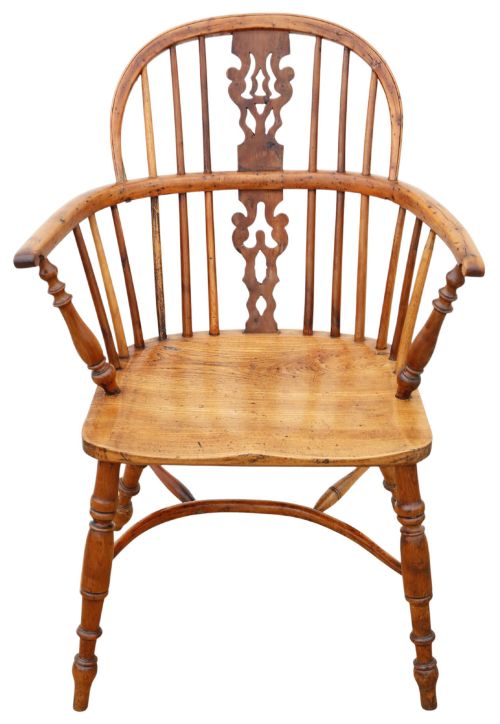
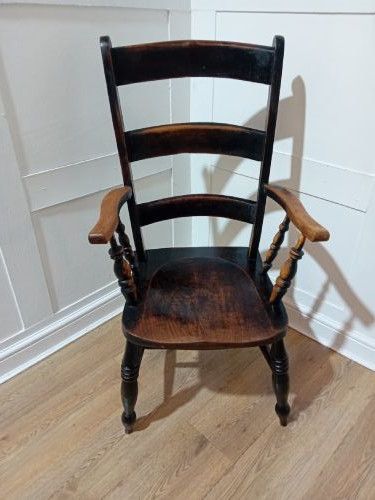
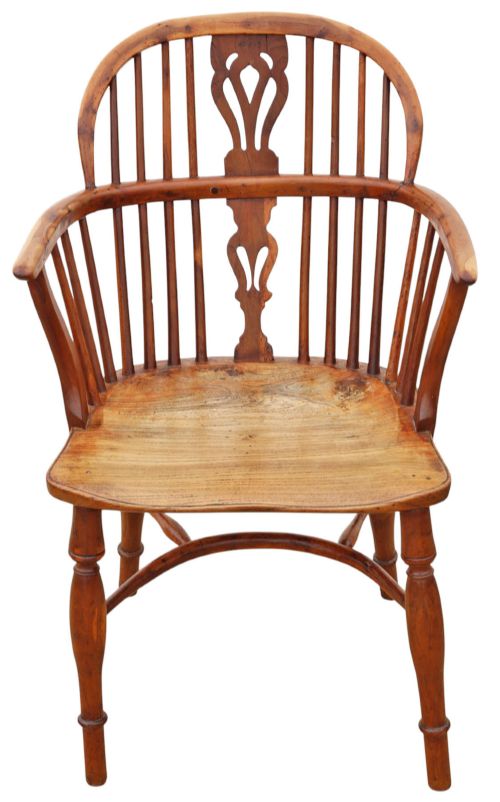
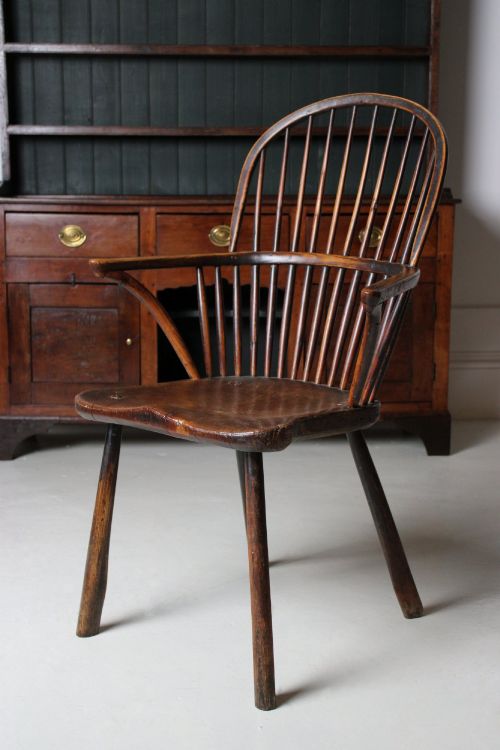
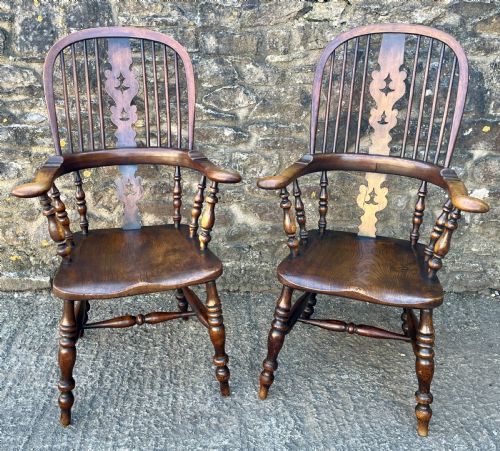
An elm wood elbow seat usually takes the form of a Windsor armchair, a country house armchair, or a ladderback chair designed for domestic use. When searching for an elm wood elbow seat, buyers encounter vernacular styles spanning the Georgian, Victorian, and Edwardian periods, alongside occasional Chinese export examples.
The selection ranges from Thames Valley Oxford chairs and smokers' bows to broad-arm Windsor chairs and primitive stick-back designs. Regional variations such as East Anglian dish seats and Yorkshire armchairs appear frequently across the periods.
Most pieces combine elm seats with supporting timbers like yew, ash, beech, or fruitwood, reflecting the resourceful traditions of rural joiners and local chairmakers.
Materials and construction
Makers utilised solid elm for seats due to its interlocking grain, which resists splitting when shaped into saddle or dish forms. Spindles, legs, and bows frequently employ ash, yew, beech, or fruitwood for strength and flexibility.
Traditional construction relies on wedged tenon joints and steam-bent components to form comb backs, hoops, and arms. Surfaces often retain original finishes or develop deep patination through decades of use.
Elm Wood Elbow Seat Retail Price Guide 2026
Typical asking prices for elm wood elbow seat among the pieces listed under this phrase on Sellingantiques today, from the lower quarter to the upper quarter. They describe what is for sale here now, not the wider market.
Some chairs served small occupants, with child-sized Windsor armchairs appearing alongside full-scale farmhouse seating.
Assessing quality and character
Quality rests in the balance of proportions, the grain definition of the timber, and the retention of original surface patination. Grain movement in burr yew and elm combinations distinguishes higher-tier pieces.
Structural integrity, unclipped legs, and the survival of early or original finishes elevate an armchair above standard utility examples. Regional idiosyncrasies and untouched historic surfaces indicate superior craftsmanship.
The Elm Wood Elbow Seat Glossary
- Windsor chair
- A chair built with a solid wooden seat into which the legs and back spindles are separately inserted. They often feature carved saddle seats and bentwood hoops.
- Comb back
- A Windsor chair back design where vertical spindles rise through a horizontal arm rail to support a low top rail resembling a comb. This form appears in primitive and vernacular pieces.
- Smoker's bow
- A low-backed Windsor variant with a continuous curved arm rail, sometimes known as a captain's chair. They were common in nineteenth-century parlours and inns.
- Dish seat
- A wooden seat hollowed into a concave shape for comfort. This technique is typical of high-quality vernacular chairmaking.
- Vernacular
- Objects designed by traditional makers using local materials and established regional methods rather than academic architectural styles.
Elm Wood Elbow Seat: Frequently Asked Questions
How do I identify a Thames Valley chair?
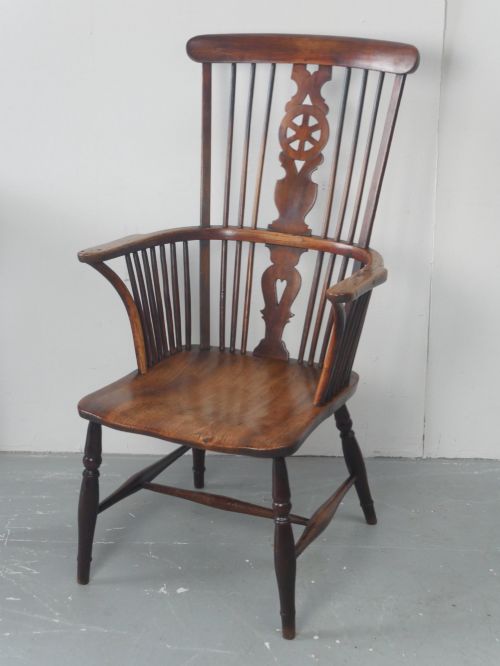
Thames Valley chairs typically display refined craftsmanship, often utilising yew wood alongside elm seats, with characteristic turned details and scholarly proportions. They date predominantly to the nineteenth century.
Look for distinctive wheel or splat backs and deep rich patination that marks regional workshop output.
Are rush seats original to these chairs?
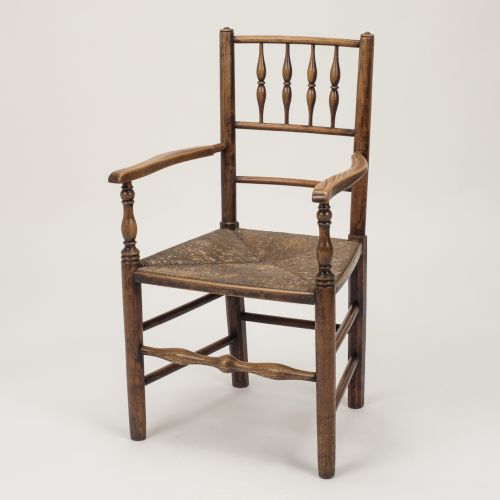
Some country armchairs incorporate woven rush seating supported by wooden frames rather than solid elm plank seats. These materials reflect alternative regional traditions, particularly in Georgian and Victorian country pieces.
Rush requires periodic care, whereas solid wood seats simply develop patina through handling and time.
How should I care for an antique elm seat?
Keep wooden armchairs away from direct heat sources and drastic humidity changes to prevent timber movement. Natural wax polish helps maintain the finish and protects historic patination.
Avoid harsh chemical cleaners, relying instead on a soft dry cloth for routine maintenance.