


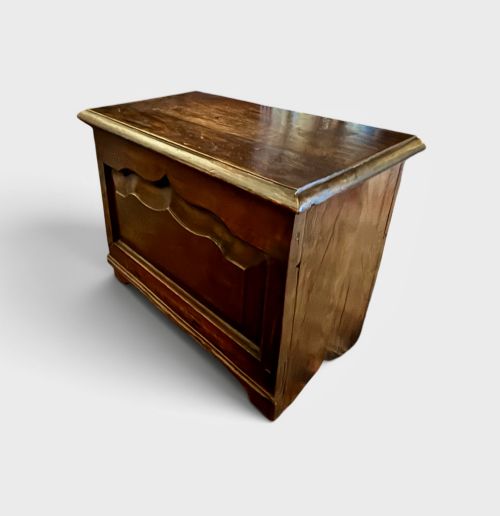
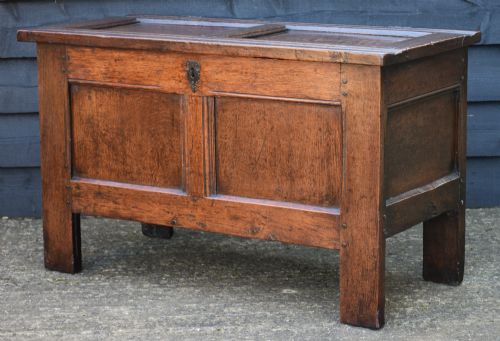
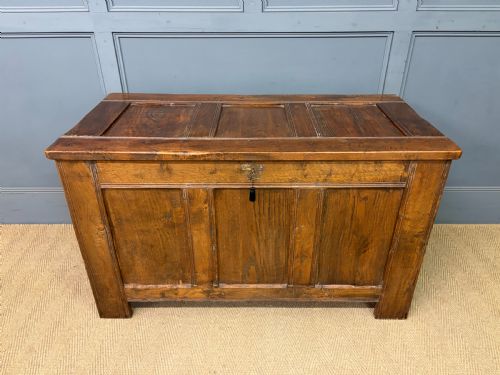
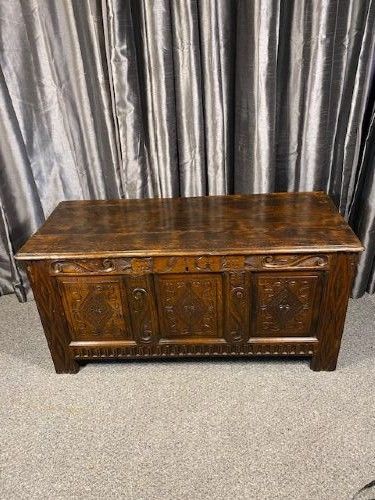
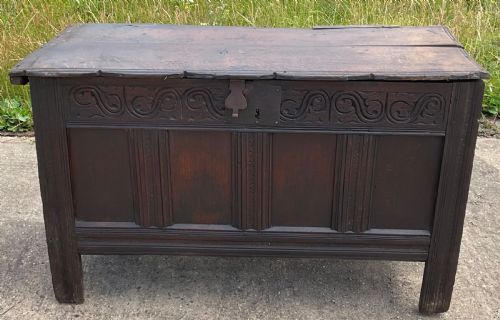
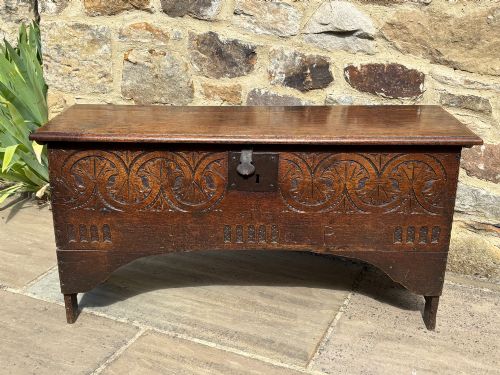
Rustic Oak Coffer Trunk
A rustic oak coffer trunk is a solid timber storage box built for heavy use, offering centuries of domestic history and practical utility.

Rustic Oak Coffer Trunk
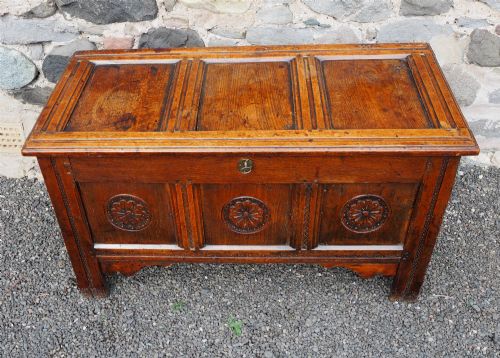
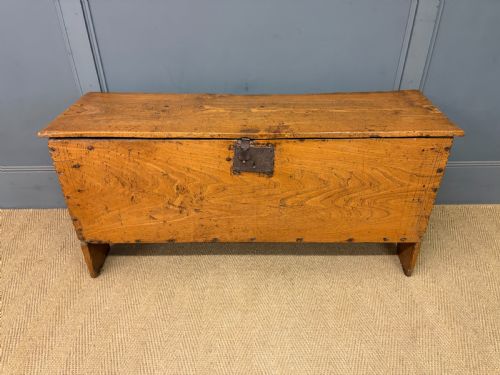
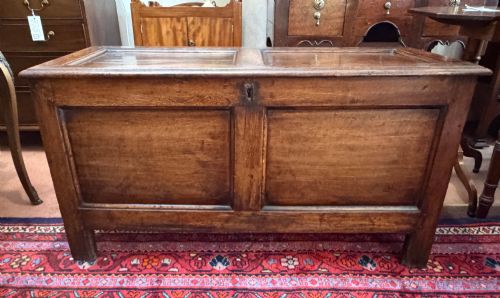
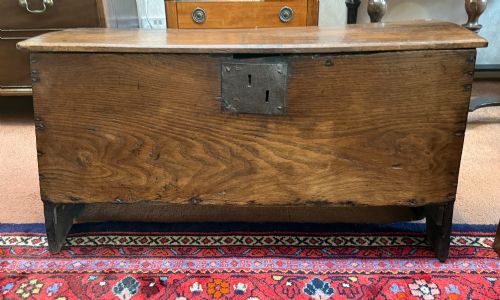
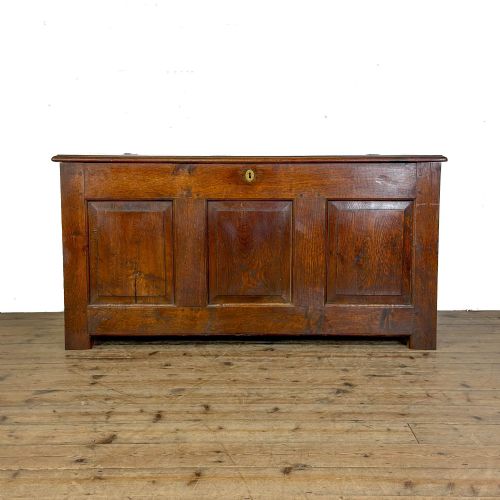
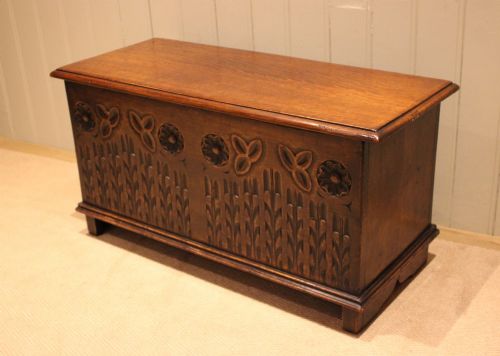
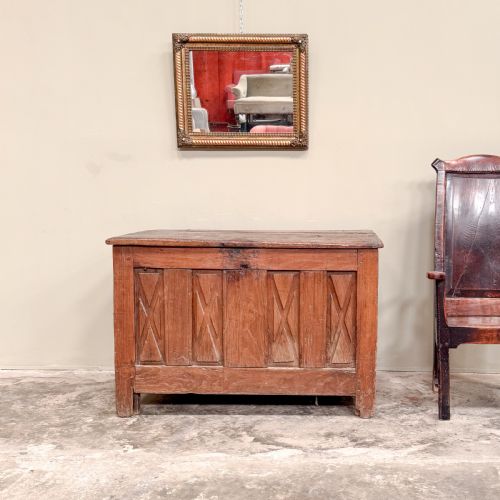
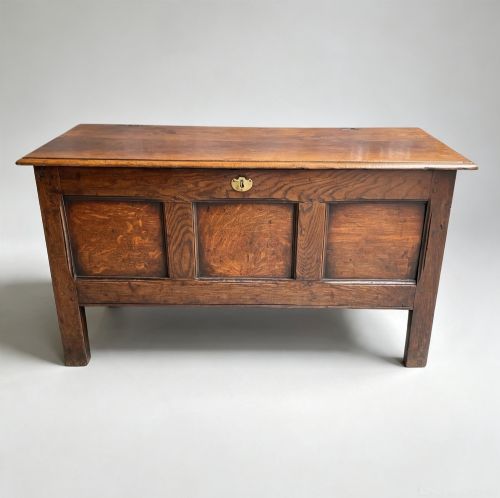
A rustic oak coffer trunk serves as a traditional storage chest, appearing across the seventeenth, eighteenth and nineteenth centuries in English, Welsh, French and wider European contexts. These pieces range from simple boarded constructions to sophisticated panelled designs made for domestic storage, marriage dowries and grain holding.
Regional vernacular styles define much of the selection, including Welsh examples from the Gower Peninsula and Snowdonia alongside French provincial pieces. Proportions vary from small cabinet-maker boxes to large European storage chests.
Materials and construction methods
Makers built these trunks predominantly from solid oak, sometimes combining panels of burr elm or pine for internal structure and secondary surfaces. Construction relied heavily on pegged tenons, frame-and-panel techniques and heavy board joints designed to withstand seasonal wood movement.
Iron and brass hardware, including strap hinges, locks and carrying handles, reinforced the timber bodies. Surfaces received hand-carved detailing, simple panel mouldings or historic paint finishes rather than modern chemical treatments.
Listings span the seventeenth, eighteenth and nineteenth centuries, featuring solid oak, elm, iron and brass across regional English, Welsh and French styles.
Factors of quality and distinction
Quality rests in the integrity of the timber selection, the crispness of hand-carved panels and the retention of original boards and ironwork. Superior examples display thoughtful proportions, such as small-scale proportions or regional Welsh vernacular characteristics.
The degree of original surface patination and the survival of secondary woods like burr elm panels distinguish finer cabinet-making from basic utilitarian boxes. Later alterations to hinges, feet or lids separate unaltered survivals from heavily restored examples.
The Rustic Oak Coffer Trunk Glossary
- Coffer
- A heavy wooden chest traditionally used for storing valuables, documents or textiles. It forms the core furniture type found throughout this category.
- Mule chest
- A storage chest featuring one or more drawers beneath the main lift-top compartment. This form bridges the evolution between the simple coffer and the chest of drawers.
- Vernacular
- Regional furniture built by local craftsmen using traditional local styles and available materials rather than following metropolitan fashion. Welsh and French provincial pieces fall into this tradition.
- Panelled construction
- A method of joining frame stiles and rails around a floating central panel to allow wood to expand and contract safely. This technique prevents major splitting in large timber surfaces.
- Sword chest
- A narrow, elongated timber box designed specifically to accommodate historical edged weapons. These form a distinct subset within regional oak storage pieces.
Rustic Oak Coffer Trunk: Frequently Asked Questions
What were oak coffers used for originally?
These trunks served as secure storage for household valuables, linens, dry goods and important documents before fitted wardrobes existed.
People also utilised them as benches or tables within domestic spaces when floor space was limited.
How do I date an old oak coffer?
Dating relies on examining tool marks, construction joints, hinge types and stylistic carving motifs relative to known periods.
Seventeenth-century pieces typically show pegged frame-and-panel work and hand-split boards, whereas later nineteenth-century examples incorporate standardised fixings.
Are these trunks suitable for daily use?
Solid oak construction provides immense durability and stability for modern storage needs.
Placing them away from direct heat sources helps protect historic timber and maintains the movement of original lids and hinges.
What is the difference between a coffer and a mule chest?
A standard coffer consists solely of a top-opening storage well enclosed by timber sides and a lid.
A mule chest incorporates one or more drawers built into the base beneath the primary storage compartment.