
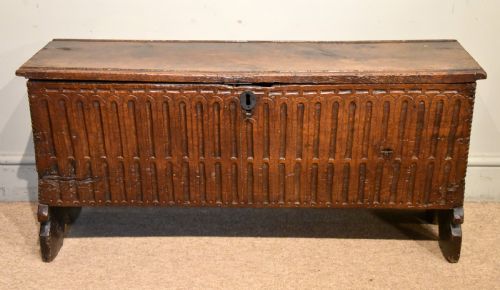

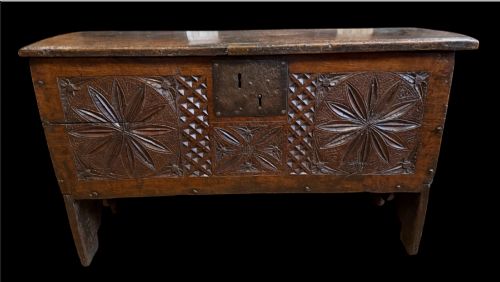


16th Century Oak Trunk
These heavy timber boxes bridge domestic storage and architectural joinery, offering the solid gravity every serious collector expects from a 16th century oak trunk.
16th Century Oak Trunk
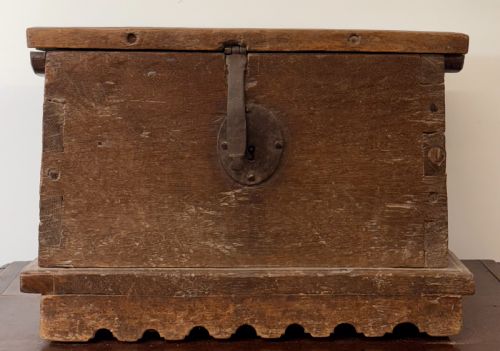
A 16th century oak trunk primarily takes the form of a coffer or chest, built for secure household storage during the Tudor and Elizabethan periods. These pieces frequently appear as boarded coffers or plank coffers, constructed to withstand the demands of early domestic life.
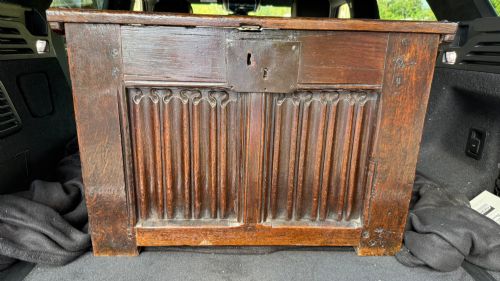
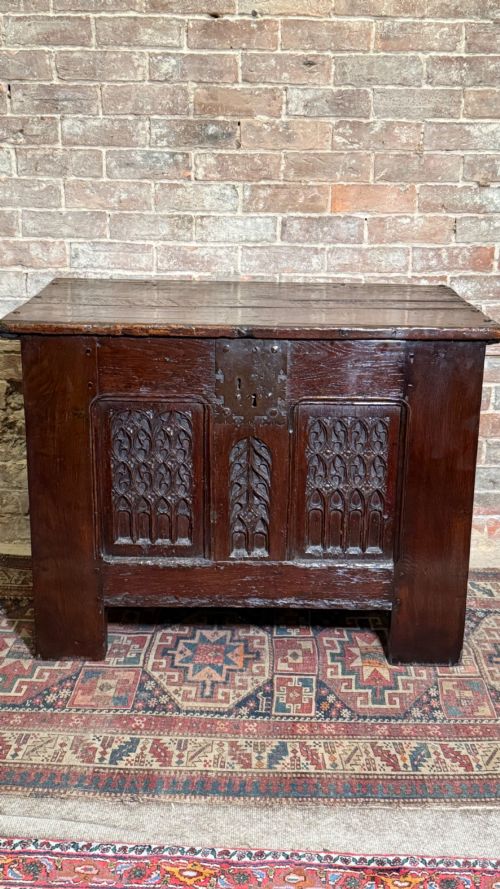
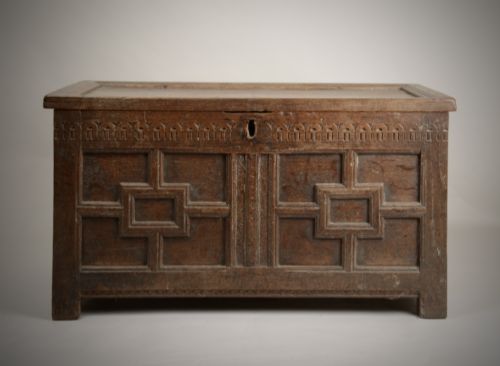
Beyond straightforward utility, many examples reflect regional styles such as Flemish Renaissance, Spanish Renaissance, and Gothic, alongside English vernacular work. Surviving pieces range from plain utilitarian storage to elaborately carved examples bearing linenfold panels and fluting.
How they were made
Makers relied primarily on native oak, supplemented occasionally by walnut and inlaid wood to create contrasting decorative surfaces. Boards were joined using robust methods suited to the heavy timbers of the era.
Iron and wrought iron played a crucial functional role, appearing as heavy strapwork hinges, clamps, and robust locking mechanisms that reinforced the structural integrity of the chest.
Listings demonstrate styles spanning Tudor, Elizabethan, Gothic, Flemish Renaissance, and Spanish Renaissance across the sixteenth and seventeenth centuries.
What varies in quality
The degree of artistic ambition separates basic boarded constructions from pieces featuring sophisticated carved fluting, linenfold panels, or regional ornamentation. Finer examples display precise joinery and well-executed decorative motifs that reflect the prevailing Renaissance tastes of their workshops.
The integration of original ironwork, such as strap hinges and complex locks, significantly influences the integrity of a piece. Survival of these original metal elements elevates a trunk beyond standard utility items into the realm of high-status period furniture.
The 16th Century Oak Trunk Glossary
- Boarded coffer
- A primitive chest constructed from thick planks nailed or pegged at the edges. This method represents one of the earliest forms of box construction.
- Linenfold
- A style of wood carving popular in the Tudor period that imitates folded linen drapery. It commonly adorns the front panels of chests and coffers.
- Meal ark
- A specialised storage chest used traditionally for keeping oatmeal or flour dry and secure. These pieces often feature specific internal ventilation or compartment divisions.
- Wrought iron
- Iron beaten into shape by hand, used extensively for structural reinforcement and hinges on early furniture. Its presence indicates period-appropriate blacksmithing techniques.
16th Century Oak Trunk: Frequently Asked Questions
What were 16th century oak trunks used for?
These trunks served as secure receptacles for valuables, documents, textiles, and domestic provisions in wealthy households and institutions. Their heavy construction and robust iron locks protected contents from theft, damp, and vermin.
In many homes, they also doubled as seating benches or tables when space was at a premium. Their portability allowed affluent families to transport belongings securely between different residences.
How do you distinguish Tudor from Elizabethan pieces?
Tudor period pieces often exhibit Gothic influences alongside early Renaissance motifs such as linenfold panels. The decoration tends to be heavier and more austere, reflecting mid-century craftsmanship.
Elizabethan examples frequently incorporate more elaborate carved fluting, strapwork, and Continental Renaissance influences. The decorative vocabulary broadens significantly during the later decades of the century.
Are these trunks always made of oak?
While oak is the predominant timber found across these pieces, material variation does occur within the evidence. Walnut and inlaid wood are also utilised in certain regional or high-status examples.
Iron and wrought iron appear frequently as structural reinforcement, hinges, and locks rather than primary body timber. The choice of wood often reflects the local availability and prevailing tastes of the workshop's region.
How should I care for an antique oak trunk?
Keep the piece away from direct heat sources and drastic humidity fluctuations to prevent the ancient oak from splitting or warping. Maintaining a stable environment preserves the structural integrity of the heavy timbers.
Apply traditional wax sparingly to nourish the dry wood without building up modern synthetic residues. Avoid harsh chemical cleaners that can strip the historic patination accumulated over centuries.