


Inlaid Oak Storage Box
An inlaid oak storage box brings heavy timber and contrasting botanical patterns into a room, offering both historical utility and surface detail.
Inlaid Oak Storage Box
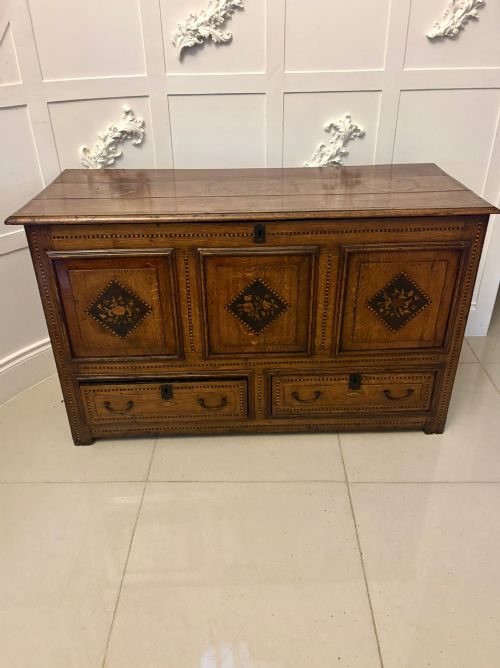
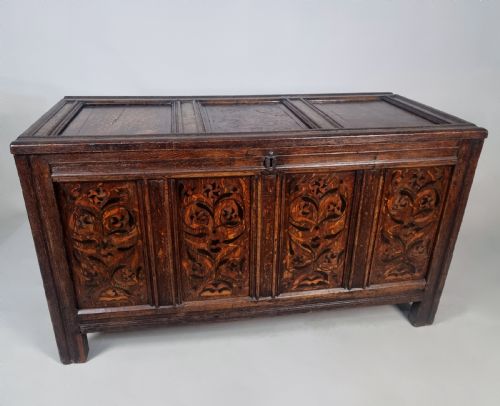
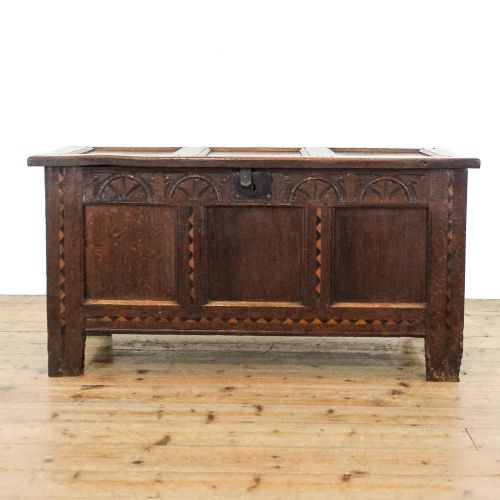
An inlaid oak storage box appears across centuries in several forms, including seventeenth-century coffers, mule chests with lower drawers, and smaller Welsh coffor bach designs. The listings show heavy domestic containers intended for linen, documents, and valuables, evolving from stark sixteenth-century panels to decorated eighteenth-century desk boxes.
The version most commonly met on this page is the seventeenth-century coffer or mule chest, often displaying wood inlay or marquetry alongside carved architectural motifs. These utilitarian containers bridge the gap between rough rural carpentry and decorative domestic furniture.
How they were made
Makers built these pieces primarily from solid oak using frame-and-panel construction to accommodate the natural movement of timber. Joinery relied on mortise and tenon joints secured with wooden pegs rather than metal nails.
Decorative surface work incorporated contrasting timbers such as fruitwood, holly, and bog oak. Craftsmen cut recesses into the oak base to receive these lighter and darker inlays, creating geometric patterns or figurative marquetry.
Listings span periods from the sixteenth century through the Victorian era, utilising oak, fruitwood inlay, and brass hardware.
What varies in quality
The standard of an inlaid oak storage box rests on the integration of the decoration with the primary structure. Superior examples display crisp carving and precise wood inlay that complements the grain of the oak rather than masking clumsy joinery.
Proportion and original survival define the better pieces on offer. Boxes retaining their early hinges, original lid boards, and undisturbed interior compartments command stronger interest than those heavily reconstructed or stripped of their patina.
The Inlaid Oak Storage Box Glossary
- Coffer
- A heavy wooden chest with a hinged lid used historically for storing valuables and documents. These pieces form the structural backbone of early domestic storage.
- Mule chest
- A storage chest featuring one or more drawers beneath the main internal compartment. This form emerged as makers sought easier access to garments without opening the top lid.
- Marquetry
- The art of applying pieces of veneer to a structural surface to form decorative patterns. In these listings, marquetry panels contrast sharply against the dark oak background.
- Arcaded
- Decorated with a series of arched openings carved in relief upon the wood. This architectural detail frequently dates seventeenth-century panels.
Inlaid Oak Storage Box: Frequently Asked Questions
How do I date an oak coffer?
Dating relies on observing construction methods, such as peg placement, hand-planed board marks, and the evolution of carved styles from Tudor motifs to Jacobean panels.
Later pieces often incorporate secondary woods or softer geometric inlays that reflect eighteenth-century regional cabinet-making habits.
What is a coffor bach used for?
A coffor bach served as a miniature storage container for precious items, documents, or personal linen within the home. Their small scale suggests they functioned as special presentation pieces or dowry items in Welsh households.
Today, they sit easily on side tables or desks while fulfilling the same minor storage role.
Where were these chests made?
The pieces span various English and Welsh workshops, with regional centres such as Lancashire and specific areas of Wales producing distinct vernacular styles. Local timber availability dictated the widespread use of solid oak across these regions.
Regional differences appear in the handling of the inlay work and the proportions of the base drawers.
How do I care for antique oak?
Maintain antique oak by keeping it away from direct heat sources and sudden humidity shifts that cause the dense timber to split. Regular dusting with a dry cloth protects the wax finish and preserves the aged surface.
Avoid modern liquid polishes that sink into the grain and darken the original patina.