


Six Plank Oak Chest
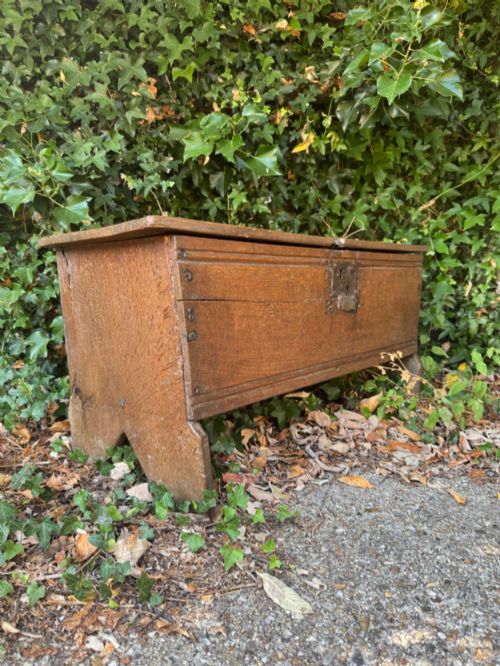
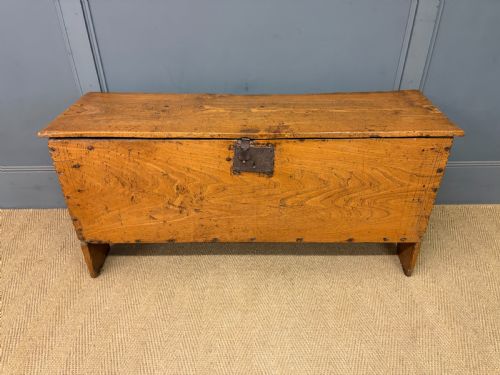
A six plank oak chest is a primitive boarded box built for utility, offering a direct tangible link to early domestic life.
Six Plank Oak Chest
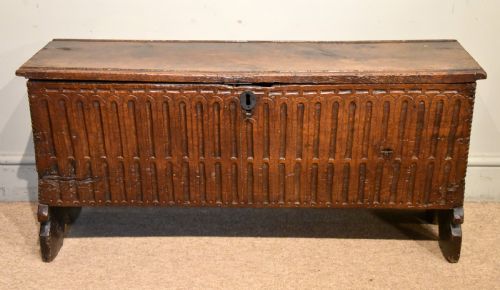
A six plank oak chest is formed from a single vertical board for each of the four sides, plus one for the base and one for the lid, pinned together at the corners. The majority of pieces encountered here date from the seventeenth century, though examples span from the sixteenth century into the eighteenth century, alongside occasional regional variations in elm and pollard oak.
Makers constructed these storage pieces to hold valuables, documents, or textiles in homes before fitted cupboards existed. Buyers frequently find boarded coffers and sword chests built with simple rectangular proportions, sometimes decorated with carved fluting or naive detailing.
Materials and construction methods
Joiners relied on solid timber boards joined with edge-to-edge pegging, rebates, or simple butt joints reinforced with hand-forged wrought iron hinges and straps. Oak provided the structural backbone for these boarded boxes, while regional alternatives such as elm or specialised pollard oak appear in specific pieces.
Makers utilised basic hand tools to shape the heavy boards, leaving behind visible adze marks and tool striations that confirm early production methods. Iron hardware, including strap hinges and lock plates, was hammered out by blacksmiths to secure the lid and contents.
Several chests show naive tool marks left by joiners who clearly rushed before lunch.
Judging quality and character
Quality rests on the survival of original boards and the depth of the surface patina accumulated over centuries of use. Pieces that retain their original wrought ironwork, baseboards, and lids command greater regard than those rebuilt with replacement timber.
The presence of early carving or unusual proportions, such as narrow widths designed for swords, elevates a piece beyond standard utility boxes. Surface wear and timber shrinkage reflect genuine age rather than structural compromise.
Jack Grimble
The Six Plank Oak Chest Glossary
- Boarded chest
- A box constructed by pinning single planks together at the edges rather than framing them around a panelled skeleton. This method defines the earliest form of domestic box furniture.
- Sword chest
- A long, narrow boarded chest specifically proportioned to accommodate a blade. These variants appear frequently in seventeenth-century English inventories.
- Patina
- The lustrous surface sheen developed on timber through decades of handling, polishing, and oxidation. Deep patination indicates centuries of exposure to light and air.
- Wrought iron
- Iron beaten and shaped by hand on an anvil rather than cast in a mould. This material provides the original hinges and lock plates on early boarded boxes.
Six Plank Oak Chest: Frequently Asked Questions
What were six plank oak chests used for?
These boxes served as secure storage for household valuables, linen, and personal documents in early domestic interiors. Their robust construction allowed them to double as seating benches when fitted with flat lids.
In some instances, narrow versions accommodated specific items such as swords or ceremonial weapons. They functioned as portable furniture that could travel easily between properties.
How do I date a six plank oak chest?
Dating relies on examining the construction marks, nail types, and hinge styles used to assemble the boards. Hand-wrought ironwork and early boarded joints typically point to the sixteenth or seventeenth centuries.
Subsequent centuries introduced different planing techniques and timber preparation methods. Comparing the surface patina and wood shrinkage helps confirm the period of manufacture.
Where should I place a chest in my home?
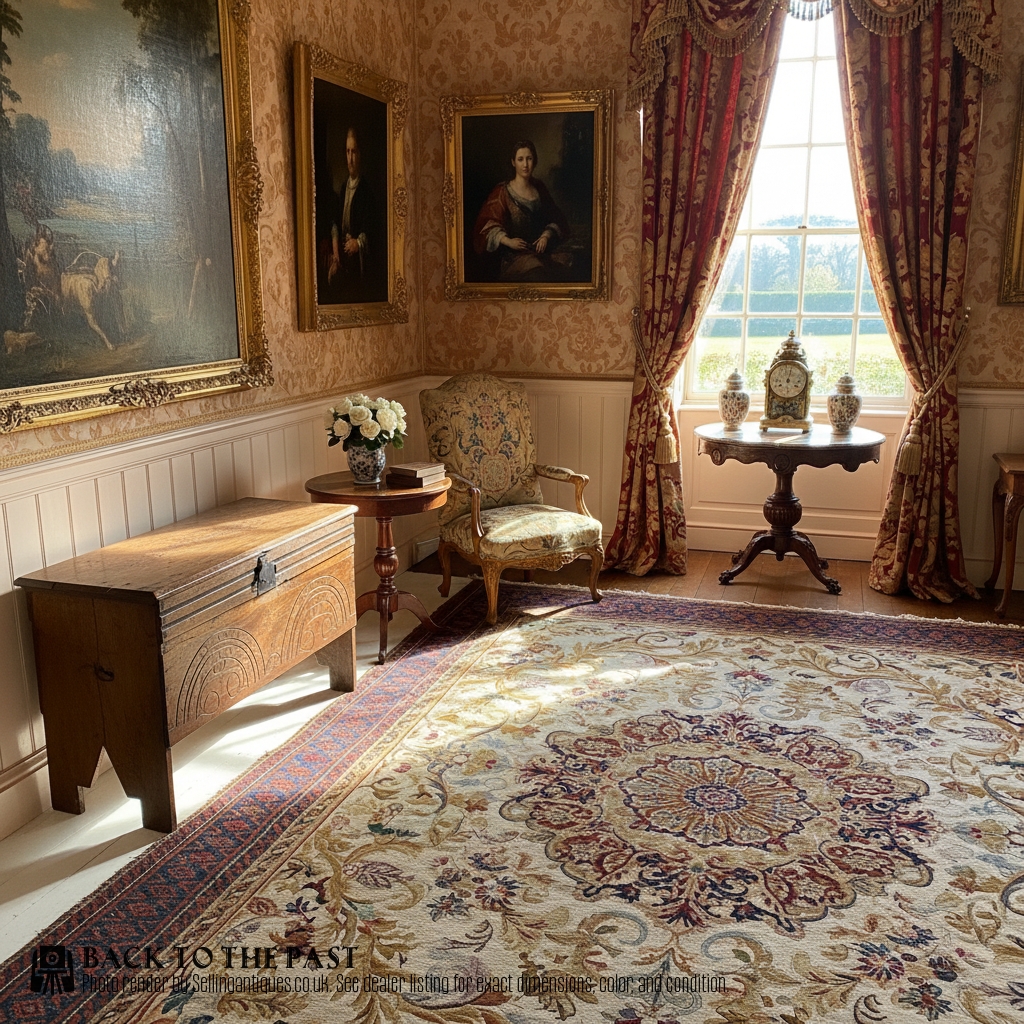
These low chests function well as hallway storage or coffee tables in a living space, holding blankets or books out of sight. Their sturdy lids provide practical flat surfaces for display.
Placement should avoid direct sunlight and extreme temperature fluctuations to protect the ancient timber. Maintaining stable indoor humidity preserves the dry, historic finish of the oak.
Are all these chests made of oak?
While oak is the dominant material seen across these listings, regional makers occasionally utilised alternative native hardwoods. Elm and pollard oak appear among the surviving examples.
Iron hardware is universally present in the form of hinges, straps, and locking mechanisms. Each material combination reflects the local timber available to the original maker.