




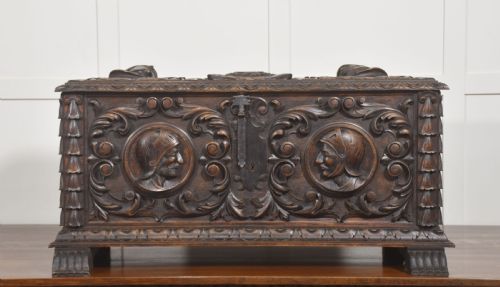


Renaissance Oak Storage Chest
These renaissance oak storage chest pieces combine heavy timber and historic carving to anchor a room.
Renaissance Oak Storage Chest
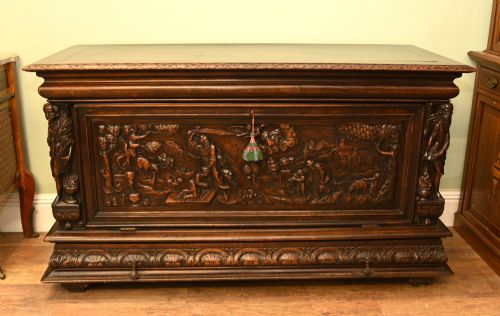
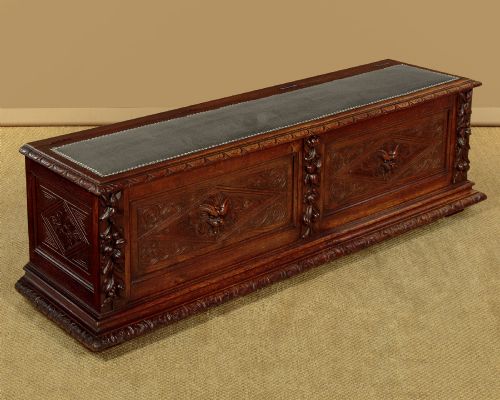
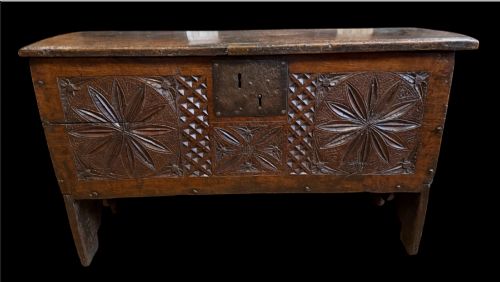
The selection ranges from simple sixteenth century oak plank coffers to ornate sixteenth century Flemish oak coffers and nineteenth century revival pieces featuring figural medallions. These forms provide deep interior storage while functioning visually as structural furniture within hallways and living spaces.
How they were made
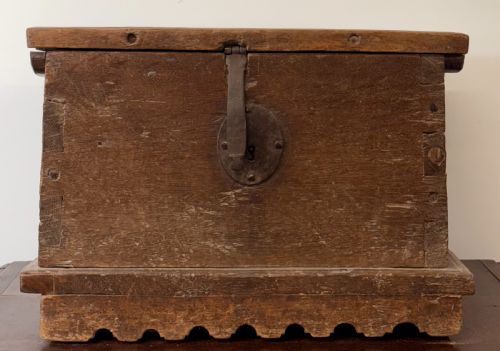
Carpenters constructed these storage items predominantly from solid oak and walnut, incorporating structural iron, wrought iron, and brass hardware for hinges, locks, and binding straps. Heavy timber planks formed the primary box structures, joined with traditional framing methods suited to heavy daily use.
Surface decoration relies heavily on hand carving, seen in figural medallions and geometric panels. Iron binding reinforces the corners and lids of defensive coffers, combining functional protection with decorative metalwork.
Renaissance Oak Storage Chest Retail Price Guide 2026
Typical asking prices for renaissance oak storage chest among the pieces listed under this phrase on Sellingantiques today, from the lower quarter to the upper quarter. They describe what is for sale here now, not the wider market.
What varies in quality
Quality rests upon the proportion of original timber and the crispness of the hand carving, distinguishing period sixteenth century examples from nineteenth century revival interpretations. The integration of period ironwork and the structural integrity of the heavy wooden boards determine the overall standard of each coffer.
Depth of relief in carved panels and the retention of authentic surface patination separate standard utilitarian storage boxes from pieces commissioned for high status interiors such as Italian cassoni or Spanish royal chests.
The Renaissance Oak Storage Chest Glossary
- Coffer
- A heavy wooden chest traditionally used for storing valuables, linens, or documents. These storage boxes often feature reinforced iron bands for added security.
- Cassone
- A richly carved or painted chest associated with Renaissance Italy, frequently created to hold marriage dowries. These large storage pieces display elaborate figural medallions and classical motifs.
- Plank coffer
- An early form of chest constructed from joined thick vertical boards rather than a framed panel structure. This method represents some of the earliest surviving box forms.
- Settle bench
- A wooden bench featuring a high solid back and storage beneath the seat or within the base. This dual purpose furniture item combines seating with enclosed domestic storage.
Renaissance Oak Storage Chest: Frequently Asked Questions
How were these chests used originally?
These large wooden boxes served primarily to secure valuable textiles, silver, and household documents in wealthy domestic or institutional settings. Their heavy construction and iron locks provided essential protection against theft and fire in medieval and Renaissance households.
Over time, many of these storage items also functioned as benches or tables within great halls. Their sturdy lids accommodated seating while keeping the interior contents safely enclosed beneath.
How do I date a sixteenth century piece?
Dating relies heavily on examining the timber species, joinery techniques, and the style of hand carving present on the panels. Sixteenth century examples typically display simple pegged mortise and tenon joints alongside heavy plank construction.
Ironwork hardware such as forged hinges and strapwork offers additional clues to the manufacturing period. Later nineteenth century revival pieces often utilise mechanical fixings and machine-assisted finishing that differ from early hand tools.
Where should I place a heavy chest?
These substantial timber items anchor large hallways, living rooms, and bedrooms effectively as focal points. Their flat lids provide a stable surface for displaying decorative objects while concealing bulky items inside.
Keep wooden storage pieces away from direct heat sources and strong sunlight to protect the historic timber and finish. Adequate clearance allows air circulation around the heavy oak and walnut panels.
What is a cassone?
A cassone is a traditional Italian chest created during the Renaissance to transport and store a bride's dowry items. These decorative receptacles often featured elaborate carving, gilding, or painted panels depicting classical stories.
As high status furniture, they sat prominently in domestic bedchambers to display family wealth and lineage. Their artistic elaboration separates them from standard utilitarian storage coffers.