



Tudor Oak Coffer Chest
A tudor oak coffer chest is a heavy timber strongbox built for domestic security, offering raw early craftsmanship that anchors a room.
Tudor Oak Coffer Chest
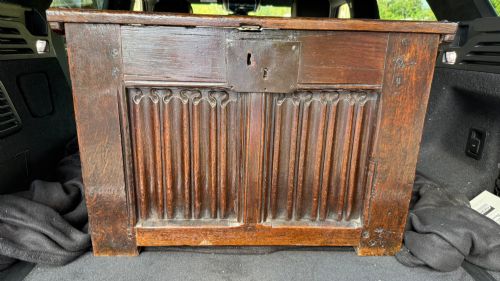
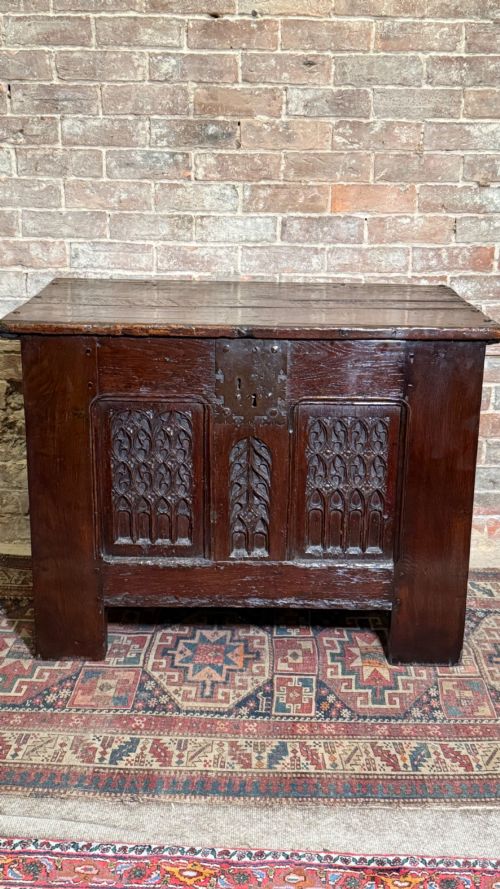
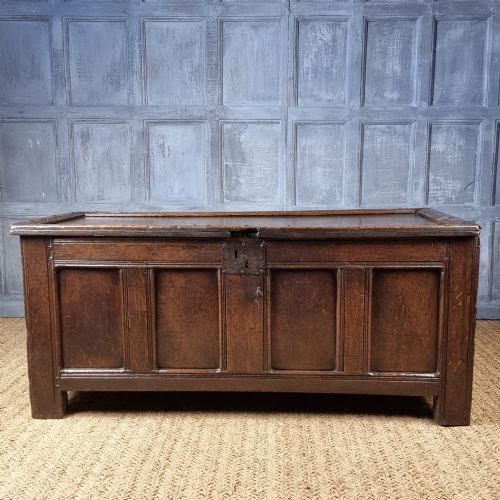
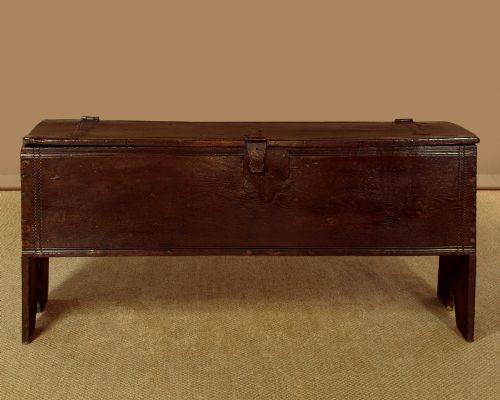
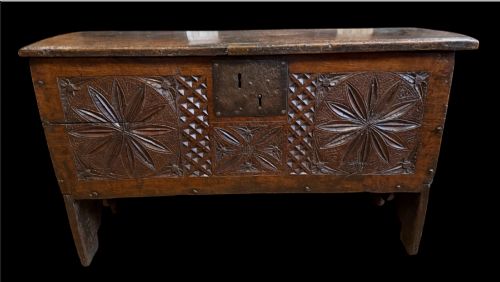
A tudor oak coffer chest represents the heavy domestic storage of the sixteenth century, built to hold valuables, documents, or textiles securely off damp floors. These pieces range from simple boarded construction to richly carved fronts reflecting Renaissance or Gothic influence.
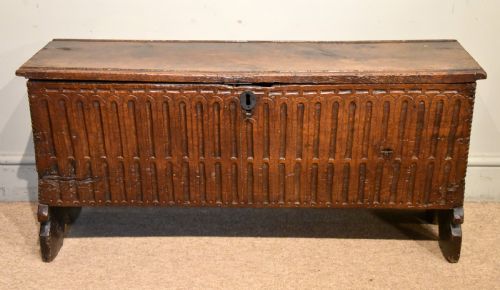
Buyers are most likely to encounter sturdy oak examples originating from English and Welsh workshops, often dated to the mid or late sixteenth century. Forms include plank chests, meal arks, and carved panel coffers bearing linenfold or fluted motifs.
How they were made
Makers built these chests primarily from solid oak using heavy planks fastened with pegged joints or robust iron straps. Wrought iron reinforcement frequently secured the lids and corners for added protection.
Carving and inlay work added ornament to select surfaces, utilising gouge work, fluting, and inlaid wood to create geometric or architectural patterns. Boards were often cleft and hewn by hand rather than cleanly sawn.
Listings feature sixteenth-century pieces constructed from solid oak, walnut, and wrought iron.
What varies in quality
Quality rests in the integrity of the original timber and the ambition of the joinery rather than pristine survival. Stronger pieces retain their original lids, hinges, and floor boards without heavy structural replacement.
The depth and crispness of the carving separate standard utilitarian boxes from elite commissions. Pieces bearing dated inscriptions or sophisticated regional motifs command greater appreciation among collectors.
The Tudor Oak Coffer Chest Glossary
- Coffer
- A heavy wooden chest traditionally used for storing valuables and documents. These boxes often doubled as seating or travel trunks.
- Linenfold
- A style of wood carving that mimics folded linen cloth. This motif appears frequently on sixteenth-century panels.
- Boarded chest
- A primitive box construction made from plain thick planks nailed or pegged at the edges. Also known as a six-plank chest.
- Meal ark
- A specialised storage chest designed for keeping grain or meal dry. They often feature specific ventilation or internal divisions.
Tudor Oak Coffer Chest: Frequently Asked Questions
How do I date an early oak coffer?
Dating relies on construction methods such as hand-cleft boards, early ironwork, and regional carving styles typical of the sixteenth century.
Changes in jointing techniques and decorative motifs like linenfold or fluting help narrow the period of manufacture.
Were these chests used for seating?
Yes, their flat tops and sturdy frames made them practical benches in the great halls of Tudor homes.
Their primary function remained secure storage, but dual utility was standard in early domestic spaces.
How should I care for sixteenth-century oak?
Keep timber away from direct heat sources and sudden humidity shifts to prevent the ancient oak from splitting.
An occasional application of breathable wax helps nourish the dry grain without sealing the historic surface.
What is the difference between a coffer and a trunk?
A coffer generally denotes a heavier, more secure box intended for valuables, often featuring robust locks and iron bands.
Trunks often served broader travel and general storage purposes with lighter framing and simpler hinges.