


Rustic Fireplace Accessories
These rustic fireplace accessories bring heavy metal and beaten copper to the hearth, offering genuine period utility and honest weight for a fireside.
Rustic Fireplace Accessories
When searching for rustic fireplace accessories, buyers encounter hard-working fireside gear primarily shaped from iron and copper during the eighteenth, nineteenth, and early twentieth centuries. These functional items range from sturdy andirons and fire dogs to coal receivers, log bins, and baskets designed to service an active hearth.
The pieces appearing on this page lean heavily toward nineteenth-century production, alongside Georgian examples and Arts and Crafts output from around nineteen hundred. French Country and Gothic Revival styles also surface, showing how domestic hearth furniture adapted across different regional workshops.
Most items fulfil a direct mechanical or storage role by the grate, whether supporting heavy logs, holding fuel, or managing the fire irons. Buyers find both monumental pairs of fire dogs and smaller utilitarian objects like bellows and taper holders.
How they were made
Blacksmiths and metalworkers shaped these pieces predominantly from wrought iron, cast iron, and sheet copper using traditional hand-forging and beating techniques. Iron components relied on heating and hammering to achieve durable structural forms, while copper vessels often featured visible hand-beaten texturing.
Makers integrated secondary elements such as wood, leather, and brass fittings to complete handles, hinges, and operational parts on bins and bellows. The reliance on manual labour left distinct tool marks across the metal surfaces that reveal the individual hand of the maker.
Listings incorporate wrought iron, copper, brass, cast iron, wood, mahogany, and leather across pieces spanning the seventeenth to the early twentieth centuries.
What varies in quality
Substance and heft set the better examples apart, as heavier gauge metals and solid forging distinguish substantial hearth furniture from lighter commercial output. A monumental pair of fire dogs demonstrates superior stability and material presence compared to standard production items.
The integrity of the construction and the preservation of original surfaces dictate the standing of a piece. Original patination on copper and uncompromised structural joints in wrought iron carry more weight than cleaned or heavily restored metalwork.
The Rustic Fireplace Accessories Glossary
- Andirons
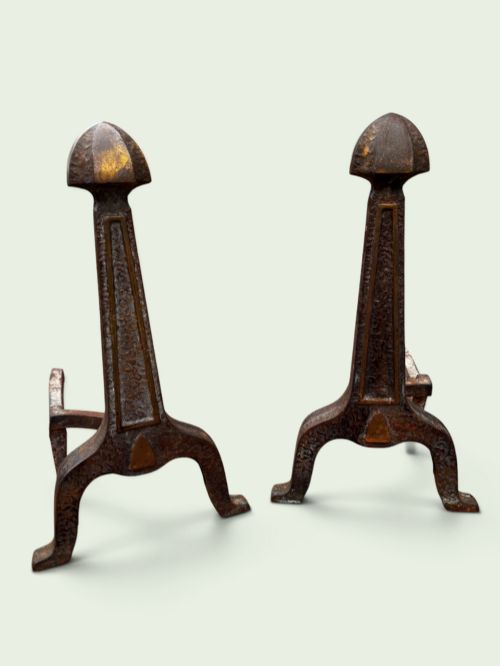
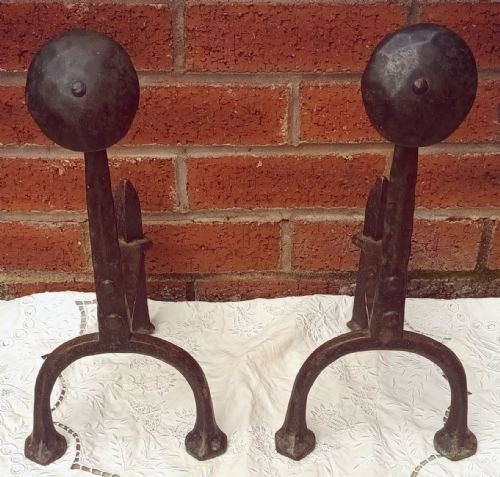
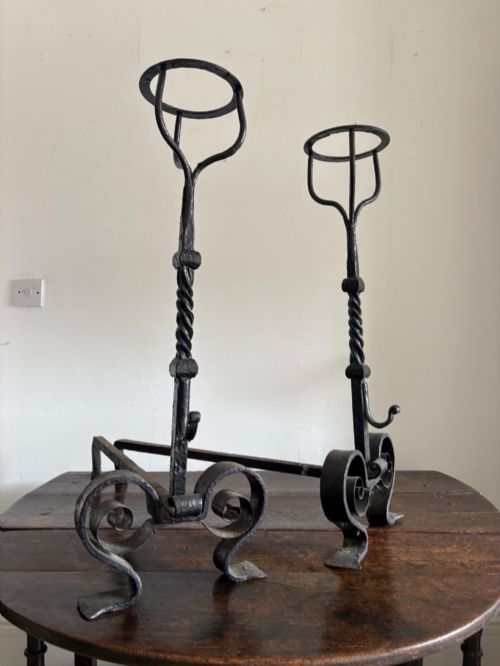
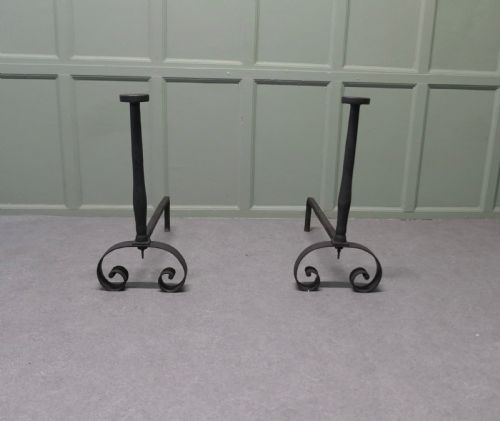
- Iron supports placed on the hearth to elevate logs for better air circulation. These objects often feature decorative wrought terminals and heavy vertical standards.
- Log bin
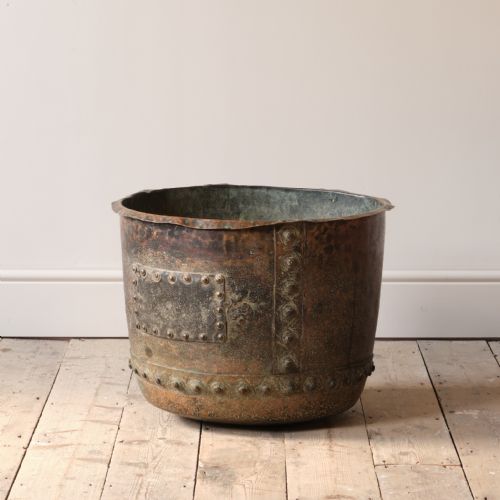
- A large container, frequently fashioned from heavy copper or iron, used to store fuel beside the fireplace. These vessels often incorporate riveted seams and drop handles.
- Fire basket
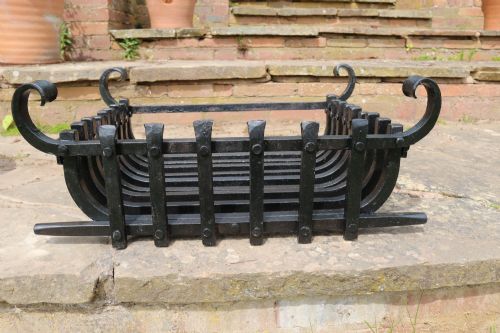
- An iron grate designed to hold coal or wood within the fireplace opening. They frequently combine cast iron backs with wrought iron retaining bars.
- Bellows
- A pneumatic device constructed from wood and leather, bound with metal accents, used to pump air into the hearth flames. Antique examples rely on flexible leather sides and nozzle tubes.
- Chimney crane
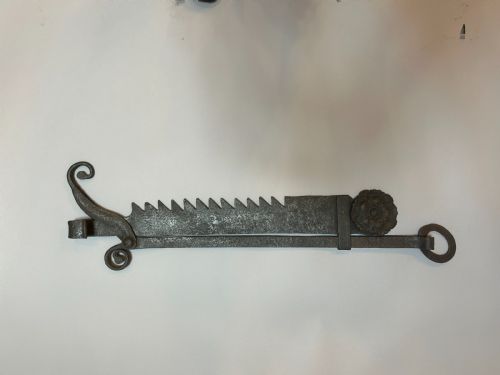
- An iron arm mounted inside a chimney to swing pots and kettles over the fire. These eighteenth-century pieces represent heavy architectural ironwork.
Rustic Fireplace Accessories: Frequently Asked Questions
What are andirons used for?
Andirons support logs above the floor of the hearth to allow air to circulate underneath the wood. This elevation helps the fire burn more efficiently and keeps the embers properly positioned against the grate.
Pairs of these iron supports range from simple functional standards to monumental Arts and Crafts designs. They remain visible at the front of the fireplace even when the hearth is unlit.
How do I clean copper log bins?
Historic copper surfaces develop a dark oxidation layer over decades of exposure to air and smoke. Many collectors prefer to leave this natural patination untouched rather than polishing the metal to a bright shine.
If cleaning is necessary, use a gentle non-abrasive cleaner to remove surface dust without stripping the character from the beaten metal. Avoid harsh chemical dips that damage the historical surface.
Are these accessories safe to use?
Most antique iron and copper fireside pieces retain their structural strength and remain fully operational for daily hearth use. Wrought iron and heavy cast components withstand high temperatures without failing.
Inspect riveted joints and handles on coal bins and fire baskets before loading heavy fuel. Items intended purely for display should be kept clear of active flames.
How do I date wrought iron pieces?
Dating relies on observing construction methods, tool marks, and stylistic indicators such as Gothic Revival or Arts and Crafts motifs. Hand-forged items from the eighteenth and nineteenth centuries show irregular surface textures from the anvil.
Standardised machine rolling and modern welding point to twentieth-century manufacturing. Comparing pieces with dated examples helps narrow down the period of origin.