

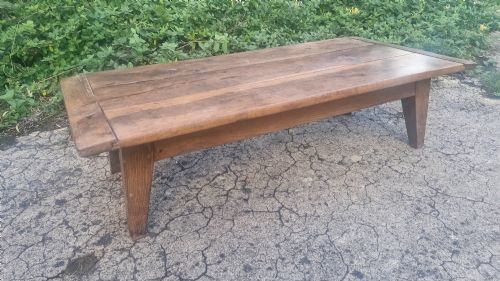
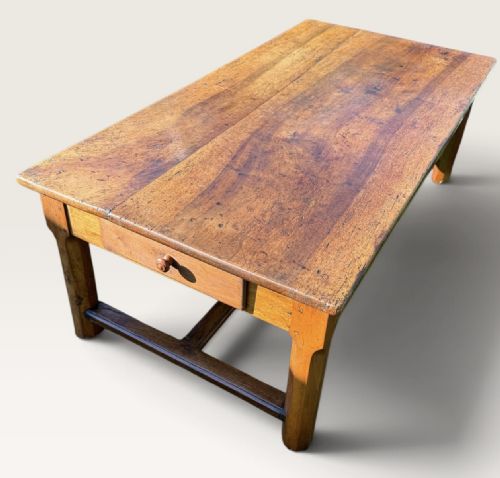
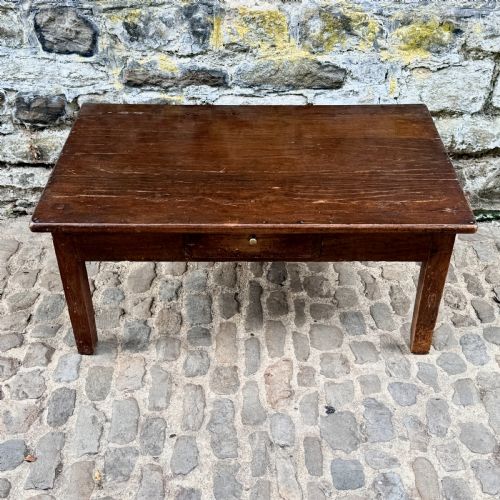
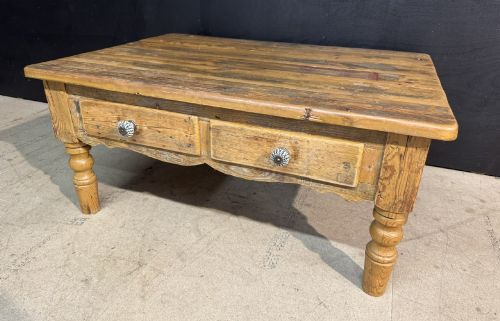
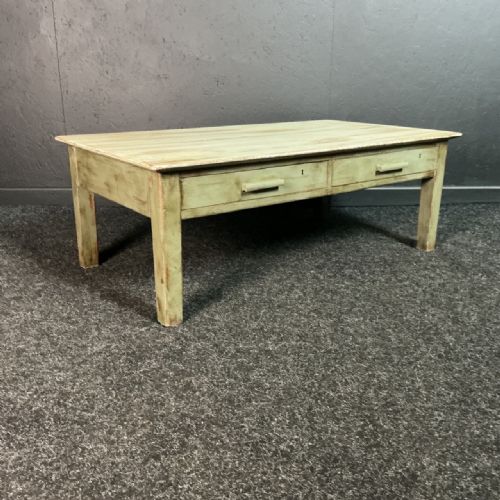
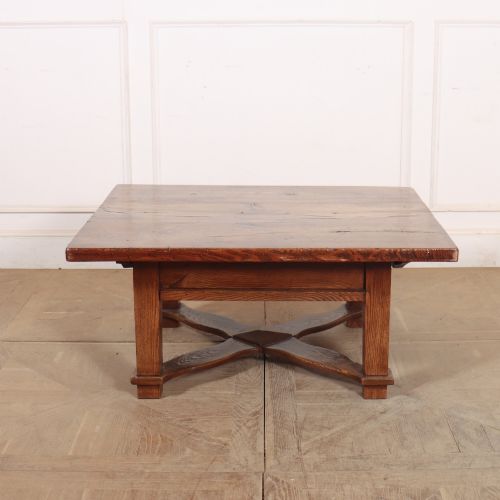
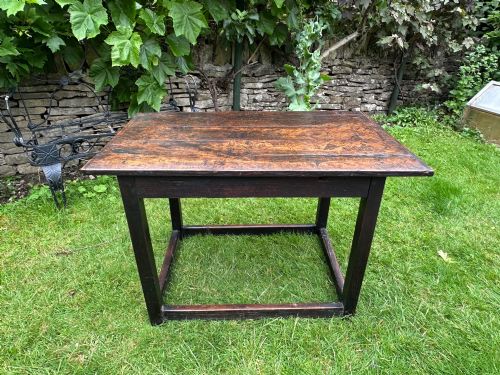

Rustic Farmhouse Coffee Table
A rustic farmhouse coffee table brings functional warmth to a room, formed from timber shaped by generations of practical use.
Rustic Farmhouse Coffee Table
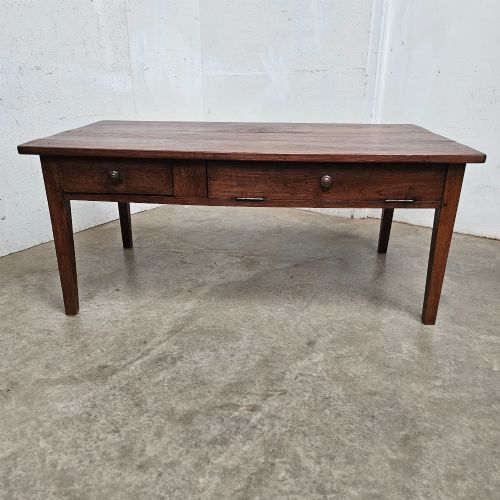
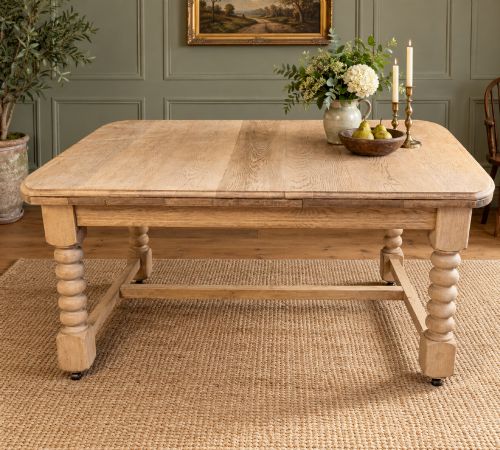
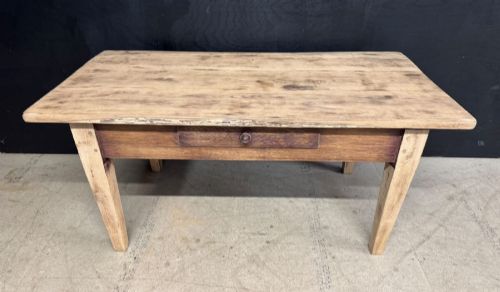
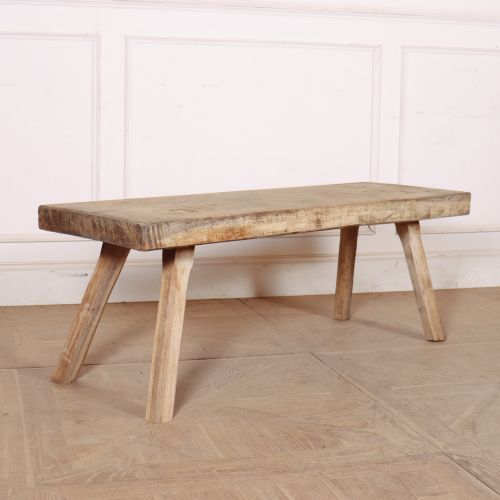
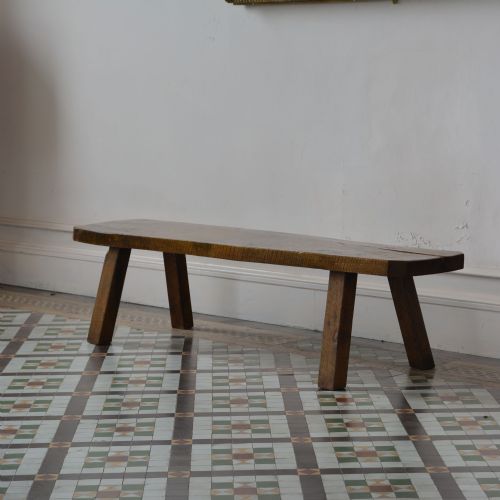
A rustic farmhouse coffee table is a low surface adapted from utilitarian origins, including former work tables, benches, dough bins and cheese presses. These pieces bridge domestic history and modern living spaces through their low profiles and robust proportions.
The versions most commonly met on this page are constructed from pine, oak, elm and walnut, spanning periods from the eighteenth century through the Edwardian era. Many originate from English, French, Austrian and Hungarian workshops, carrying the marks of regional vernacular design.
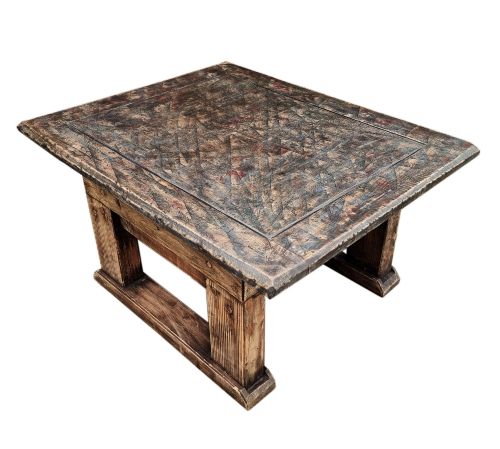
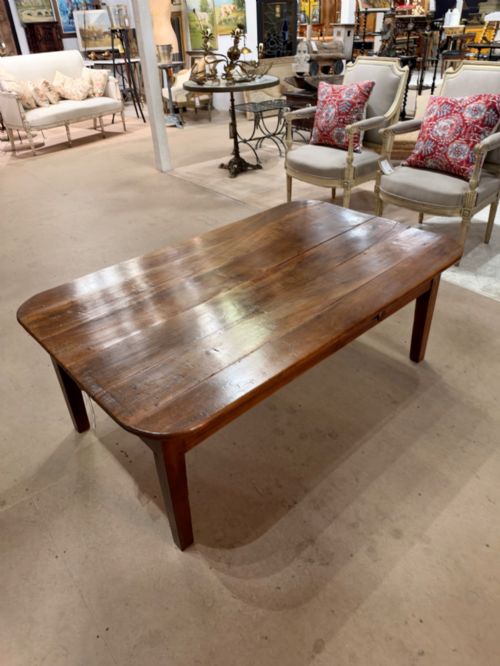
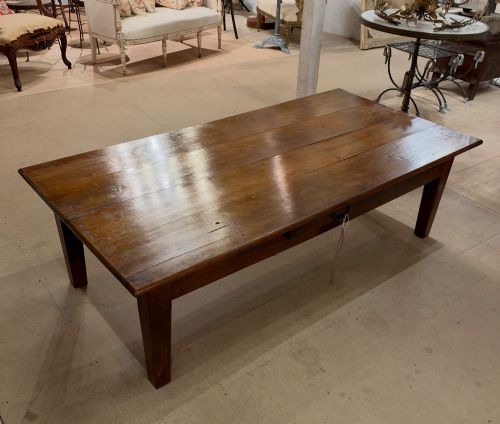
Makers utilised sturdy hardwoods and softwoods alike, producing plank tops, trestle bases and turned legs designed for daily utility. Today, these forms serve as coffee tables, offering substantial timber surfaces with distinct patinas.
How they were made
Carpenters constructed these tables using solid timber such as oak, pine, elm, sycamore and walnut, selecting materials for local availability and strength. Planks were joined to form thick tops, supported by turned legs, trestle bases or sturdy frames.
Surfaces often display scrubbed finishes, bleached oak treatments or remnants of early paint, reflecting the methods used to maintain cleanliness in working kitchens and rural homes. Drawers and joints relied on traditional carpentry techniques suited to heavy daily wear.
Rustic Farmhouse Coffee Table Retail Price Guide 2026
Typical asking prices for rustic farmhouse coffee table among the pieces listed under this phrase on Sellingantiques today, from the lower quarter to the upper quarter. They describe what is for sale here now, not the wider market.
Materials recorded across the inventory include oak, pine, elm, sycamore, walnut, cherry wood, hardwood and paint.
What varies in quality
Quality rests in the integrity of the timber and the depth of the patina earned through actual use rather than artificial distress. Tables retain character when their scrubbed tops, original paint or bleached surfaces show authentic age.
Proportions and structural honesty separate exceptional examples from standard pieces, particularly when original joined planks and sturdy supports remain intact. The balance between the scale of the top and the strength of the underframe defines the success of each piece.
The Rustic Farmhouse Coffee Table Glossary
- Pig bench
- A long, narrow low bench traditionally used in agricultural settings, now repurposed as a low table.
- Dough bin
- A lidded wooden container once used for bread making, resting on a frame and adapted for domestic surface use.
- Trestle table
- A table featuring a horizontal beam supported by two pairs of slanted legs, allowing stability and legroom.
- Scrubbed finish
- A timber surface washed repeatedly with water and soap, leaving the grain raised and pale.
- Cheese press table
- A heavy table originally designed to exert pressure on cheese curds during the agricultural production process.
Rustic Farmhouse Coffee Table: Frequently Asked Questions
What is a rustic farmhouse coffee table?
A rustic farmhouse coffee table is a low timber surface adapted from historical work tables, benches and bins.
These pieces use traditional materials like pine, oak and elm to provide sturdy, low surfaces for living rooms.
How do I style a rustic coffee table?
Pair the natural timber grain and scrubbed finishes with simple ceramics, books or textiles.
The neutral tones of bleached oak and pine allow these tables to anchor both contemporary and traditional rooms.
How do I clean a scrubbed timber table?
Maintain scrubbed pine or oak surfaces using a dry cloth or a slightly damp sponge without harsh chemicals.
Avoid excessive moisture to preserve the natural patina and dry grain developed over centuries.
Are these tables made from reclaimed wood?
These tables are period pieces originally constructed for functional agricultural or domestic tasks rather than modern reclamation.
Their materials reflect the timber available in eighteenth, nineteenth and early twentieth century workshops.