
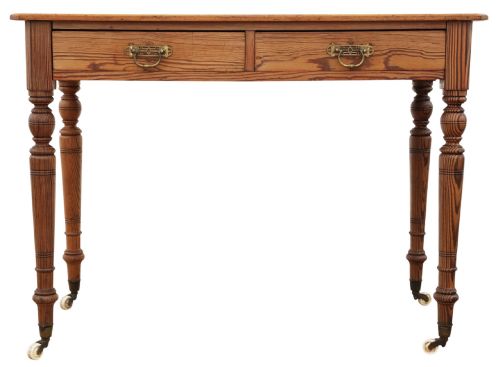
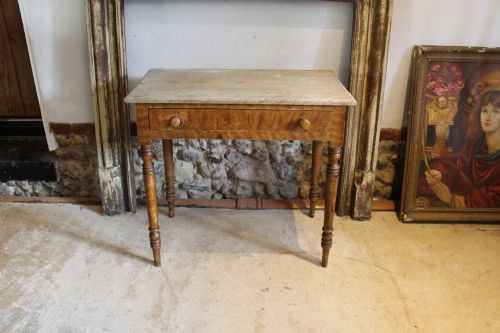

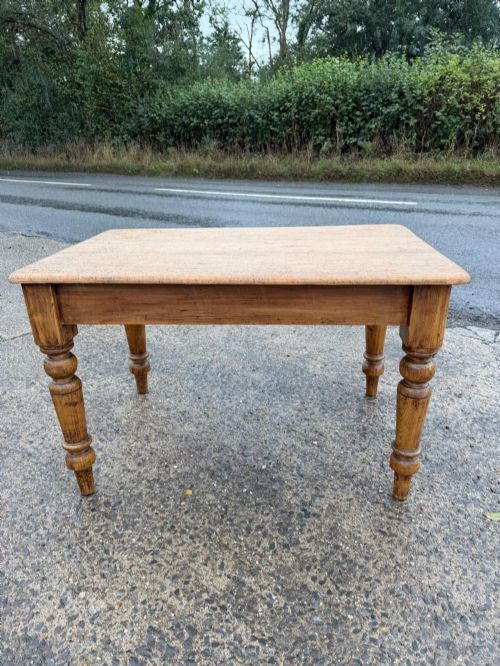
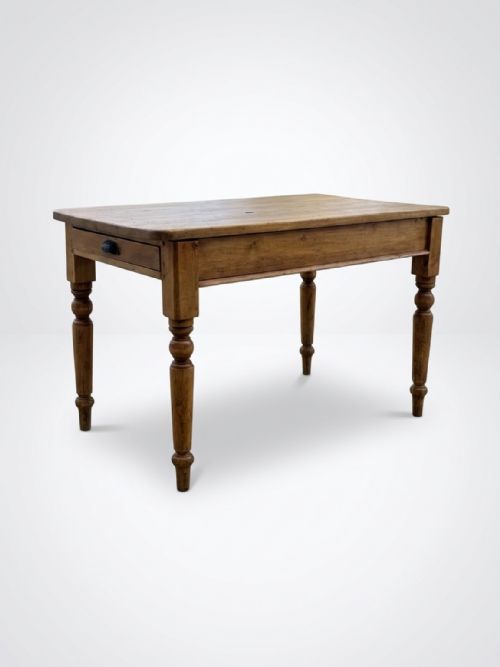
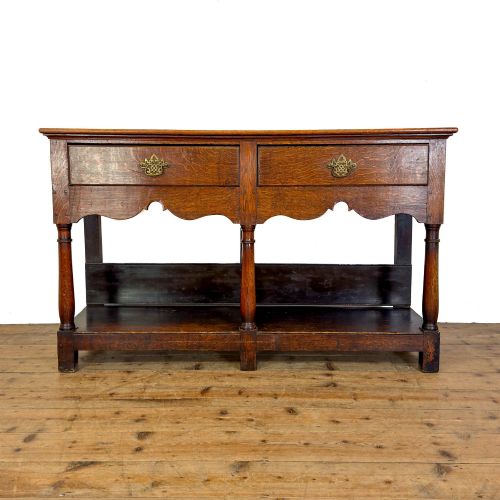
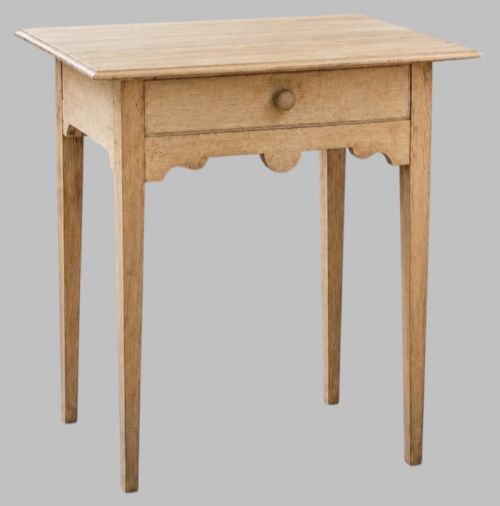
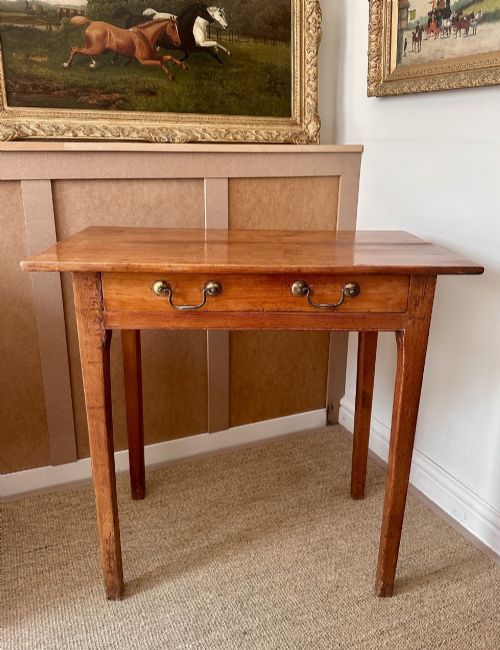
Rustic Country Hall Table
A rustic country hall table brings honest domestic utility to an entrance, grounded in solid timbers like oak and pine.
Rustic Country Hall Table
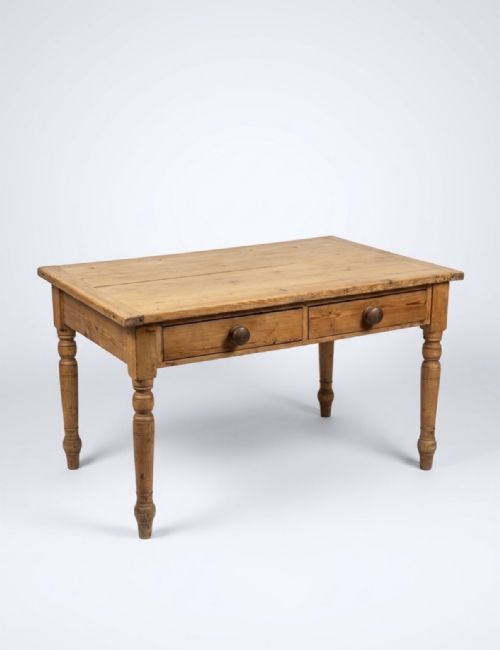
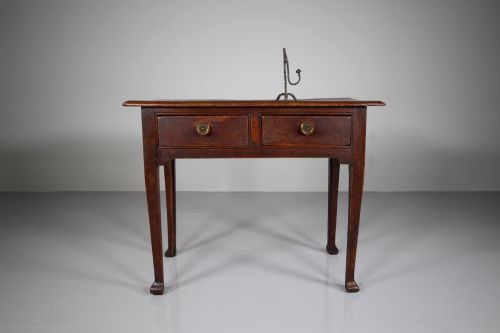
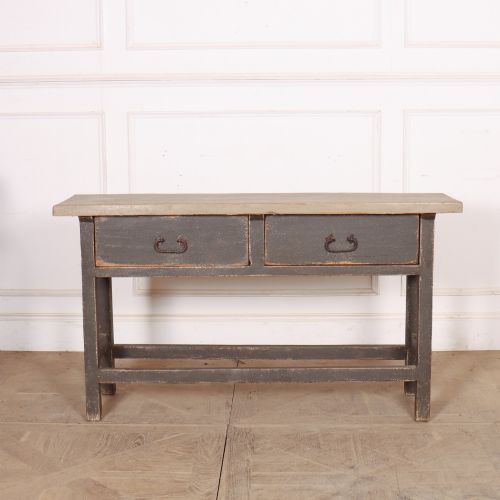
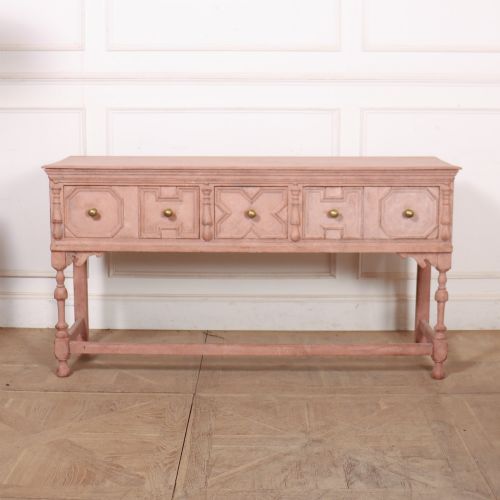
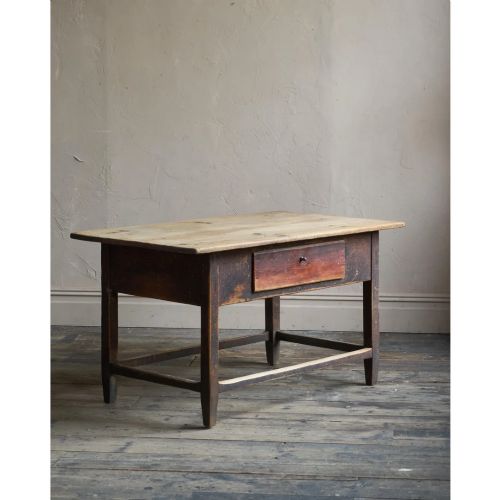
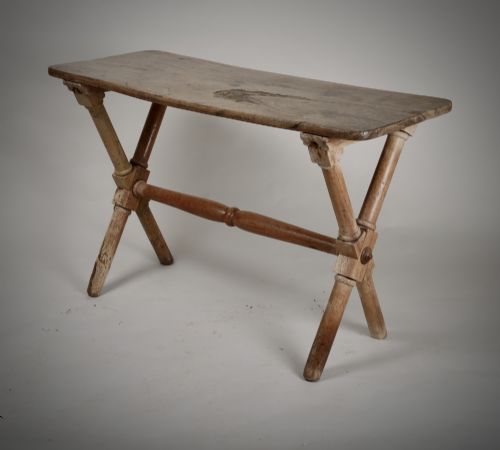
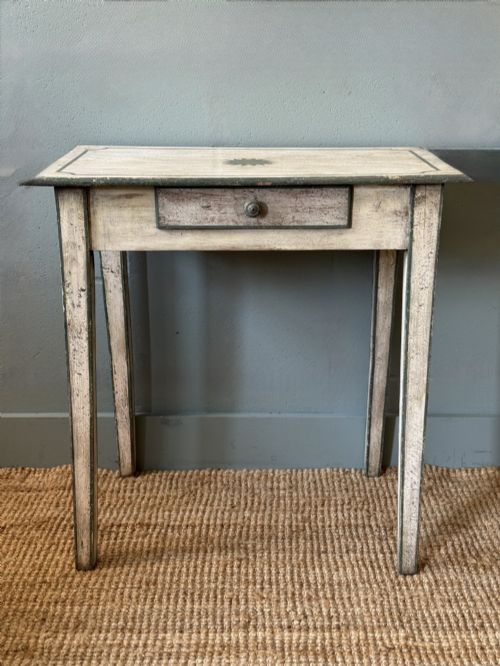
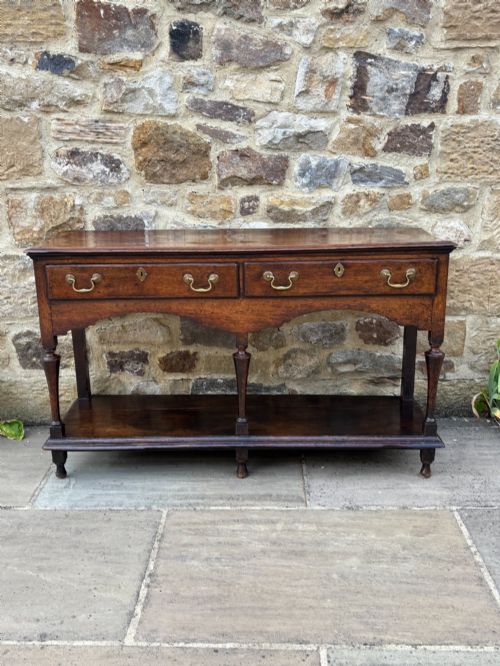
A rustic country hall table serves as a sturdy drop-off point in an entryway, taking the form of side tables, servers, and dresser bases found in the listings. These pieces span centuries from the seventeen-fifties through the Edwardian period, capturing domestic working furniture built for daily service.
Pine and oak dominate the offerings, appearing alongside painted wood surfaces and occasional fruitwood or elm. The examples range from simple nineteenth-century kitchen and writing tables to eighteenth-century oak plank top tables and Welsh dresser bases.
Regional variations emerge through English, French, Scandinavian, and Welsh origins, showing how local workshops adapted standard forms like the console table or side table using native timbers.
Materials and Construction
Carpenters constructed these tables primarily using solid pine, oak, elm, and fruitwood, often selecting thick planks for tops that could endure heavy daily tasks. Joinery relied on traditional methods to keep frames rigid, whilst drawer fronts incorporated single or multiple pulls fashioned from brass or wood.
Surface treatments vary between natural waxed timber, bleached oak finishes, and original painted or scumble-glazed coats. Iron and brass fittings occasionally reinforce structural joints or drawer construction on servers and work tables.
Object types include side tables, console tables, dresser bases, washstands, and organ benches.
Assessing Quality
Quality rests in the integrity of the timber selection and the retention of original surfaces, such as early paint or scumble work rather than stripped wood. Heavier oak planks and well-proportioned drawer friezes separate standard domestic tables from finer country house examples.
The sophistication of the joinery and the survival of original hardware indicate the level of craftsmanship invested in a piece. Tables retaining untouched patination command greater interest than those subjected to heavy modern restoration.
The Rustic Country Hall Table Glossary
- Dresser Base
- A low sideboard fitted with drawers, often featuring a potboard shelf beneath for storing heavy kitchen or hall items.
- Scumble
- A translucent or opaque glaze applied over a base coat to imitate the grain of more expensive woods or create textured decorative painted effects.
- Potboard
- An open slatted lower shelf built into the base of a table or dresser specifically designed to hold pots and heavy objects.
- Plank Top
- A table top constructed from broad, solid boards joined edge to edge rather than veneered panels.
- Frieze
- The horizontal structural band situated directly beneath the top surface of a table, frequently housing one or more drawers.
Rustic Country Hall Table: Frequently Asked Questions
What is a rustic country hall table used for?
These tables provide a stable surface in an entranceway for letters, keys, and lamps. Their drawers also offer practical storage for household sundries.
Historically, similar tables served multiple domestic duties in kitchens, parlours, and hallways before finding a permanent role in modern entryways.
How do I care for an antique pine table?
Maintain the wood by applying a quality beeswax polish occasionally to nourish the dry grain and protect the surface from moisture marks.
Keep these tables away from direct heat sources and strong sunlight to prevent the aged timber from splitting or warping.
How can I tell eighteenth-century oak from nineteenth-century pine?
Eighteenth-century oak exhibits a dense, heavy grain with distinct medullary rays and darker patination developed over centuries of use. Nineteenth-century pine is generally lighter in weight and colour, showing softer grain patterns and simpler structural joints.
Pine tables from the Victorian era frequently feature painted or scumble finishes, whereas earlier oak pieces highlight the natural timber.
Are these tables suitable for small hallways?
Many side tables and console tables built for country houses have shallow depths designed precisely for narrow corridors and restricted spaces.
Narrow proportions allow these pieces to sit flat against a wall without obstructing foot traffic in compact entryways.