
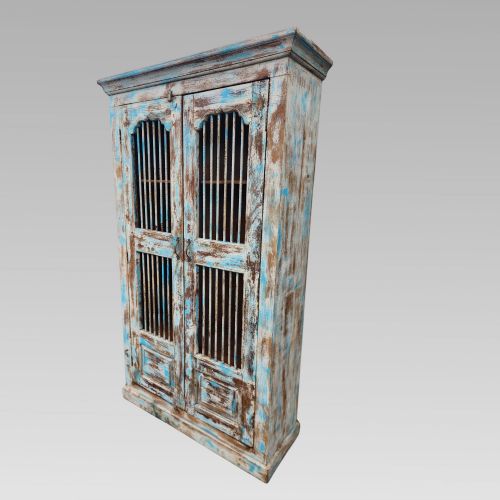
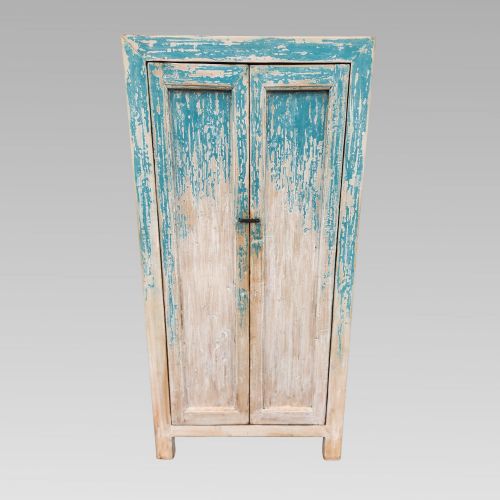
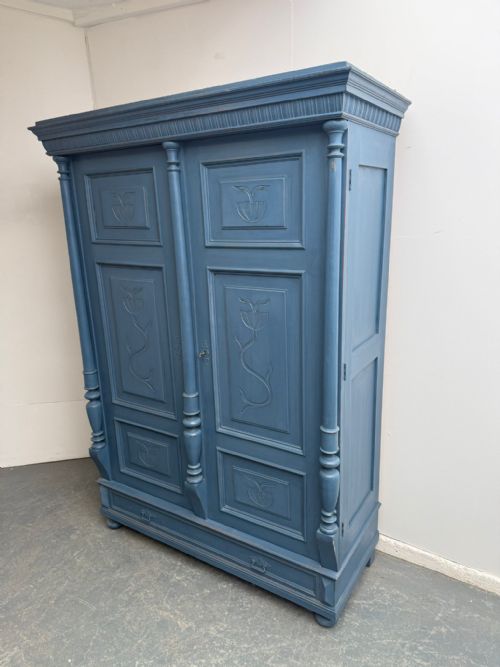


Rustic Blue Cupboard
A rustic blue cupboard brings honest utility and strong regional character into a room through painted pine and time-worn surfaces.
Rustic Blue Cupboard
A rustic blue cupboard encompasses practical storage furniture built from pine and other softwoods, typically finished in historical blue or green paint layers. The pieces span regional traditions including Scandinavian, English, Welsh, French and Indian workshops.
Buyers meet forms ranging from small wall cabinets and bedside cupboards to large kitchen dressers, linen cupboards and two-part storage units. Nineteenth-century examples dominate the selection alongside eighteenth-century formats and early twentieth-century kitchen pieces.
The aesthetic relies on the physical evidence of age, where original scraped paint or folk decoration defines the surface rather than high-style cabinet making.
Materials and construction methods
Makers utilised pine as the primary structural timber, constructing carcasses with pegged joints, plain panels and solid backboards suited to daily domestic service. Iron and brass hardware, from hinges to latches, secured doors and drawers across provincial workshops.
Surfaces received layers of lead-based or distemper paint, often subject to ragwork techniques, scumble glazing or subsequent over-painting that created deep patination over decades of use.
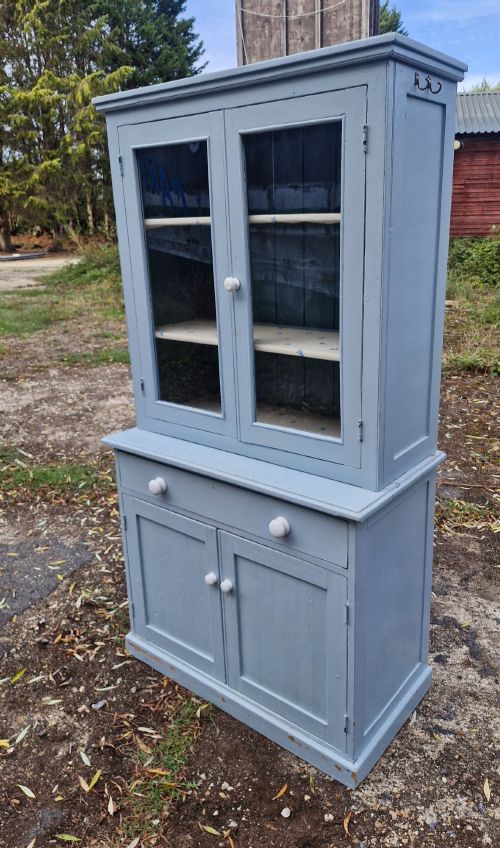
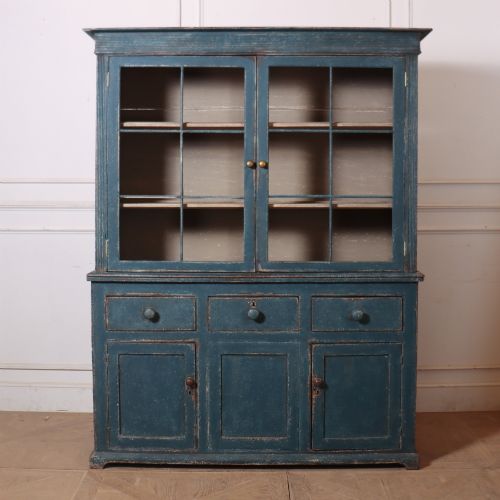
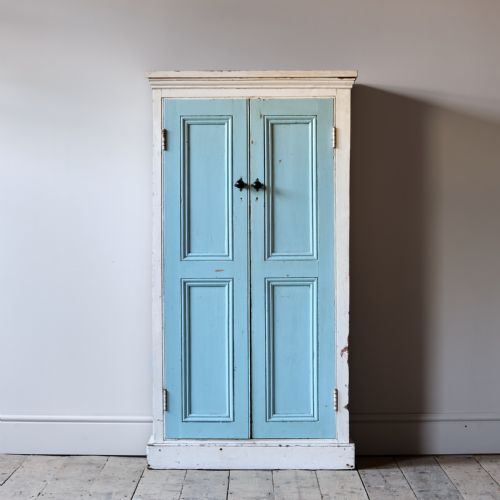
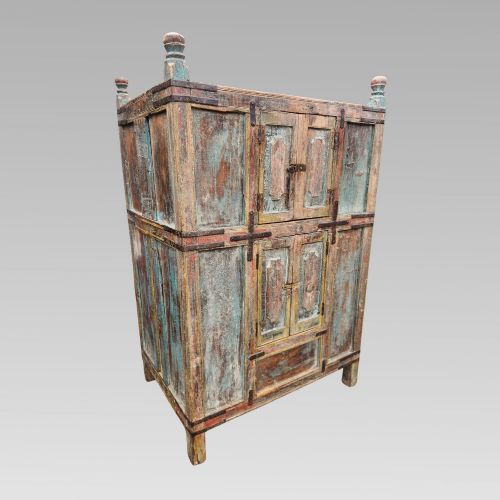
Listings feature pine constructed cupboards finished in painted wood, iron fittings and glass panels across eighteenth and nineteenth century periods.
Distinctions in quality and survival
The integrity of the original paint surface dictates much of the distinction between pieces, separating untouched scraped finishes from later decorative overhauls. Survival of original ironwork, backboards and interior shelving without major timber replacement maintains historical value.
Proportional harmony and regional vernacular detailing, such as carved panels or distinct cornice mouldings, separate standard utility furniture from more ambitious country workshop commissions.
The Rustic Blue Cupboard Glossary
- Pine
- A softwood timber commonly used in country furniture for its accessibility and workability. It forms the structural carcass of most regional cupboards.
- Ragwork paint
- A decorative paint finish applied by manipulating colour with rags or cloths while wet. This technique creates mottled, textured patterns on nineteenth-century Scandinavian surfaces.
- Almirah
- A freestanding cupboard or wardrobe used for storage. The term is associated with Indian regional cabinets.
- Washstand
- A low piece of furniture designed to hold washbasins and pitchers. Some examples incorporate cupboards or drawers below the top surface.
Rustic Blue Cupboard: Frequently Asked Questions
How do I spot original paint?
Original paint exhibits natural thinning, micro-cracking and wear patterns around handles and edges that match centuries of handling.
Under magnification, early mineral or milk paint layers show multiple subtle tones rather than uniform modern flat colour.
Where were these cupboards made?
These pieces originated in regional domestic workshops across Sweden, England, Wales, France, Austria and India.
Local tradesmen built them to serve specific storage needs in rural homes and farmhouses.
Are the shelves adjustable?
Most period country cupboards feature fixed internal shelving supported by traditional wooden cleats or fixed dado grooves.
Alterations to interiors occur frequently because these utilitarian pieces adapted to changing household storage requirements over generations.
How do I clean a painted surface?
Dust the surface gently with a dry, soft cloth to prevent abrasive particles from damaging fragile historic paint layers.
Avoid commercial cleaning agents, water or wax unless tested carefully on a hidden area of the timber.