



Swedish Country Armoire
A Swedish country armoire brings practical storage and calm, painted presence into a modern interior.
Swedish Country Armoire
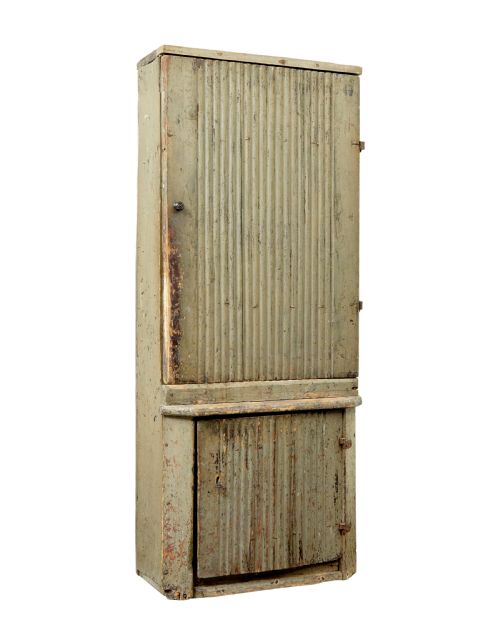
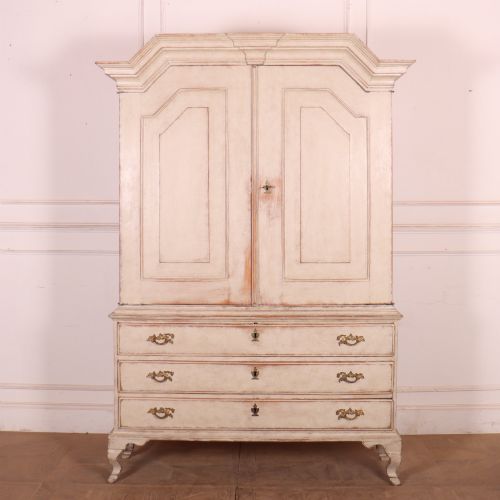
A swedish country armoire is a substantial storage piece designed to hold linen, clothing, or kitchen provisions in Scandinavian domestic interiors. These pieces take the form of cupboards and cabinets, often standing directly on the floor or occasionally raised on a stand.
The pieces seen here date from the eighteenth century and the nineteenth century, reflecting long traditions of regional cabinetmaking. Buyers encounter forms ranging from simple rustic pine cupboards to refined Gustavian kitchen cabinets and folk art pieces.
Linen cupboards form a significant part of the available selection, designed specifically to protect textiles in rural homes. Alongside these, corner cupboards and traditional ragwork pine pieces provide varied storage options for different domestic spaces.
Materials and construction methods
Construction relies primarily on native pine, chosen for its availability and workability by country joiners. Selected examples incorporate birch and satin birch, sometimes utilising birch veneer for specific decorative surfaces.
Surfaces are frequently finished with paint, including mineral paint and traditional hand-painted folk art decoration. Iron and brass fittings, such as hinges and locks, secure the doors and complete the functional construction.
Swedish Country Armoire Retail Price Guide 2026
Typical asking prices for swedish country armoire among the pieces listed under this phrase on Sellingantiques today, from the lower quarter to the upper quarter. They describe what is for sale here now, not the wider market.
Listings feature pieces spanning the eighteenth century and the nineteenth century, constructed primarily from pine with painted wood finishes.
Assessing quality in regional pieces
Quality rests in the balance between architectural proportion and the character of the surface treatment. Finer examples display deliberate Gustavian restraint, while folk art and ragwork pieces derive their merit from spirited surface patterns.
The integrity of the timber and the retention of original painted finishes distinguish standard storage from exceptional examples. Surviving hardware, such as original iron or brass handles and hinges, contributes significantly to the integrity of the piece.
The Swedish Country Armoire Glossary
- Gustavian
- The Swedish interpretation of neoclassical style, characterised by restrained symmetry, fluted columns, and pale painted finishes. This aesthetic developed during the reign of King Gustav III in the late eighteenth century.
- Ragwork
- A decorative painting technique where rags or cloths are used to apply pigment and create mottled or textured patterns on furniture surfaces. This finish appears frequently on nineteenth-century Scandinavian pine pieces.
- Pine
- A soft timber extensively used in Scandinavian country furniture for its accessibility and structural reliability. It forms the carcase of nearly all painted regional cupboards.
- Satin Birch
- A pale hardwood with a lustrous sheen, utilised for interior details or select veneers on finer Scandinavian pieces. It offers a distinct contrast to painted pine surfaces.
Swedish Country Armoire: Frequently Asked Questions
How do I date a Swedish painted cupboard?
Dating relies on stylistic clues, construction techniques, and the type of paint used across the piece. Eighteenth-century examples often show distinct joinery methods compared to mid-nineteenth-century items.
Examining the layers of paint and the wear on the timber helps confirm the period. Regional variations in Scandinavian folk art also guide the attribution to a specific century.
Are these cupboards suitable for modern clothing?
Many of these pieces function effectively as wardrobes or general storage cabinets in contemporary homes. Their internal depth accommodates hanging rails or shelving depending on the original layout.
Buyers should check the internal depth of linen cupboards and wardrobes before purchase. Adjustments to interiors are sometimes made to suit modern living requirements.
What is the difference between Gustavian and folk art styles?
Gustavian pieces follow neoclassical lines with balanced proportions and muted, elegant paint palettes. They reflect urban influences reaching into the Swedish countryside.
Folk art pieces embrace bolder painted decoration, including traditional ragwork and hand-painted motifs. These items express local rural traditions rather than formal classical design.
How should I care for a painted pine finish?
Preserving the surface requires keeping the furniture away from direct sunlight and excessive humidity. Gentle dusting with a dry cloth maintains the painted wood without stripping the historical patina.
Avoid harsh chemical cleaners that can damage mineral paint or historic layers. Natural wax is occasionally applied if the pine requires nourishment, depending on the specific finish.