


Blue Storage Armoire
A blue storage armoire brings regional colour and everyday utility into a room, offering generous interior shelving or hanging space behind painted doors.
Blue Storage Armoire
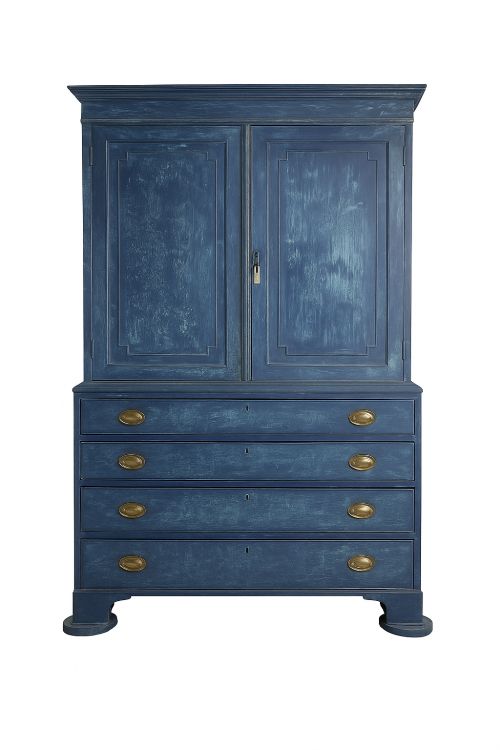
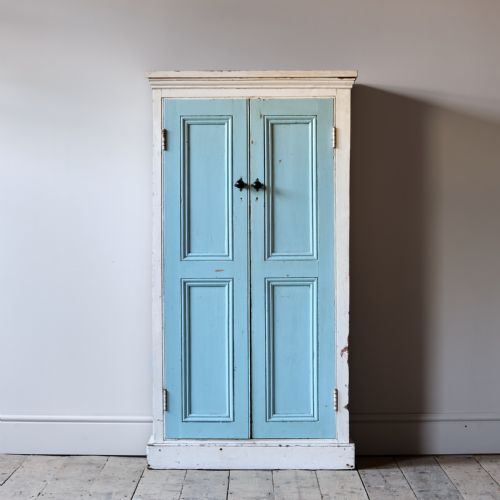
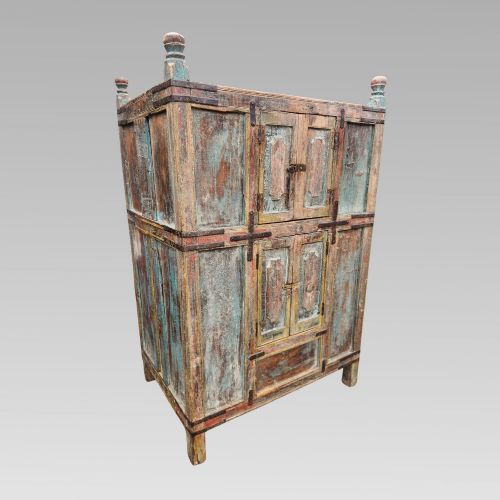
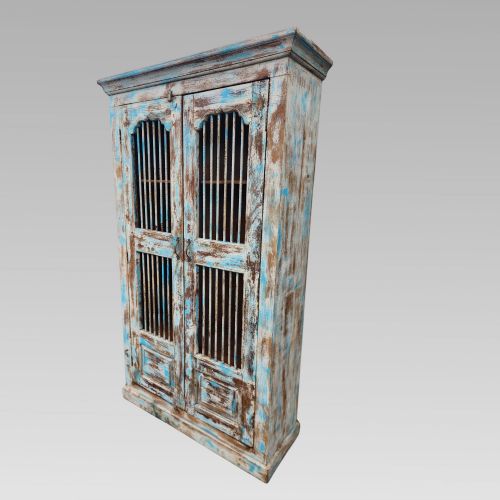
A blue storage armoire encompasses regional cupboards, linen presses, and wardrobes from periods spanning the eighteenth, nineteenth, and early twentieth centuries. These pieces originate from various traditions including Scandinavian country, Victorian country, Hungarian folk art, and rustic Indian workshops, bringing distinct painted surfaces into domestic spaces.
The most common examples on this page are nineteenth-century painted pine cupboards and wardrobes originating from Scandinavia, alongside traditional Indian almirahs and Hungarian hall wardrobes. They provide deep storage capacity through single or double doors, often elevated on stands or built with fitted interior shelves and linen compartments.
Materials and construction
Construction relies primarily on solid pine, teak, cedar, and assorted regional timbers assembled with traditional joinery methods suited to utilitarian furniture. Iron and brass hardware such as hinges, latches, and hooks secure the heavy timber doors and support internal shelving.
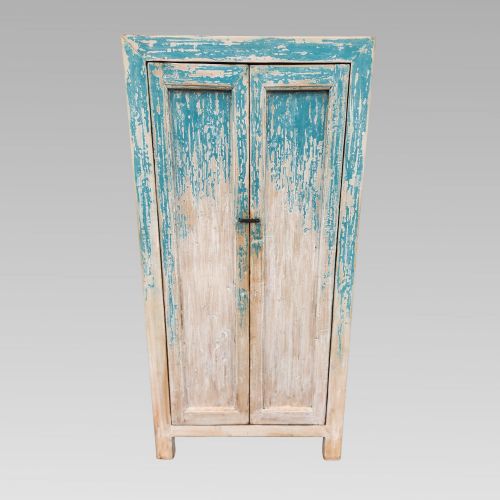
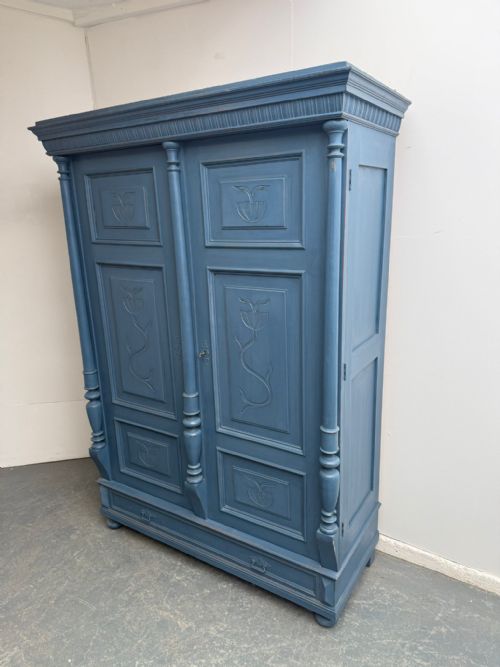
Surfaces are finished with layers of paint, often applied in folk art or country traditions that showcase patinated blue tones. Over generations, these painted finishes acquire natural wear and weathering that define the exterior character of each cabinet.
Styles span Scandinavian folk art, Victorian country, rustic Indian, and Hungarian traditions.
Assessment of quality
Quality rests in the preservation of the original painted surface and the structural integrity of the timber frame. Pieces that retain their early or original blue pigment without extensive modern repainting hold greater visual coherence.
Proportion and execution distinguish regional vernacular pieces, from finely moulded Swedish cornices to deeply carved Indian cupboard facades. The balance between practical storage capacity and decorative proportion determines the presence of each cabinet.
The Blue Storage Armoire Glossary
- Armoire
- A large freestanding cupboard or wardrobe used primarily for storing clothes and linens. They typically feature panelled double doors enclosing shelves or hanging space.
- Almirah
- A freestanding cupboard or cabinet originating from South Asia, frequently constructed from teak or cedar and finished with painted details.
- Linen press
- A tall piece of furniture designed specifically to store household linens and folded garments, combining upper cupboard doors with lower drawers or shelving.
- Folk art
- Decorative and utilitarian objects created within a specific regional cultural tradition, often characterised by hand-applied painted finishes and vernacular construction methods.
- Pine
- A softwood commonly utilised throughout European vernacular furniture for its workability and availability, frequently forming the primary carcase of painted country cupboards.
Blue Storage Armoire: Frequently Asked Questions
How do I clean a painted cupboard?
Dust the exterior gently with a dry microfibre cloth to remove surface particles.
Avoid chemical cleaning solutions or excessive moisture, which can damage historic painted finishes.
Are the shelves adjustable?
Most antique cupboards feature fixed internal shelving built into the original carcase.
Some larger wardrobes or armoires provide removable shelves or integrated hanging space for garments.
How do I date a painted armoire?
Examine the construction methods, timber types, and iron or brass hardware used in the hinges and locks.
Paint layering, patination, and regional stylistic details also help narrow down the period of manufacture.
Can these cabinets fit modern hangers?
Depth varies significantly across regional cupboards from the eighteenth and nineteenth centuries.
Many earlier pieces were built for folded linen rather than modern clothing hangers, so internal dimensions should be checked.