


Rust Wool Area Rug
A rust wool area rug brings warmth and grounded character to a room through centuries of traditional weaving.

Rust Wool Area Rug
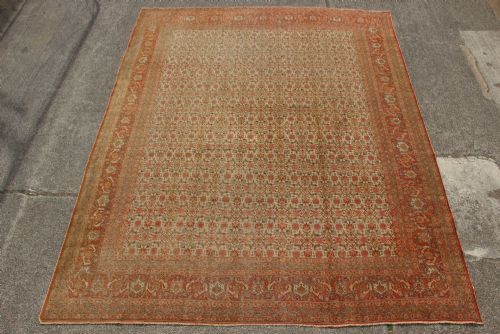
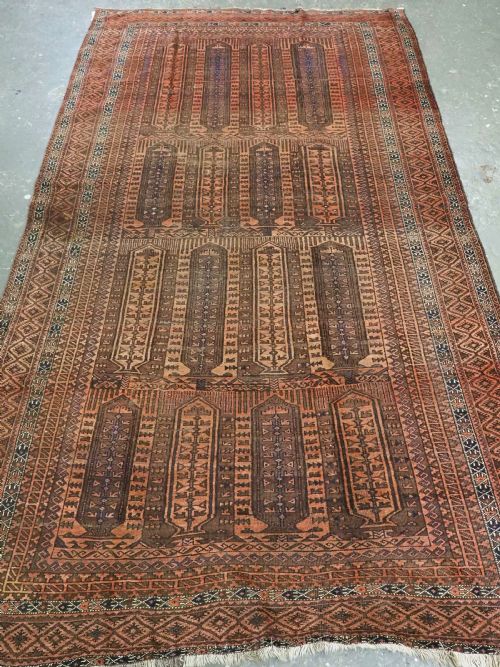
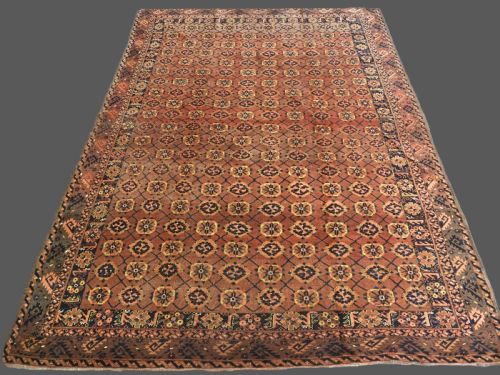
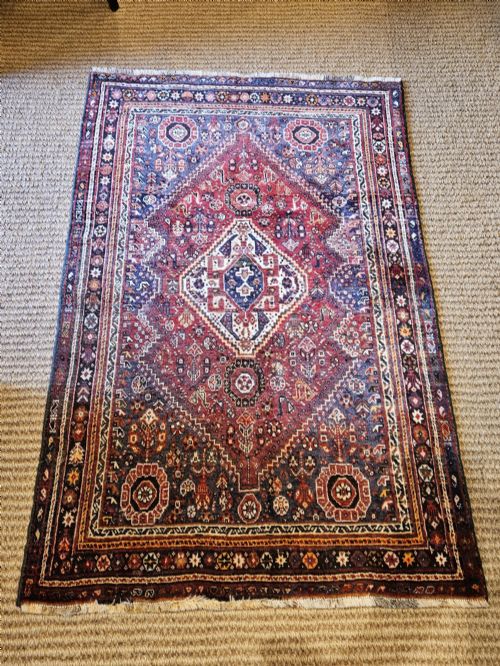
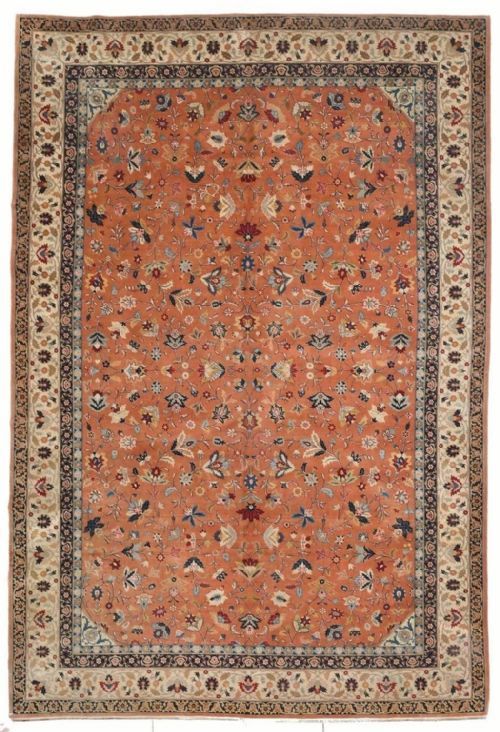
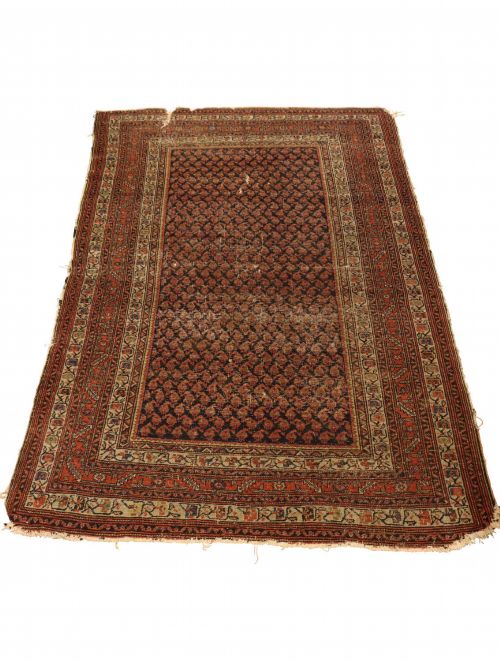
A rust wool area rug draws on traditional Persian, tribal, and Anatolian designs originating from village workshops and nomadic groups. These textiles encompass large carpets and smaller floor coverings spanning the late nineteenth and early twentieth centuries, featuring distinct regional motifs like boteh and geometric patterns.
The selections available here rely heavily on named weaving centres and tribal traditions such as Heriz, Tabriz, Baluch, and Turkmen. Buyers encounter both room-sized carpets and compact mats that reflect the specific dyeing and knotting customs of their districts of origin.
How they were made
Makers utilised natural dyes to achieve deep rust backgrounds and contrasting secondary colours, applied primarily to hand-spun wool foundations. Certain pieces incorporate goat hair or cotton within the structural warp and weft to ensure durability.
Weaving techniques range from fine, court-workshop knotting to coarse tribal weaves and flat-woven kilims. Artisans tied individual knots by hand or employed flat-weave structures, producing varying pile depths and surface textures.
Rust Wool Area Rug Retail Price Guide 2026
Typical asking prices for rust wool area rug among the pieces listed under this phrase on Sellingantiques today, from the lower quarter to the upper quarter. They describe what is for sale here now, not the wider market.
Nomadic weavers sometimes inserted intentional irregularities into tribal rugs to ward off the evil eye.
What varies in quality
Quality rests upon the fineness of the weave, the precision of the design execution, and the stability of the natural dyes. Superior examples demonstrate tight knot densities and crisp geometric or curvilinear outlines that maintain their structural integrity.
The complexity of the regional design and the condition of the wool pile dictate the standing of an individual piece. Finer rugs show sophisticated handling of traditional motifs such as the boteh or Mina Khani variant patterns.
The Rust Wool Area Rug Glossary
- Boteh
- A stylised almond or paisley motif representing a bush or floral spray. It appears frequently in traditional Persian and tribal weaving.
- Kilim
- A flat-woven carpet or rug produced without a pile. These pieces rely on interlocking weft threads to create sharp geometric patterns.
- Warp
- The vertical threads stretched tightly on the loom that form the foundational skeleton of a knotted carpet. Fringe typically extends from these parallel elements.
- Weft
- The horizontal threads passed across the warp strands to secure the knots in place. Multiple weft shots help determine the rigidity of the rug.
- Gul
- A medallion or floral octagonal motif used extensively in Turkmen and Baluch tribal carpets. Each clan often utilised distinctive variations.
Rust Wool Area Rug: Frequently Asked Questions
How do I clean a wool rug?
Maintenance requires gentle vacuuming without a rotating brush to protect the hand-knotted pile from excessive friction. Professional cleaning is necessary for deep washing to preserve the natural wool fibres and dyes.
Water exposure should remain minimal to prevent the foundation from shrinking or distorting. Prompt blotting of spills stops liquids from penetrating the dyed wool.
Where should I place a tribal rug?
These floor coverings suit low-to-medium traffic areas like studies, bedrooms, or quiet reception spaces where the wool pile receives moderate wear. Positioning them away from direct, harsh sunlight prevents the natural dyes from fading prematurely over time.
Underlay usage provides essential grip on smooth flooring and reduces friction against the back of the textile. This simple addition extends the working life of older woven structures.
How can I tell a Heriz carpet apart?
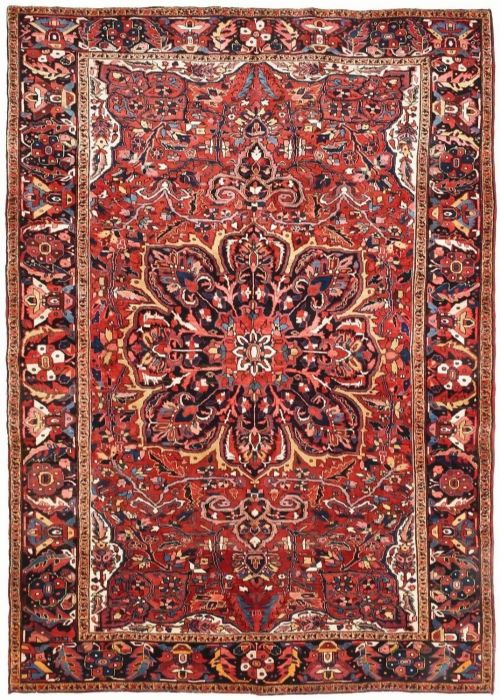
Heriz carpets display robust geometric medallions, often featuring prominent corner spandrels and bold rectilinear drawing styles. The colour palette frequently centres on rust and terracotta tones contrasted with deep blues and ivory.
These large formats were produced in north-western Persia and are known for heavy cotton foundations that give them a distinct, rigid weight. The weave is typically coarser than that of urban Tabriz carpets.
What is a Baluch rug?
Baluch rugs originate from nomadic and semi-nomadic groups inhabiting the borderlands of Persia and Afghanistan. They are generally smaller in scale and feature deep, sombre tones including dark rust, brown, and indigo.
Common design elements include geometric lattices, stylized tree motifs, and repeated gul patterns. The use of goat hair in the outer selvedges is a frequent characteristic of these tribal pieces.