
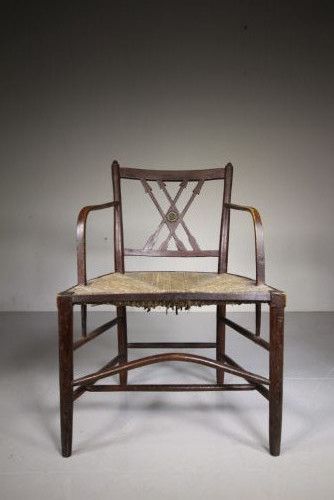

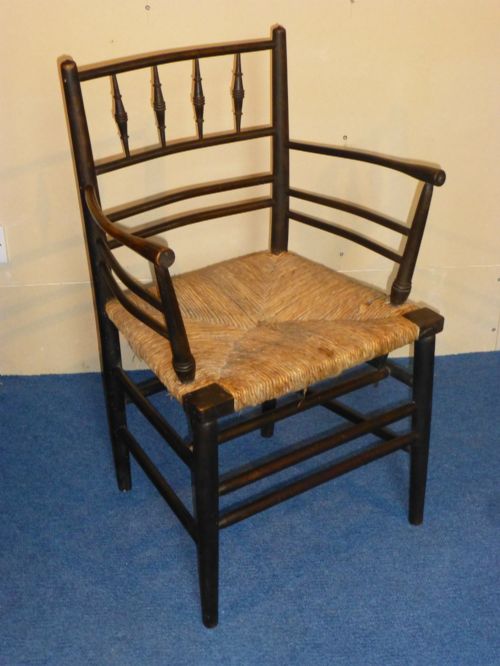
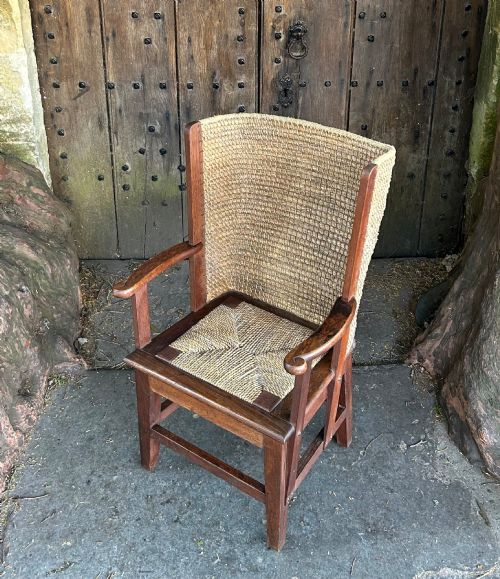
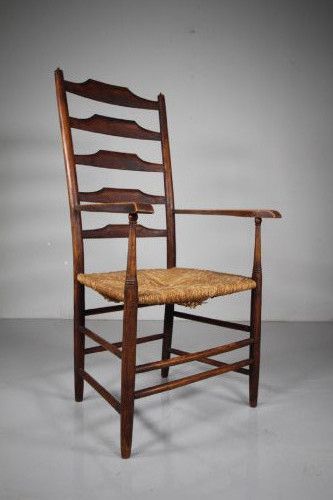

Rush Seated Armchair
When you search for a rush seated armchair, you are looking at country vernacular and Arts and Crafts seating built for comfort.
Rush Seated Armchair
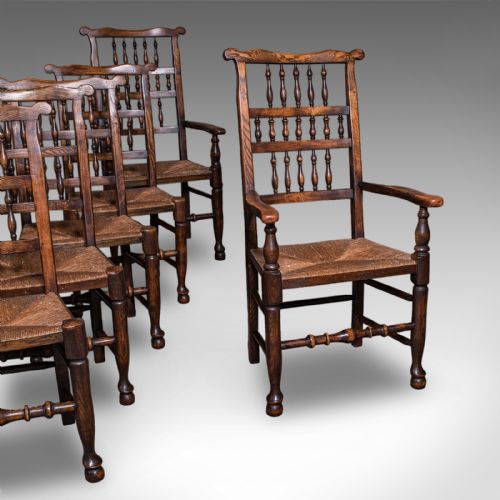
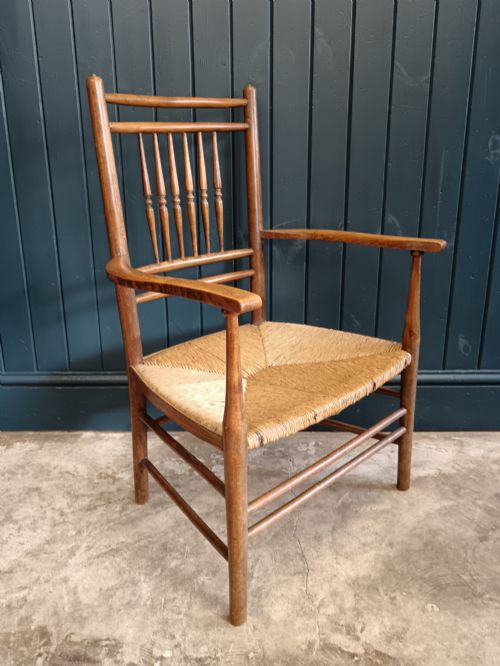
A rush seated armchair combines a woven rush seating pad with a timber frame designed for everyday sitting in country houses and town interiors. These chairs span periods from the eighteenth century through the Victorian era and into the Arts and Crafts movement.
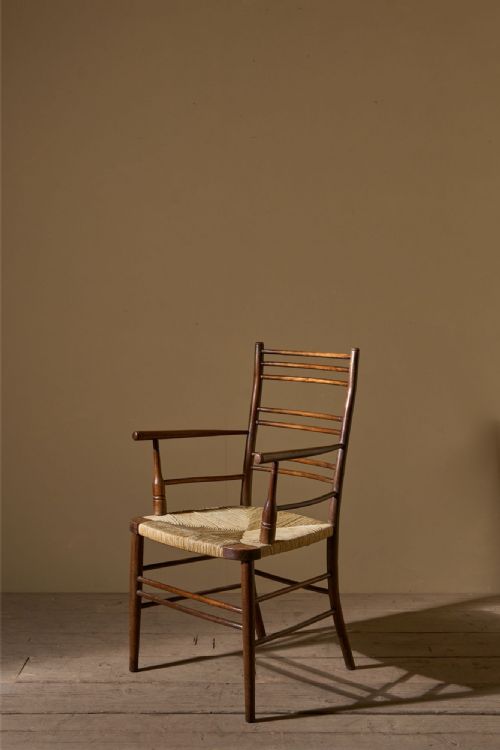
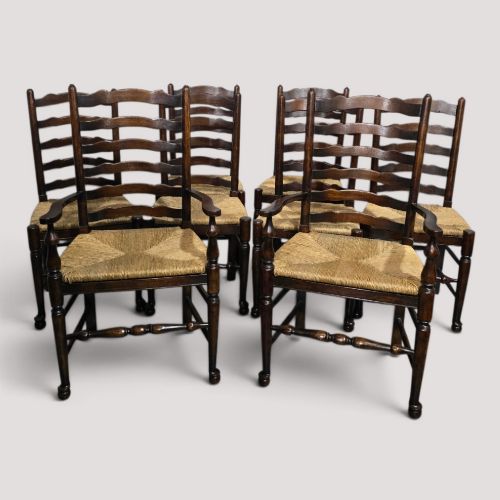
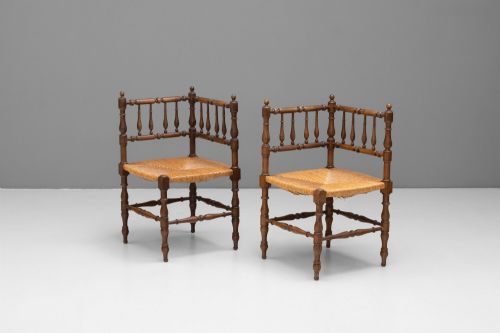
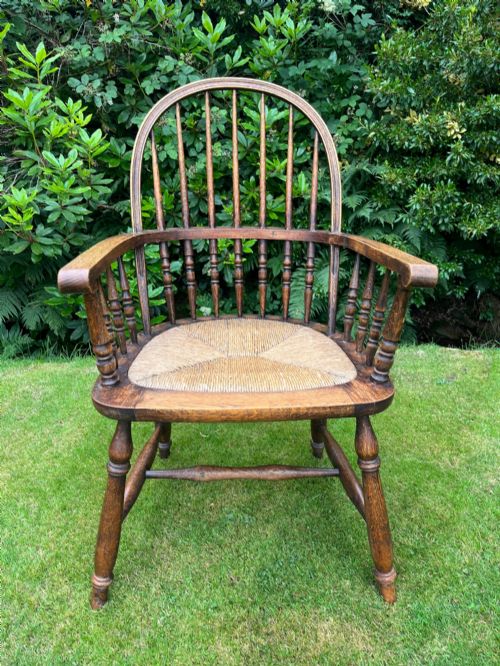
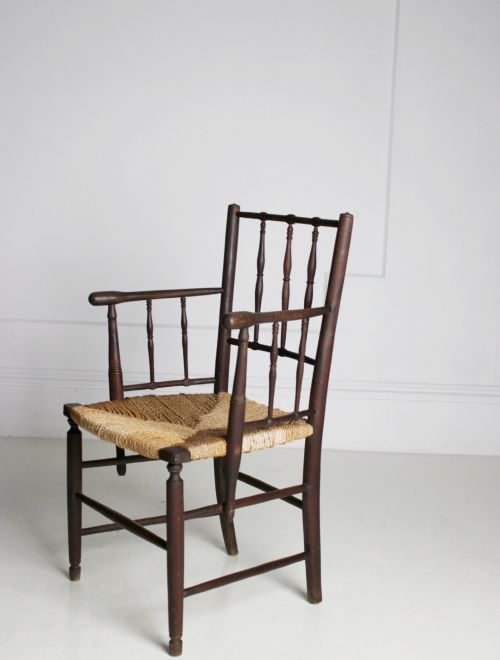
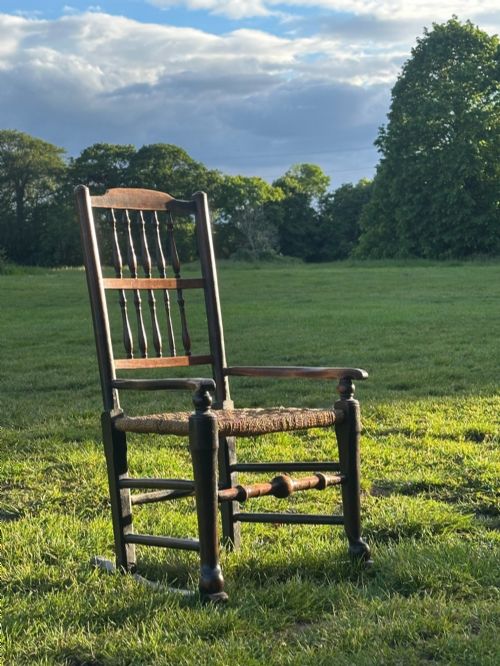
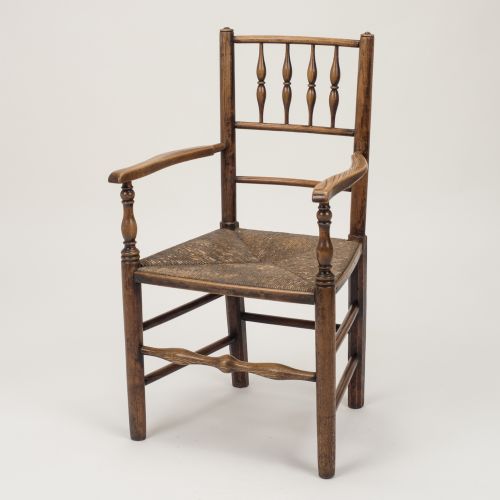
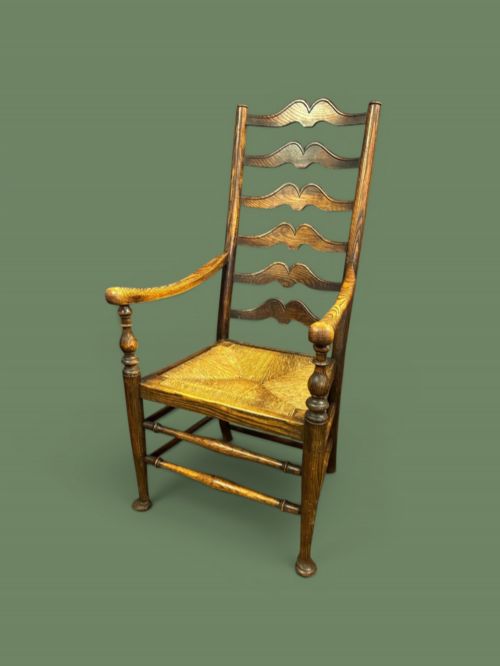
The form appears in various guises, including ladder backs, spindle backs, corner chairs, and low fireside models. Regional English types from Lancashire, Cheshire, and the West Country sit alongside designer pieces from makers associated with the Morris circle.
Makers utilised native hardwoods for the frames, pairing ash, elm, oak, beech, and fruitwood with twisted marsh rush. Buyers encounter everything from simple farmhouse carvers to sophisticated ebonised studio seating.
How they were made
Frames were constructed using traditional joinery, turning woods like ash, beech, and fruitwood on lathes while shaping elm and oak components by hand. Country chairmakers selected timbers for strength and flexibility, often combining multiple woods within a single piece.
Seats were hand-woven using dried marsh rush twisted into cords and laced tightly around the seat rails in a pattern that distributes weight evenly. Some frames received coats of original paint, stain, or ebonising to mimic more expensive ebony furniture.
Pairs of 'His' and 'Hers' ebonised armchairs allow nineteenth-century sitters to hold court in matching botanical style.
What varies in quality
Quality rests in the integrity of the timber frame and the tightness of the woven rush. Tighter, more uniform cord work and robust joinery distinguish superior pieces from utilitarian workshop output.
Provenance and attribution elevate certain chairs, particularly those linked to known designers or workshops such as Morris & Co. Original painted surfaces and untouched patination carry greater interest than stripped or heavily restored timber.
Morris & Co·Philip Webb·Philip Clissett·E W Godwin·Dicon Nance
The Rush Seated Armchair Glossary
- Rush
- Dried marsh plant twisted into cord for weaving chair seats. It provides a resilient and natural surface.
- Ladderback
- A chair back featuring horizontal slats arranged like the rungs of a ladder. This form is common in English country vernacular seating.
- Spindleback
- A chair back constructed with numerous thin turned wooden rods. These uprights offer flexible support to the sitter.
- Carver
- An armchair designed to match a set of dining chairs, usually placed at the head of a table. These pieces share stylistic details with their smaller side chair counterparts.
- Ebonised
- Wood treated with a dark stain or finish to imitate ebony. This technique was popular in Victorian and Arts and Crafts furniture.
Rush Seated Armchair: Frequently Asked Questions
How do I care for a rush seat?
Keep rush seated armchairs away from damp environments and direct heat sources to prevent the dried plant material from becoming brittle. Clean the weave gently with a dry brush and avoid soaking the seat with water.
Applying occasional light furniture wax to the wooden frame preserves the finish without affecting the woven cord. Professional re-rushers can repair or replace worn sections when the natural fibres eventually give way.
Are these chairs comfortable for daily use?
Most rush seated armchairs were built for domestic living and offer supportive seating through angled backs and woven pads. Low fireside models and wide carvers provide relaxed seating positions.
Adding a loose squab cushion can increase comfort during extended periods of sitting. The natural give of the woven rush moulds slightly to the user over time.
How do I distinguish regional styles?
Regional pieces often display characteristic turning patterns and timber choices tied to specific English counties. Lancashire and Cheshire chairs frequently feature multiple arched ladder rungs and painted ash frames.
Other variations include West Country chairs built from local elm and fruitwood. Comparing the turning details and wood species helps identify the probable workshop origin.
What is an Arts and Crafts Sussex chair?
The Sussex chair is a lightweight, ebonised or stained beech armchair inspired by traditional country seating. These designs gained popularity through the Morris circle in the late nineteenth century.
They feature spindle backs and woven rush seats suitable for both dining and fireside use. Examples often carry attribution to specific designers within that movement.