


Eighteenth Century Carvers
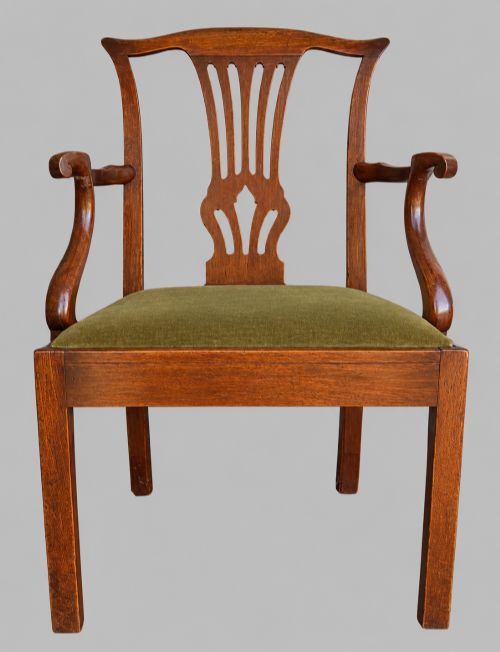
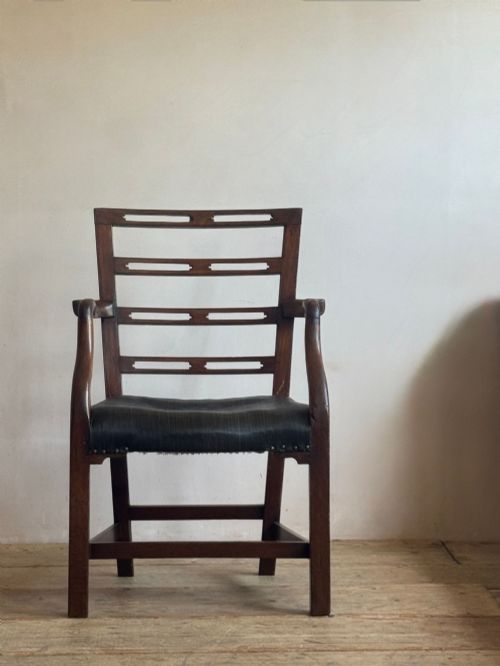
Eighteenth century carvers are sturdy seating pieces with arms, shaped for the heads of dining tables or desks, built from woods like mahogany, elm, and fruitwood.
Eighteenth Century Carvers
Eighteenth century carvers comprise armed dining chairs and elbow chairs designed for the head of a table or use at a desk. The examples found here span the Georgian period alongside later 19th century interpretations in the Georgian Chippendale style, English country traditions, and Italian Rococo designs.
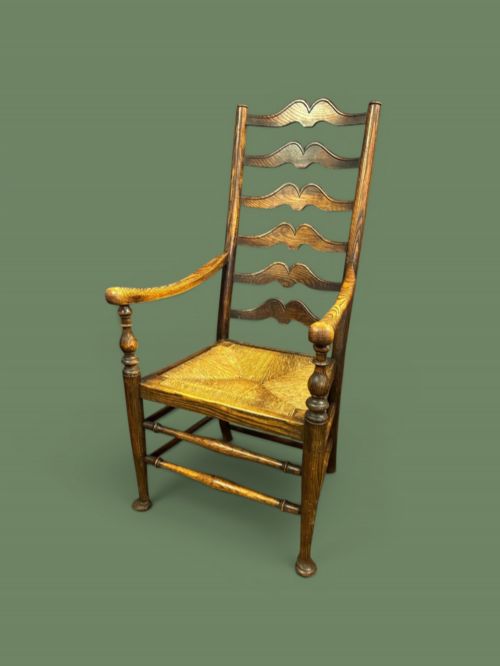
Most pieces met on this page are constructed from mahogany or sturdy timbers like elm and fruitwood, often featuring rushed, fabric, velvet, or leather seats. Forms range from ladder-back armchairs to large scale gilt seating and expansive dining chair suites including both carvers and slipper chairs.
How they were made
Makers utilised solid timbers such as mahogany, elm, beech, and fruitwood, shaping frames through traditional joinery suited to heavy daily use. Seats were frequently fitted with rush, or upholstered in fabric, velvet, and leather.
Decorative surface treatments included silver leaf or silver gilt applications, alongside natural polishing processes that developed patination over generations of use.
What varies in quality
The standard of timber selection and the crispness of joinery separate ordinary seating from superior examples. Finishes range from simple oiled surfaces to elaborate silver leaf applications on grand Italian frames.
Scale and proportion distinguish country vernacular pieces from formal urban furniture. Authenticity of the timber and the depth of patination developed over time dictate the standing of each piece.
The Eighteenth Century Carvers Glossary
- Carver
- An armchair designed for the head of a dining table, traditionally larger than the matching side chairs.
- Elbow chair
- An armchair featuring open sides with rests for the arms, often used at a desk or table.
- Ladder-back
- A chair back constructed with a series of horizontal slats resembling the rungs of a ladder.
- Patination
- The surface sheen and colour acquired by wood and leather through age, handling, and polishing.
- Rush
- Dried marsh grass twisted into cords and woven tightly to form a durable, textured seat.
Eighteenth Century Carvers: Frequently Asked Questions
What is an eighteenth century carver?
An eighteenth century carver is an armed chair traditionally placed at the head or foot of a dining table. These pieces provided extra presence and comfort for the host.
They frequently match a larger set of dining chairs while offering distinct armrests for support.
Where were carvers used?
Carvers were positioned primarily around large dining tables for the head of the household or honoured guests. They also served as standalone desk chairs in private studies.
Their sturdy construction suited daily use in both formal townhouses and country homes.
What woods are used?
Makers utilised dense hardwoods like mahogany for formal urban seating. Country workshops favoured native timbers including elm, beech, and fruitwood.
Silver leaf or silver gilt finishes appear on more extravagant continental European frames.
How do I live with them?
These chairs function well at modern dining tables or as accent pieces in living spaces and hallways. Regular dusting and occasional feeding of leather or wood maintain their condition.
Avoid placing them in direct sunlight or near heat sources to protect the historic timber.
Are they all from the 1700s?
While some examples date directly to the 18th century, others are later 19th century interpretations built in Georgian or Chippendale styles. Craftspeople continued producing these traditional forms long after the initial period.
Checking construction details and materials helps identify the actual period of manufacture.