


Continental Carved Armchairs
Continental carved armchairs bring centuries of European craft into a room, offering grand forms and deep historic character that elevate any seating arrangement.
Continental Carved Armchairs
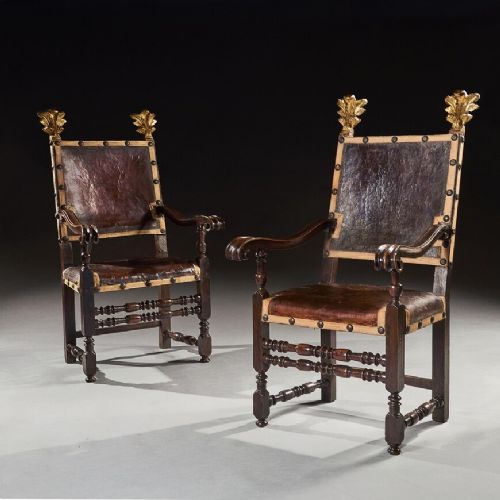
Continental carved armchairs encompass seating pieces originating from across Europe, featuring distinct regional carving traditions and robust wooden frames. When exploring continental carved armchairs, buyers frequently encounter 17th century Italian Baroque examples alongside later 18th century and Victorian iterations.
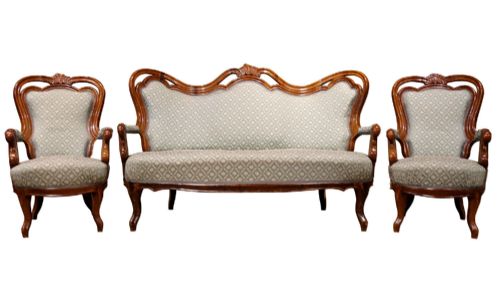
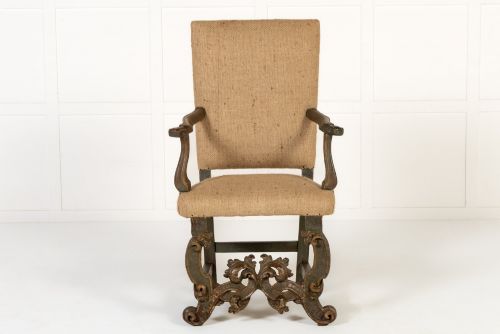
The selection ranges from individual walnut armchairs to larger salon suites, incorporating styles such as Italian Rococo, Renaissance Revival, and Neoclassical Revival. Forms vary from high-backed open armchairs to specialised shapes like the caquetoire.
Makers utilised various traditional woods, often pairing the primary structure with applied gilding, paint, or upholstery. These pieces serve as both functional seating and prominent decorative focal points.
How they were made
Makers constructed these frames predominantly in solid walnut, beech, and general wood, shaping the structural elements through traditional joinery. Artisans then applied intricate hand-carving directly into the timber to create elaborate crest rails, arms, and legs.
Finishing techniques involved the application of gold leaf, silver gilt, or paint directly onto the wood surface. Upholstery methods incorporated materials such as leather, fabric, hessian, and other textiles secured to the frame.
Listings span multiple centuries, ranging from seventeenth-century Italian Baroque frames to nineteenth-century Victorian revivals.
What varies in quality
The sophistication of the hand-carved detail dictates much of the distinction between standard and superior examples, with deeper and more fluid relief work marking finer execution. The choice of finish, such as genuine gold leaf or parcel-gilt highlights on walnut, elevates the visual presence of the piece.
Structural integrity depends on the preservation of the original timber frame and the quality of the joinery beneath any surface gilding or paint. Cohesion within pairs or larger salon suites also influences the overall standing of the seating.
The Continental Carved Armchairs Glossary
- Caquetoire
- A high-backed conversation chair with a tapered seat, designed to allow women to converse easily while wearing wide farthingale skirts. This form appears in 19th-century interpretations.
- Parcel-Gilt
- A decorative treatment where specific carved portions of a wooden object receive a thin layer of gold leaf while the underlying material remains visible. This technique highlights particular details of the carving.
- Rococo Revival
- A 19th-century design movement that revives the asymmetrical C-scrolls, floral motifs, and ornate curves of the 18th-century Rococo period. It appears frequently on salon suites and armchairs.
- Salon Suite
- A matched set of seating furniture, typically comprising a settee and multiple armchairs designed for formal reception rooms. These suites share uniform stylistic details and wood finishes.
Continental Carved Armchairs: Frequently Asked Questions
How do I date an antique armchair?
Dating relies on examining the wood species, joinery methods, and the specific carving styles characteristic of periods like the 17th century or the Victorian era. Stylistic revivals often emulate earlier epochs, so construction details help clarify the actual age.
Secondary indicators include the wear patterns on the wood and the type of finish applied to the frame. Comparing the piece to documented examples from the same region provides further confirmation.
Where were these armchairs used historically?
These seating pieces occupied the principal rooms of European homes, including formal salons, reception halls, and grand parlours. They served both as functional seats for guests and as displays of status.
Grander versions with gilt finishes were placed in reception spaces to impress visitors, while simpler wooden forms served private chambers.
How should I care for antique wood?
Maintain a stable indoor environment away from direct sunlight and dramatic humidity shifts to protect the antique wood and any applied gilding. Dust the carved surfaces gently with a dry, soft cloth.
Avoid using modern liquid polishes or harsh chemical cleaners that might strip historic finishes or damage exposed leather and fabric upholstery.
Are these chairs comfortable for daily use?
Historic armchairs were built with different ergonomic priorities than modern seating, often featuring upright backs and firm foundational padding. Their suitability for daily lounging depends on the specific era and internal upholstery construction.
Many collectors balance their historical integrity with careful daily placement, reserving them for lighter use in reception spaces.