


Carved Walnut Sofa Set
A carved walnut sofa set brings formal Victorian and Continental elegance into a room with matching settees and chairs.
Carved Walnut Sofa Set
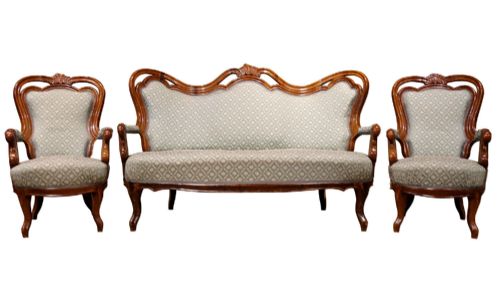
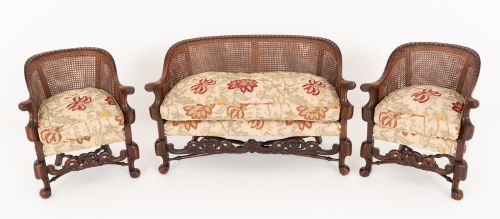
When you search for a carved walnut sofa set, you encounter matching groups of Victorian and Continental drawing room furniture designed for formal entertaining. These suites typically include a central settee or small sofa paired with armchairs and side chairs, sharing identical timber frames and upholstery.
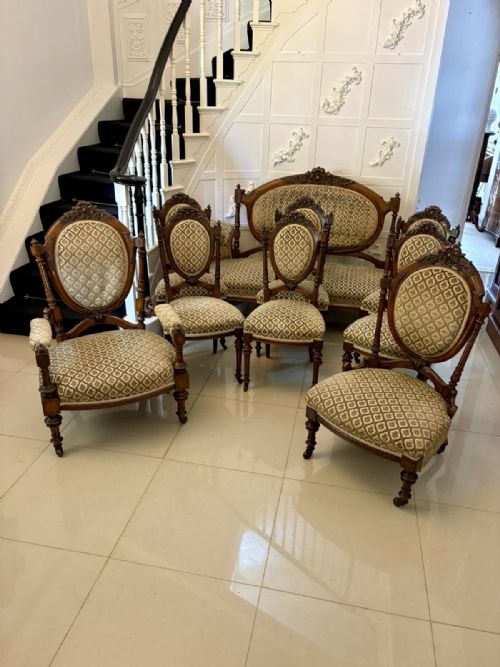
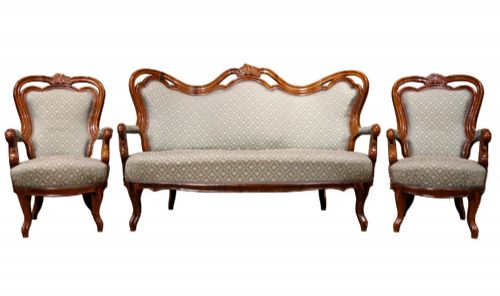
The most common versions on this page are three-piece salon suites featuring a settee and two matching chairs, alongside larger Victorian multi-piece drawing room settings. They span from the mid-nineteenth century through to the early twentieth century, incorporating revival aesthetics like Rococo, Carolean and Empire styles.
Originating in grand nineteenth-century parlours and salons, these suites served to display wealth and taste through coordinated seating arrangements. Today, they function as striking focal points in large living spaces, offering historic craftsmanship combined with upholstered comfort.
What varies in quality
The distinction between standard and exceptional suites lies primarily in the depth and crispness of the wood carving on the walnut frames. Superior pieces exhibit deeply undercut, sculptural foliage and finely detailed motifs executed by skilled hands rather than mechanical replication.
Completeness and scale also govern the hierarchy of these seating groups, where larger, unified suites spanning seven to eleven pieces command greater presence than basic three-piece configurations. The integration of high-grade textiles like velvet or damask, matching across every single armchair and settee, elevates the overall execution.
Carved Walnut Sofa Set Retail Price Guide 2026
Typical asking prices for carved walnut sofa set among the pieces listed under this phrase on Sellingantiques today, from the lower quarter to the upper quarter. They describe what is for sale here now, not the wider market.
Some grand Victorian suites included matching footstools, ensuring that even the most formal Victorian parlour kept a place to rest tired feet.
The Carved Walnut Sofa Set Glossary
- Salon Suite
- A matched group of seating furniture designed for a formal drawing room or parlour, typically comprising a settee and matching chairs.
- Carolean Style
- A seventeenth-century revival aesthetic characterised by rich carving, scrolling foliage, and upright proportions popular in later Victorian furniture.
- Cameo Back
- An upholstered chair or sofa back enclosed within a carved wooden oval frame resembling a cameo brooch.
- Bergere Suite
- A matched set of upholstered seating featuring enclosed wooden arms and woven cane or padded panels.
- Button Back
- An upholstery technique where depressions are formed in the padding by stitching buttons through to the frame in a diamond pattern.
Carved Walnut Sofa Set: Frequently Asked Questions
What is a carved walnut sofa set?
A carved walnut sofa set is a matched collection of nineteenth or early twentieth-century drawing room furniture consisting of a settee and accompanying armchairs or side chairs.
These suites share uniform timber frames and upholstery styles, designed specifically to furnish formal Victorian and Continental parlours with coordinated elegance.
How were these suites used?
Historically, these seating groups occupied the principal reception rooms of grand homes, serving as the social centre for entertaining guests and displaying domestic refinement.
Today, they function both as usable seating and historic decorative art, anchoring traditional or eclectic interior schemes with period character.
How do I live with one?
Living with a historic walnut suite involves balancing daily use with the preservation of nineteenth-century frames and period upholstery fabrics. Placing them out of direct sunlight protects the timber finish and textile colours from fading.
Regular, gentle dusting of the carved walnut woodwork and professional cleaning for the velvet or damask upholstery ensures these pieces remain in good condition.
How do I tell periods apart?
Distinguishing periods relies on observing the decorative vocabulary carved into the walnut frames, which shifts from mid-nineteenth-century Victorian Rococo curves to later Empire Revival symmetry.
Earlier Victorian pieces often display exuberant floral crests and serpentine rails, whereas twentieth-century revival interpretations can adopt more restrained neoclassical proportions.