


Baroque Gilt Armchairs
Baroque gilt armchairs bring grand presence to a room, combining carved timber frames with rich gold surfaces and upholstered seats.
Baroque Gilt Armchairs
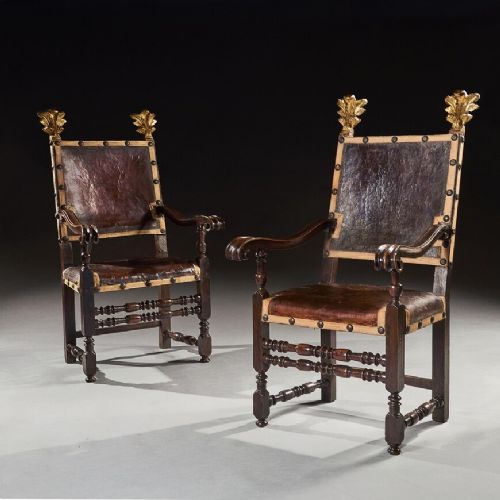
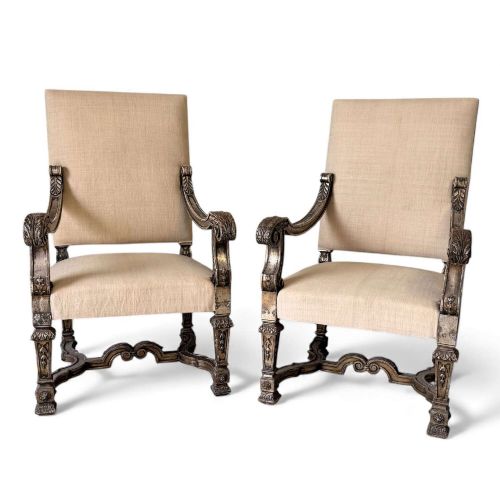
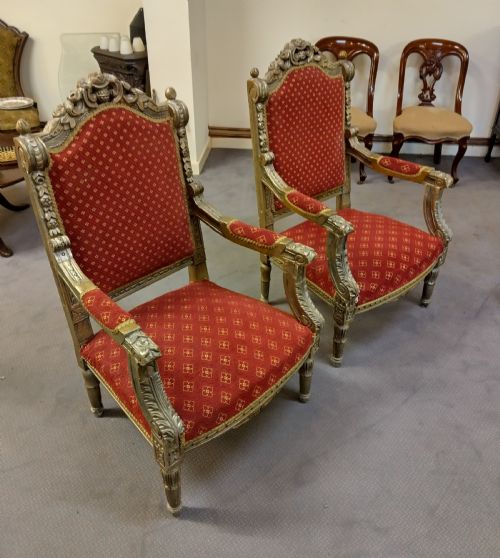
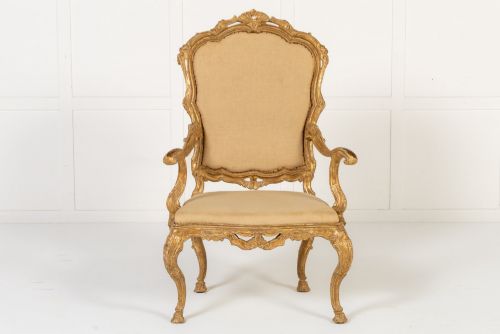
Baroque gilt armchairs are substantial seating pieces defined by ornate wooden frames finished in gold leaf, parcel-gilt, or gilt paint. When you search for baroque gilt armchairs, you encounter forms ranging from 17th-century Italian walnut originals to later revival interpretations from the 19th and early 20th centuries.
Stylistic influences stretch across Italian baroque, French baroque revival, Italian rococo, and even Queen Anne style elements. Most examples date from the 17th, 18th, and 19th centuries, supplemented by Edwardian and early 20th-century revivals.
How they were made
Makers fashioned the robust structural frames of baroque gilt armchairs from timber such as walnut and general hardwoods, shaped with deep hand carvings. Artisans then applied gold leaf or gilt finishes directly onto the prepared wooden surfaces to achieve a luminous appearance.
Upholstery completed the chairs, incorporating traditional materials like leather, linen, and brass tacking to secure the coverings to the timber frames. Carved details on the arms, legs, and rails required skilled hand work rather than mass production methods.
Folding wooden slat chairs appear alongside grand throne armchairs, proving that even Renaissance-style folding seats wanted to wear gold.
What varies in quality
Quality in baroque gilt armchairs rests upon the depth and crispness of the hand carvings on the wooden frame. Superior examples display fluid, deeply undercut foliage and figures rather than shallow, mechanical moulding.
The integrity of the gilding and the underlying timber condition dictate the visual success of the piece. Authentic period surfaces that have aged naturally carry a depth superior to later, heavy-handed refinishing.
The Baroque Gilt Armchairs Glossary
- Giltwood
- Wood that has been decorated with gold leaf or powder applied over a prepared gesso ground. This finish provides the characteristic metallic sheen seen on formal period furniture.
- Parcel-Gilt
- A decorating technique where only specific portions of the wooden object are gilded, leaving other areas such as natural walnut exposed for contrast.
- Baroque Revival
- A nineteenth-century design movement that copied the dramatic curves, heavy proportions, and rich ornamentation of the seventeenth-century baroque style.
- Throne Armchair
- An exceptionally tall and imposing seat designed to confer status upon the sitter, often featuring high backs and substantial armrests.
- Savonarola chair
- A type of folding chair formed from multiple intersecting wooden slats, named after the famous fifteenth-century Florentine friar.
Baroque Gilt Armchairs: Frequently Asked Questions
How do I date a baroque gilt armchair?
Dating relies on examining the construction methods of the timber frame, tool marks, and the wear patterns on the gold leaf. Earlier pieces from the seventeenth and eighteenth centuries show hand-cut joinery and traditional preparation layers beneath the gilding.
Revival pieces from the nineteenth and early twentieth centuries often employ machine-sawn timber elements alongside stylistic mixtures like Italian rococo or Renaissance revival details. Comparing the carving crispness with documented examples helps confirm the period.
Were these chairs used at dining tables?
These imposing seats were designed primarily for reception rooms, halls, and formal parlours rather than everyday dining use. Their substantial scale and delicate gilded surfaces suited stationary placement against walls or within formal seating arrangements.
Occupants used them to project status and authority during meetings or social gatherings. The addition of leather or textile upholstery provided comfort for formal audiences.
How do I care for giltwood furniture?
Giltwood requires protection from direct sunlight, high humidity, and rapid temperature changes that can crack the delicate gesso and gold leaf layers. Dusting should be done very gently with a dry, soft brush rather than a cloth that might snag on carved edges.
Avoid using liquid cleaners, polishes, or chemical solvents on the gilded surfaces. Professional conservation is recommended for any structural repairs or flaking finish.
What is the difference between baroque and rococo chairs?
Baroque chairs emphasise symmetry, heavy proportions, and architectural grandeur with bold, muscular carvings. The forms feel solid and grounded, utilising straight structural lines softened by prominent foliage and scrolls.
rococo chairs introduce asymmetrical designs, C-scrolls, and lighter, more playful S-curves. The carving becomes more fluid and delicate, moving away from the strict symmetry of the earlier baroque aesthetic.