
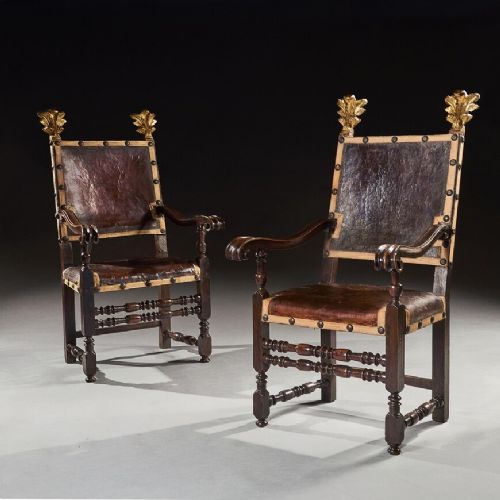
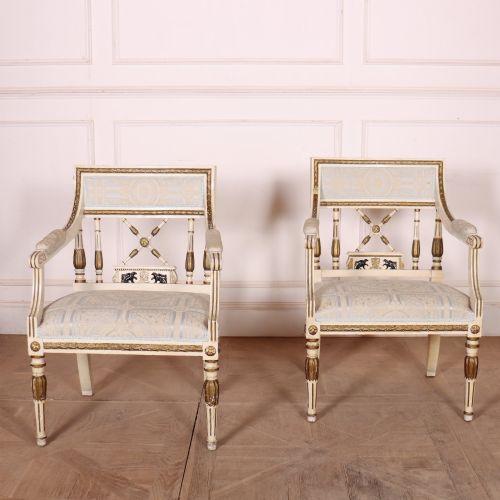
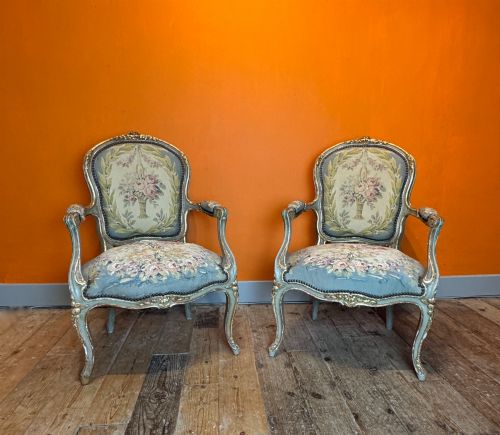
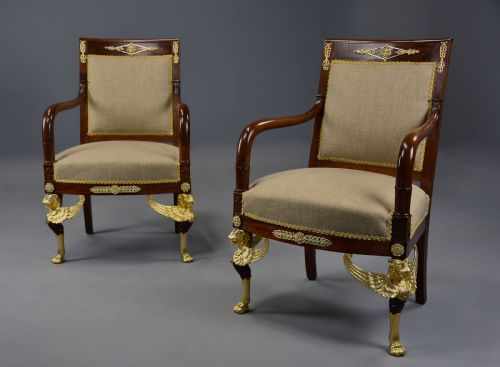
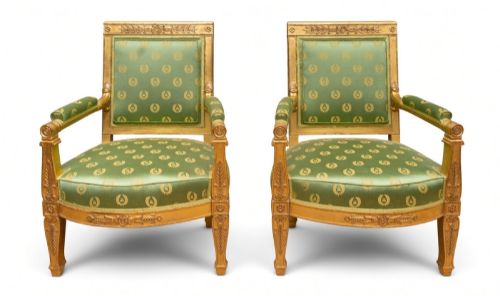
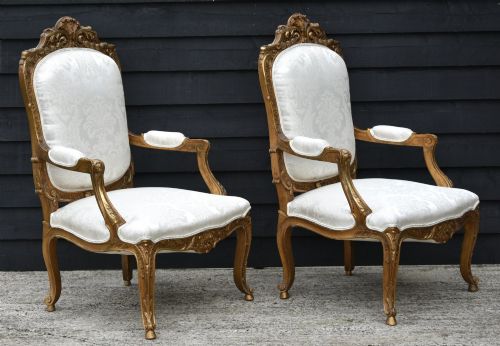
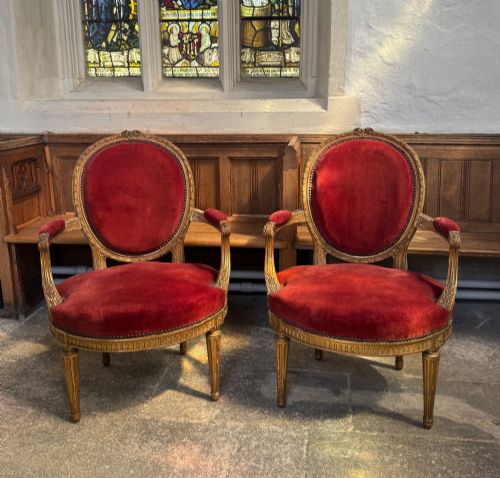
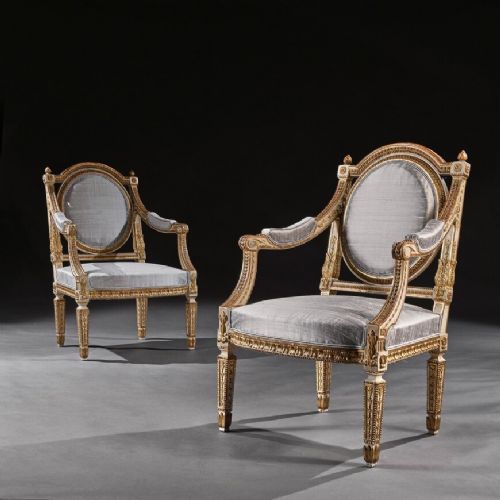
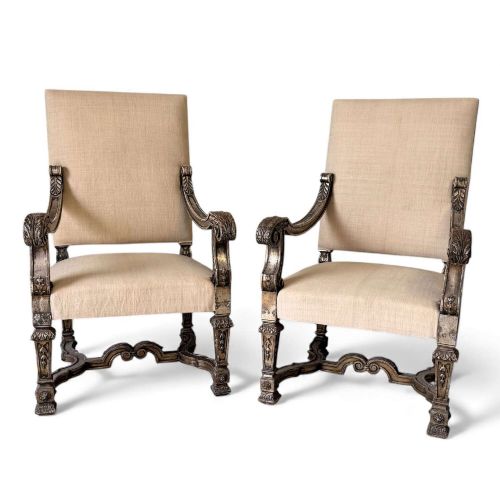
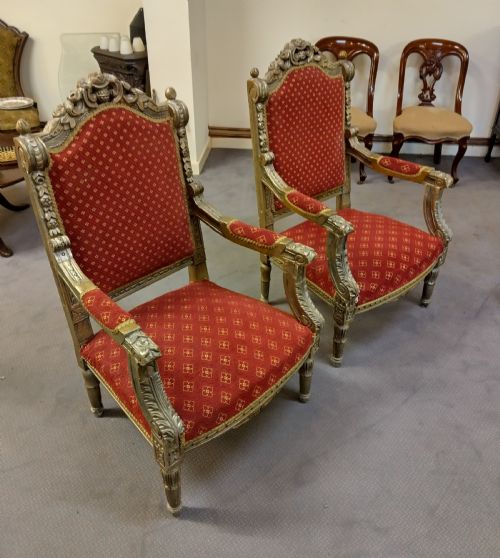
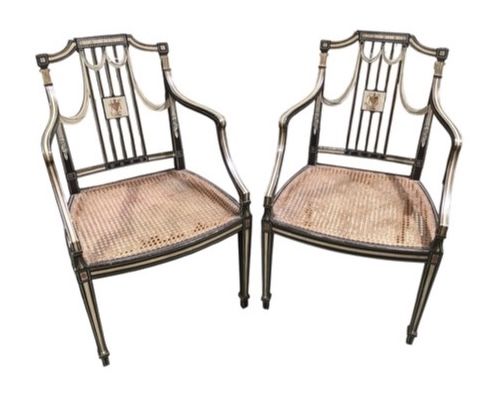
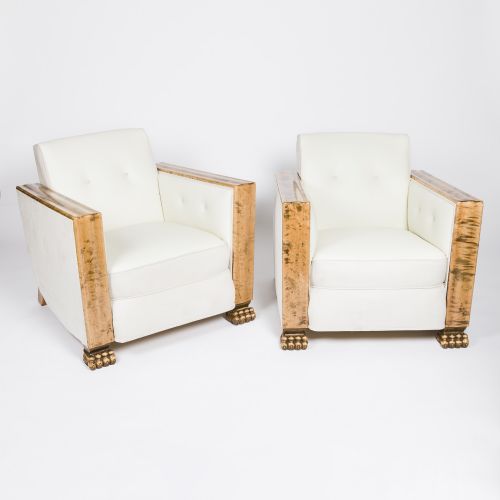
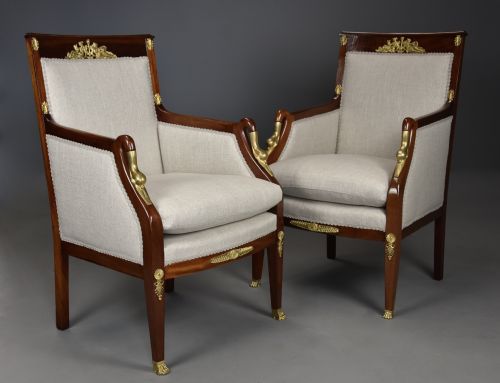
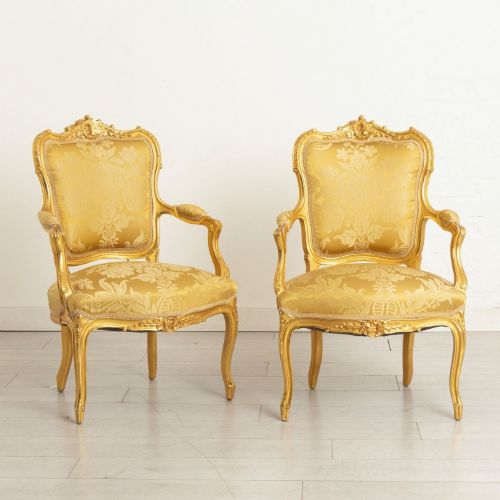


Pair of Gilt Armchairs
A pair of gilt armchairs brings immediate architectural presence and gilded warmth to a salon, drawing on centuries of European seating traditions.
How they were made
Traditional frames rely on solid hardwoods such as walnut, mahogany, beech and rosewood, which provide the structural integrity required for heavily carved armchairs and throne chairs. Timber components are meticulously joined before receiving surface preparations for gilding or paint.
Gilding techniques involve the application of gold leaf or silver leaf over a prepared bole and gesso ground, sometimes combined with painted or parcel-gilt surfaces to accentuate carved details. Many examples integrate brass mounts, ebonised accents, or japanned finishes.
Upholstery methods span historical periods, utilising traditional stuffing techniques covered in contemporary silks, velvets, leather, tapestry, or needlepoint. Original textile covers occasionally survive alongside modern restorations.
What varies in quality
The depth, crispness and definition of the wood carving distinguish superior frames from simpler production, particularly around floral crests, scrollwork and acanthus leaves. Master carvers achieved fluid lines and naturalistic asymmetry that lesser workshops reduced to flat or formulaic repetition.
The application of the metallic finish dictates the visual richness of the surface, with genuine gold leaf ageing with a warm, complex patina compared to flat modern metallic paints. Gilded surfaces that show nuanced burnishing reflect light differently than uniform sprayed alternatives.
Scale and proportion govern the architectural success of the seating, where larger throne chairs and grand salon suites demand harmonious balance between the padded upholstery and the supporting gilt framework.
Children do not miss out on grand interior design, as the selection occasionally includes miniature throne chairs scaled down for youthful nobility.
Jacob Desmalter
The Pair of Gilt Armchairs Glossary
- Giltwood
- Timber that has been coated with thin sheets of gold leaf over a prepared gesso base. This technique was widely utilised across European furniture to simulate solid gold and catch candlelight in formal rooms.
- Fauteuil
- An open-framed upholstered armchair with wooden armrests, originating in France during the 17th century. The exposed wooden frame is typically carved and gilded or painted.
- Bergère
- An enclosed upholstered armchair featuring padded sides filled with upholstery or cane work. These pieces often include a loose cushion for the seat and date predominantly from French revival periods.
- Parcel-gilt
- A decorative treatment where only specific carved elements or raised details of a painted or stained wooden surface are highlighted with gold leaf. This method creates contrast against a contrasting ground colour like white or walnut.
- Tapisserie
- Woven textile coverings utilised for upholstery, frequently depicting floral scenes, pastoral landscapes or historical subjects. Aubusson workshops produced many of the notable examples found on formal French seats.
Pair of Gilt Armchairs: Frequently Asked Questions
Where were these armchairs placed originally?
These seats were designed for the principal reception rooms, salons and withdrawing rooms of grand houses and palaces, where entertaining guests demanded visual splendour. They served both functional seating roles and decorative displays of wealth and taste.
Pairs were positioned symmetrically around fireplaces, beneath large mirrors, or aligned along panelled walls to maintain formal interior layouts during the 18th and 19th centuries.
How do I identify French revival styles?
French revival pieces emulate earlier monarchical periods, particularly the reigns of Louis XIV, Louis XV and Louis XVI, drawing on specific decorative motifs. Louis XV designs favour asymmetrical rococo curves, floral cartouches and cabriole legs.
Louis XVI revival furniture introduces straight tapered fluted legs, neoclassical urns, and strict geometric symmetry. Nineteenth-century makers frequently reinterpreted these historical vocabularies with heavier proportions.
Are these chairs suitable for daily seating?
Historic gilt seating requires thoughtful placement and considerate use due to fragile gilded surfaces and antique frame construction. While robust enough for gentle sitting, they function best as occasional chairs in low-traffic settings.
Modern upholstery interventions often improve the internal support, making them comfortable for reading rooms and studies when paired with protective positioning away from direct sunlight.
What is the difference between giltwood and painted gilt?
Giltwood frames are entirely covered in gold or silver leaf applied over a gesso ground, creating a continuous metallic surface that reflects light across the carved woodwork. The underlying timber is completely obscured by the metallic layer.
Painted and parcel-gilt chairs combine a painted base colour - such as white, grey, or black - with gold leaf restricted to specific carved highlights like mouldings and floral motifs. This dual finish softens the overall appearance of the seating.