
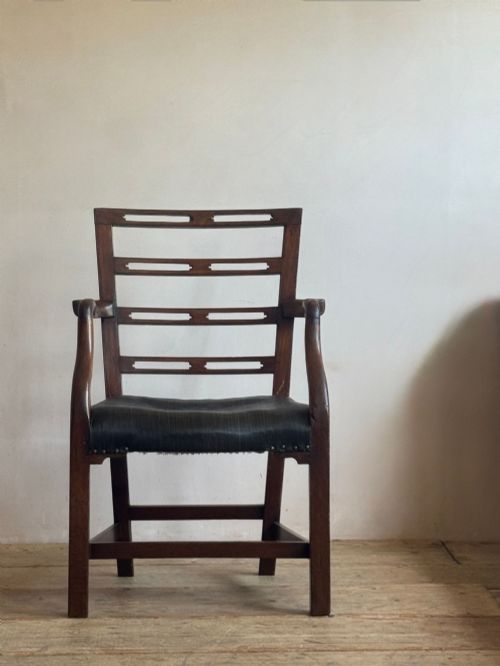
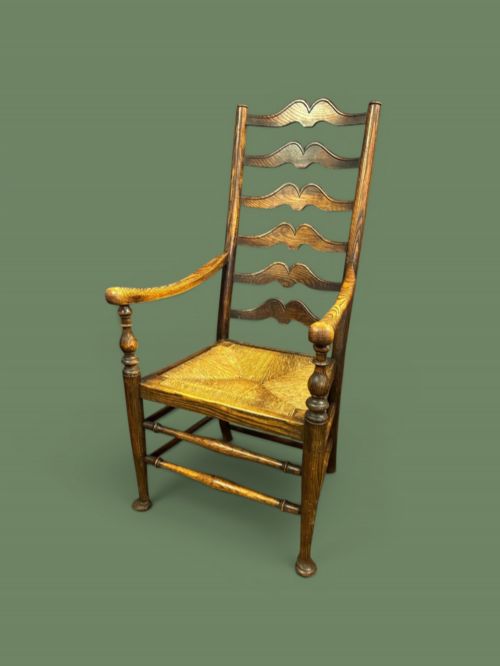


Georgian Ladderback Armchair
A georgian ladderback armchair offers sturdy vernacular comfort, built with horizontal slats and enduring local timbers for everyday seating.
Georgian Ladderback Armchair
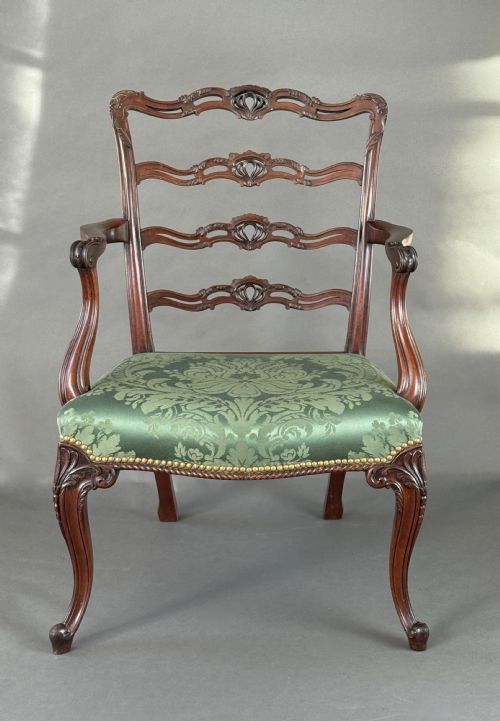
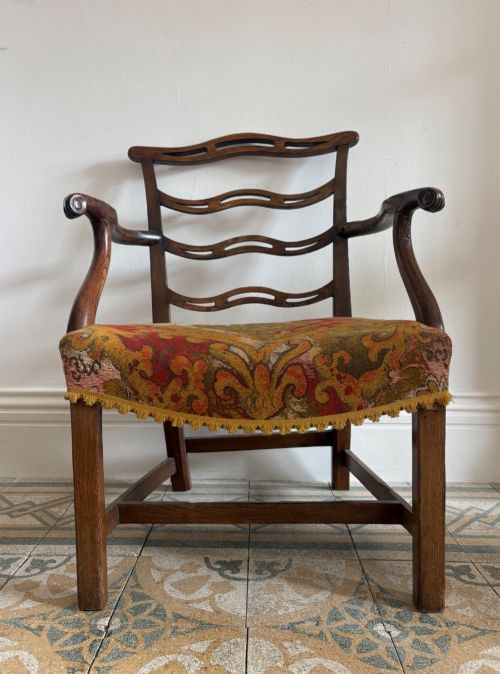
A georgian ladderback armchair is a traditional seating form defined by horizontal wooden rails set between the uprights of the back. These chairs appear in various formats across the evidence, including straightforward country versions and more formal revival pieces.
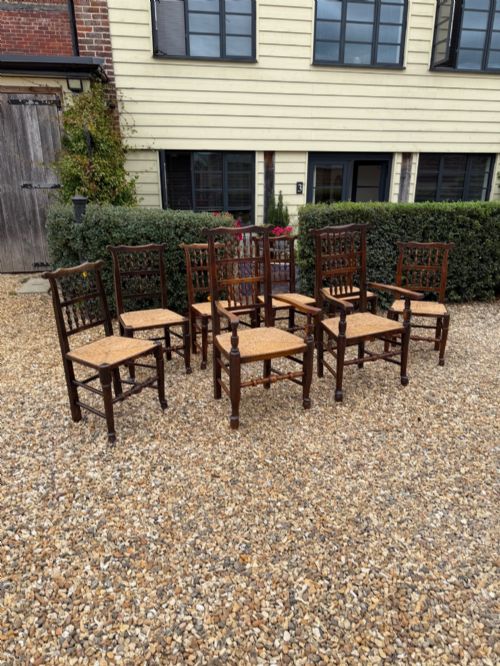
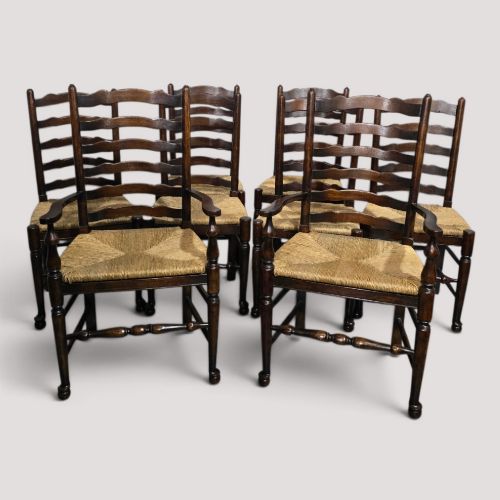
The selections on this page span several centuries, featuring pieces from the eighteenth century alongside later nineteenth-century interpretations and twentieth-century revivals. Buyers encounter individual armchairs, carver chairs, and occasional sets in regional British woods.
Makers fashioned these pieces for domestic utility, resulting in armchairs that combine practical arm supports with woven or upholstered seats. Regional variations include elm and ash country vernacular designs alongside polished mahogany examples from the George III period.
What varies in quality
The choice of primary timber dictates the initial tier, moving from regional utility woods like elm and ash up to dense mahogany. Superior examples display refined shaping along the horizontal ladder slats and balanced proportions in the arms.
The integrity of the rush seating or the precision of the frame joinery defines the standard of preservation. Pieces retaining their original structural members and untouched surface patination command greater interest among collectors.
At least one child's high chair proves that eighteenth-century toddlers needed a proper ladderback just like the adults.
The Georgian Ladderback Armchair Glossary
- Ladderback
- A chair back constructed with multiple horizontal wooden slats resembling the rungs of a ladder. This vernacular design distributed support evenly across the sitter's back.
- Rush seat
- A seating surface woven from dried marsh grasses twisted into cords. Craftsmen traditionally utilised rush for its durability and pliable comfort in country seating.
- Carver chair
- An armchair designed with upright supports and armrests, historically placed at the head of a dining table. The term often distinguishes the seating from standard side chairs in a matching set.
- Vernacular
- Everyday utilitarian furniture built by regional joiners using local materials rather than following strict metropolitan design rules. These pieces reflect specific local traditions and available timbers.
- Chippendale
- A style inspired by the eighteenth-century cabinet maker Thomas Chippendale, notable for carved mahogany details and openwork splats. Revival versions emerged in later periods to emulate this refined aesthetic.
Georgian Ladderback Armchair: Frequently Asked Questions
Were these chairs used for dining?
Yes, many ladderback chairs functioned as seating around dining tables, especially in large country houses where sets were commissioned.
Armchairs typically served as carvers for the head of the table while matching side chairs completed the arrangement.
How do I identify a Georgian piece?
Georgian pieces display the construction methods, proportions, and timber choices typical of the eighteenth and early nineteenth centuries.
Examining the underside, joinery techniques, and surface wear helps distinguish genuine period pieces from later revivals.
What woods were used?
Makers utilised whatever timber was locally abundant, ranging from native hardwoods like oak, elm, and ash to imported mahogany.
Country pieces frequently employ elm or ash, whereas more formal urban examples favour polished mahogany.
How do I care for rush seats?
Rush seats require a stable indoor humidity level to prevent the dried marsh grass from becoming brittle and fracturing.
Regular gentle dusting maintains the fibres, and owners should avoid placing them in damp areas or direct sunlight.