





Brown Rush Armchair
A brown rush armchair brings vernacular warmth to an interior, combining sturdy timber frames with natural woven seating.
Brown Rush Armchair
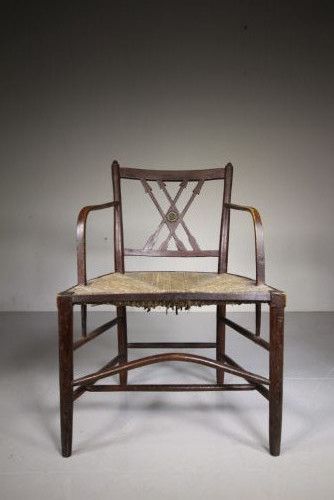
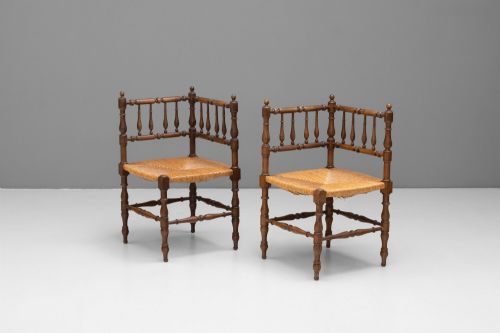
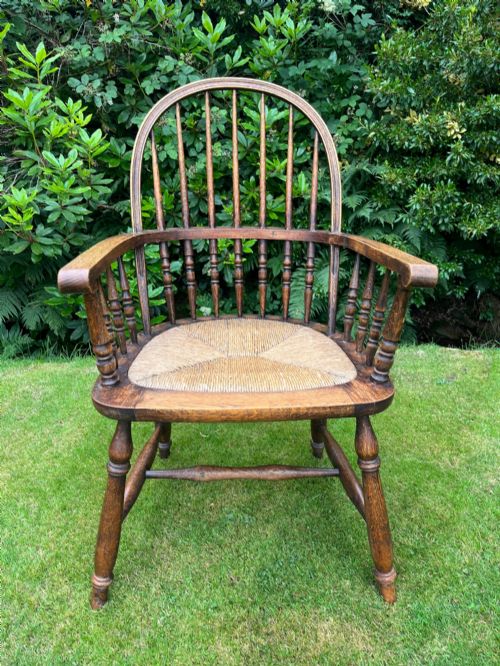
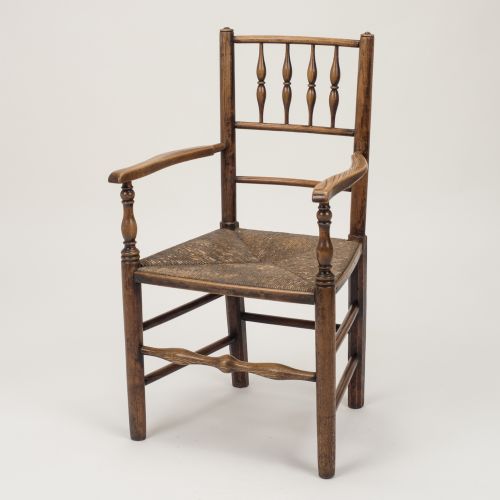
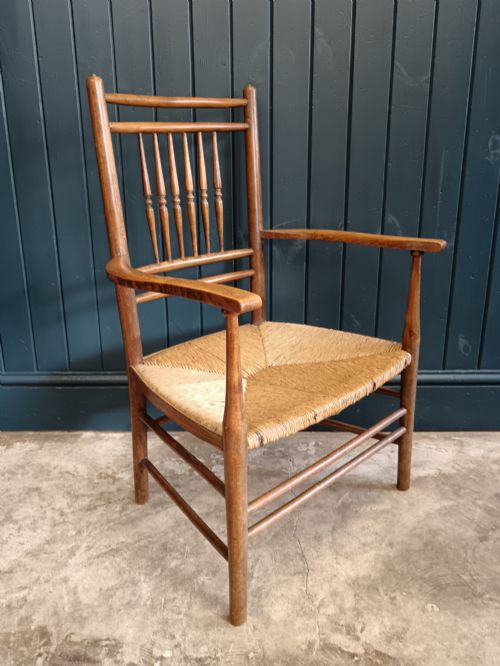
A brown rush armchair represents traditional country seating, drawing on English Country, Victorian Country, and Arts and Crafts traditions. These pieces combine wooden frames in oak, elm, ash, and fruitwood with woven rush seats.
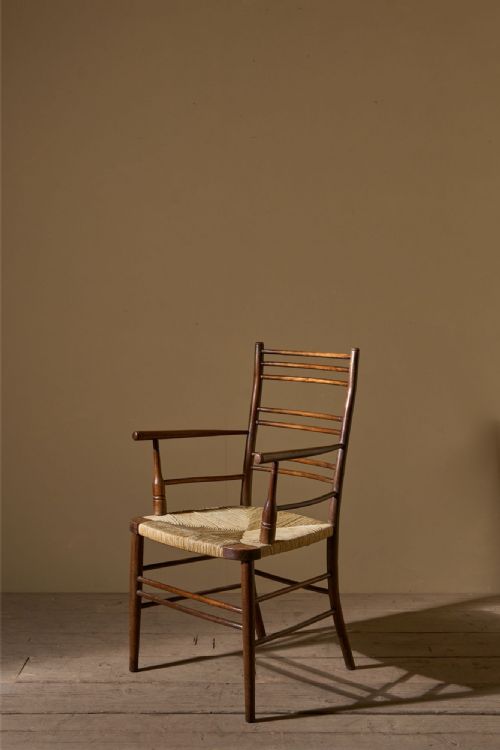
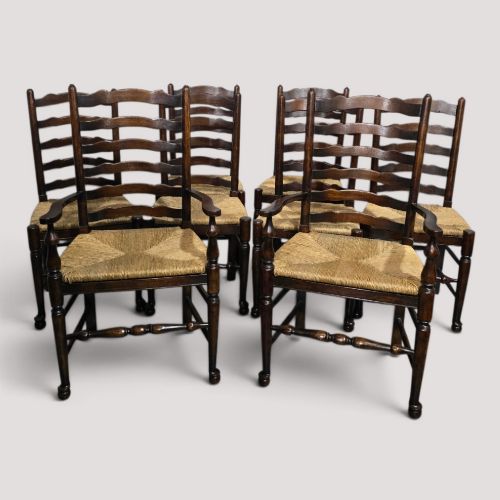
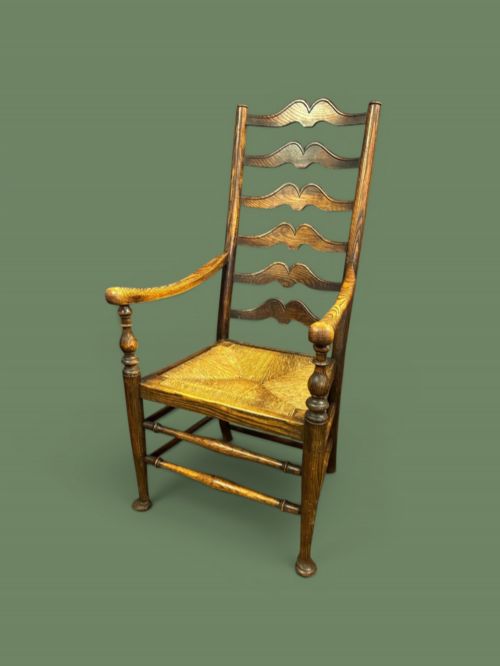
Buyers encounter forms ranging from Georgian country models to late nineteenth-century spindleback fireside chairs and Arts and Crafts Sussex designs. Regional variations such as Scottish vernacular or Lancashire ladderbacks frequently appear among the listings.
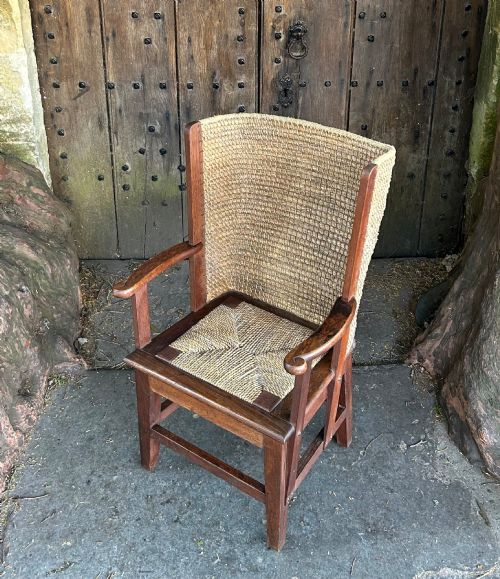
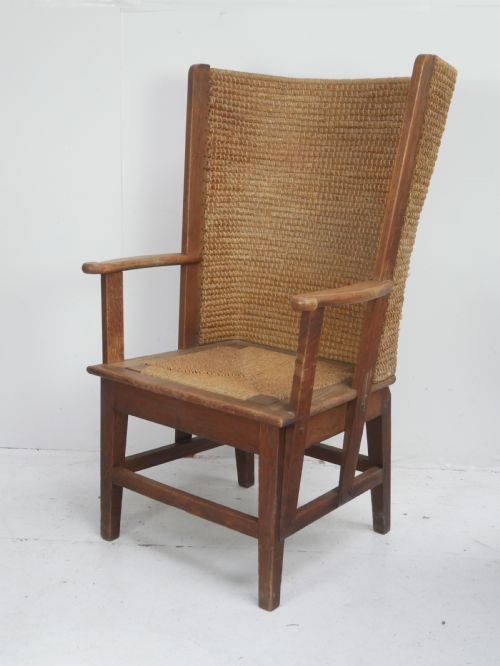
The phrase encompasses standard armchairs, low fireside seats, rocking chairs, and larger Orkney variants. Most examples reflect utilitarian domestic origins within farmhouse kitchens and cottage parlours.
How they were made
Makers utilised native hardwoods for the structural frames, turning to elm, ash, oak, beech, and fruitwood depending on regional availability and the specific part of the chair being shaped. Turned spindles and bentwood components required seasoned timber to maintain rigidity under daily use.
Seats were woven by hand using natural rush or straw material, wound tightly around timber rails to create a resilient and supportive platform. Frames often utilised traditional joinery methods, including pegged mortise and tenon joints, without relying on metal fasteners.
Regional styles on this page include Lancashire spindlebacks, Scottish crofter chairs, and Arts and Crafts Sussex designs.
What varies in quality
The integrity of the woven rush seat dictates much of the standard, as tightly packed, uniform strands endure generations of use whereas loose or brittle weaving requires intervention. Original surface treatments, such as early paint layers or patinated bare timber, elevate the character of a piece.
Proportion and timber selection separate utilitarian workshop output from refined vernacular design, particularly in turned spindle backs and shaped arm supports. Maker attribution to notable workshops or designers like Morris & Co or E W Godwin adds historical significance to specific examples.
Morris & Co·E W Godwin·Dicon Nance St.Ives Studio
The Brown Rush Armchair Glossary
- Rush
- Natural marsh plant material used for weaving chair seats. It provides a flexible yet durable surface that develops a rich brown patina over time.
- Ladderback
- A chair back featuring horizontal wooden rails resembling a ladder. This vernacular form is common in English and Scottish country seating.
- Spindleback
- A chair design incorporating numerous thin, turned wooden uprights within the backrest. These components provide lightweight support and often define regional styles.
- Carver
- A traditional term for an armchair, typically designed to match a set of smaller dining chairs. They frequently feature broader arms and sturdier proportions.
- Vernacular
- Architecture and furniture rooted in local traditions and practical utility rather than formal academic design. These pieces utilise regional materials and methods.
Brown Rush Armchair: Frequently Asked Questions
How do I clean a rush seat?
Dust the woven surface gently using a soft brush or a low-suction vacuum attachment to remove trapped particles.
Avoid applying excess water or harsh chemical cleaners, as moisture causes natural rush to weaken and fracture over time.
Are these chairs suitable for daily dining?
Many historical country armchairs were built for daily domestic use in kitchens and dining rooms. Their robust timber frames remain well suited to regular seating when structurally sound.
Checking the stability of the joints ensures the chair can handle everyday weight without strain.
What is an Orkney chair?
An Orkney chair is a distinct regional armchair featuring a high woven straw back designed to deflect draughts in northern coastal dwellings. They often incorporate low wooden frames paired with detailed oat straw or rush work.
Full-sized and ladies' variants appear in vernacular collections, prized for their unique silhouette.
How do I date an elm armchair?
Dating relies on examining tool marks, timber shrinkage, construction joints, and stylistic details such as turning patterns on the spindles. Georgian and Victorian examples display distinct joinery techniques that evolved across the nineteenth century.
Comparing the wear patterns and wood patination against documented pieces from the same period helps clarify the age.