
Rustic Rush Seat
These rustic rush seat pieces combine traditional vernacular form with woven natural strands, offering honest utility for everyday interiors.
Rustic Rush Seat
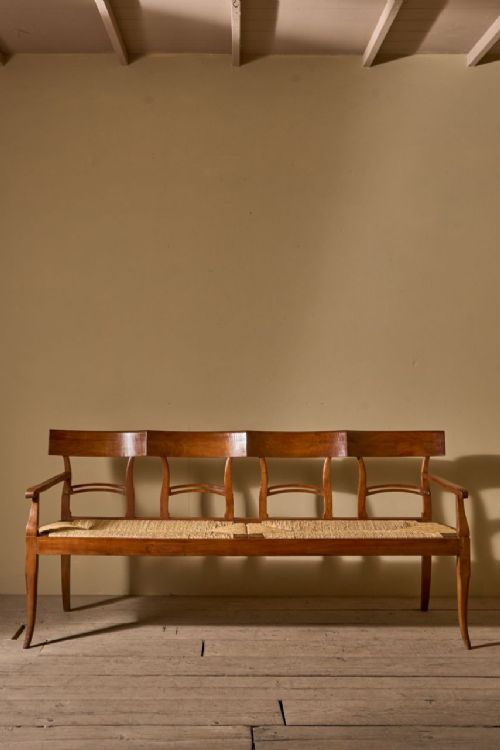
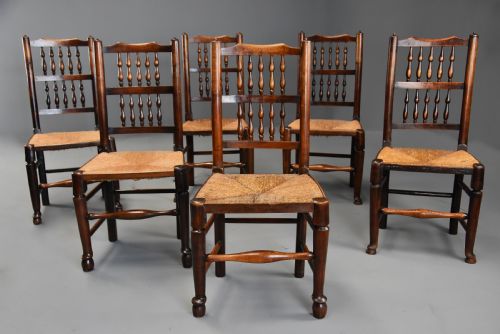
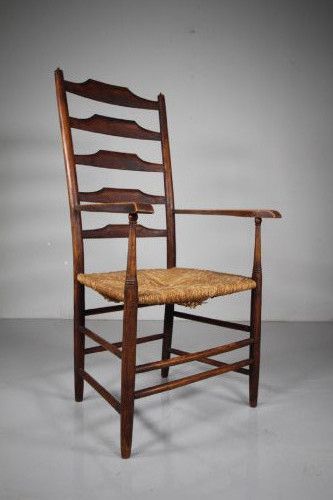
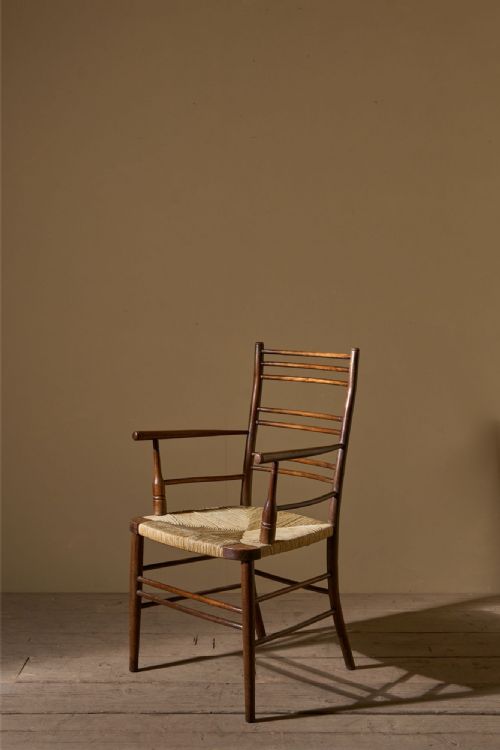
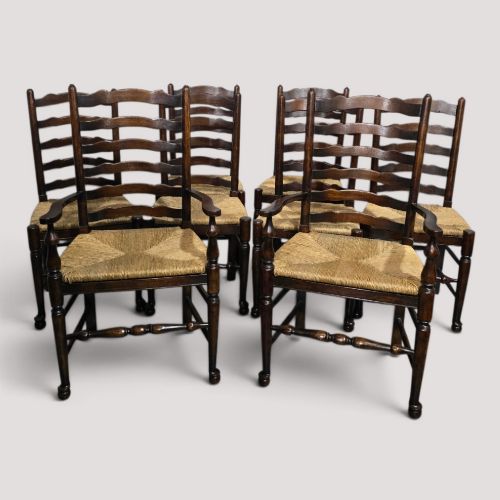
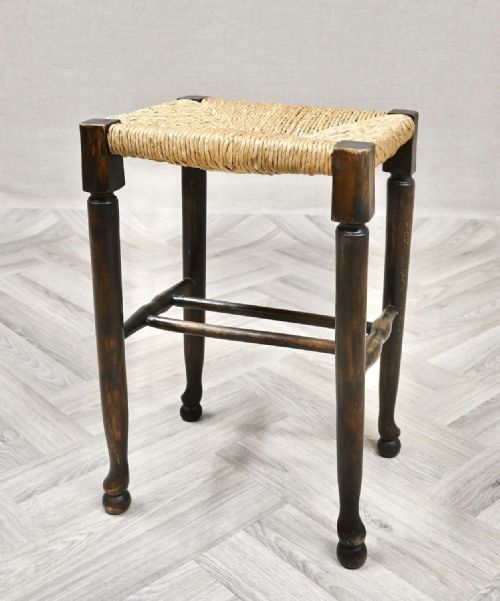
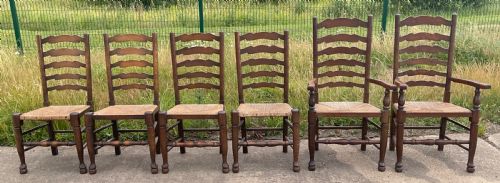
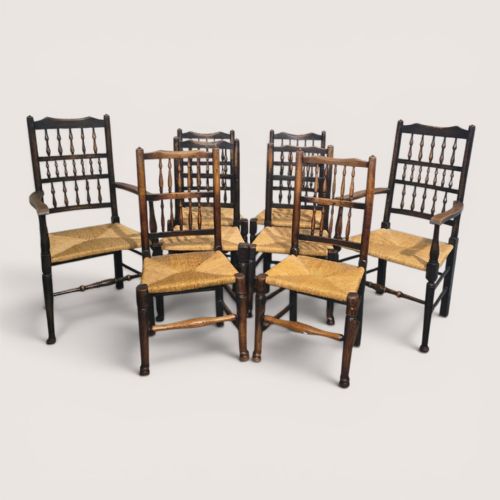
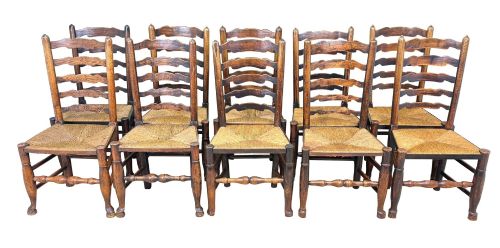
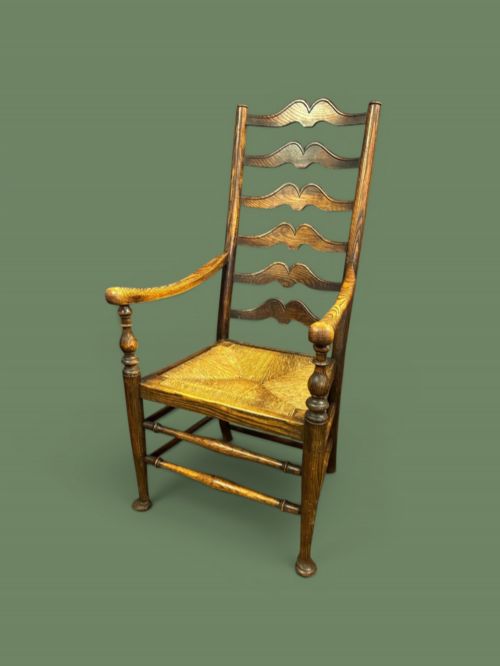
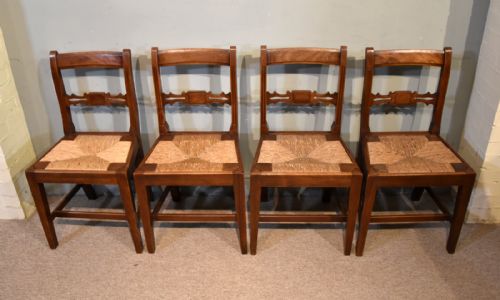
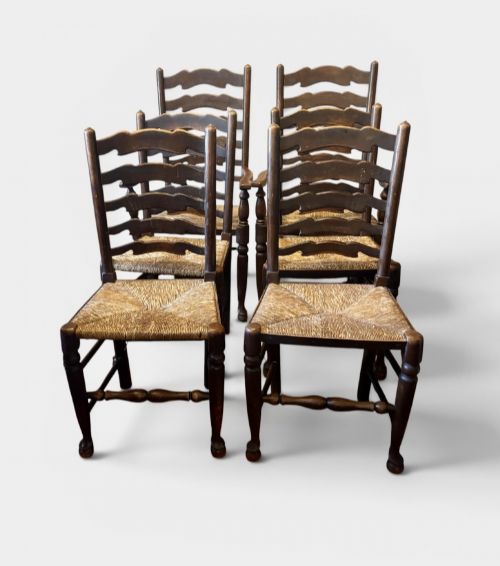
A rustic rush seat search uncovers vernacular seating spanning from the eighteenth century through the early twentieth century, including dining chairs, armchairs, benches, and stools. The most common forms met on this page are ladderback and spindleback chairs in sets or pairs, originating from English, French, and Dutch country traditions.
Makers utilised local timbers to supply domestic farmhouses and kitchens, resulting in robust side chairs, carvers, and occasional seating. Pieces range from single country side chairs to large dining sets, often constructed with regional variations such as Lancashire or Dales patterns.
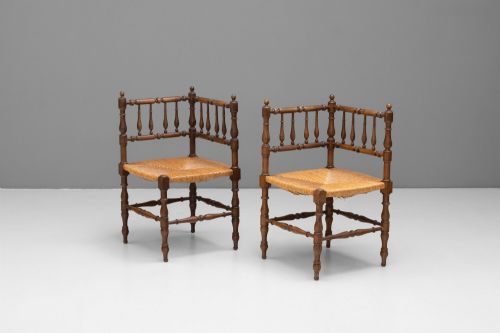
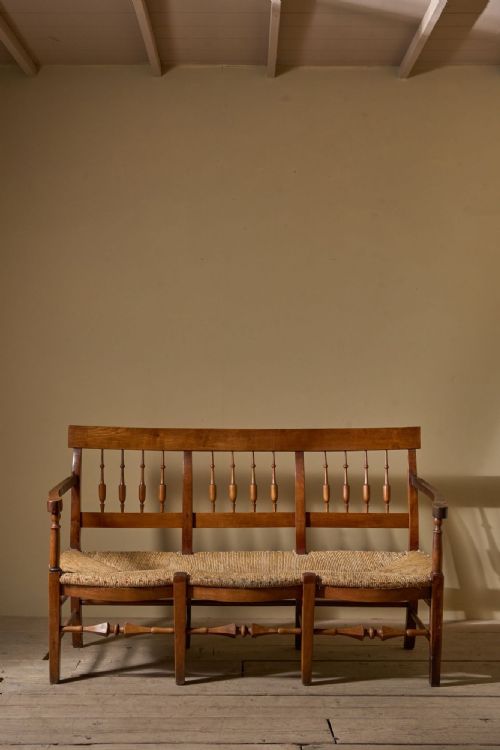
The selection encompasses utilitarian forms like high chairs, corner chairs, and long benches alongside standard dining seating. These utilitarian objects reflect the everyday needs of rural households across Georgian, Victorian, and later periods.
Materials and construction methods
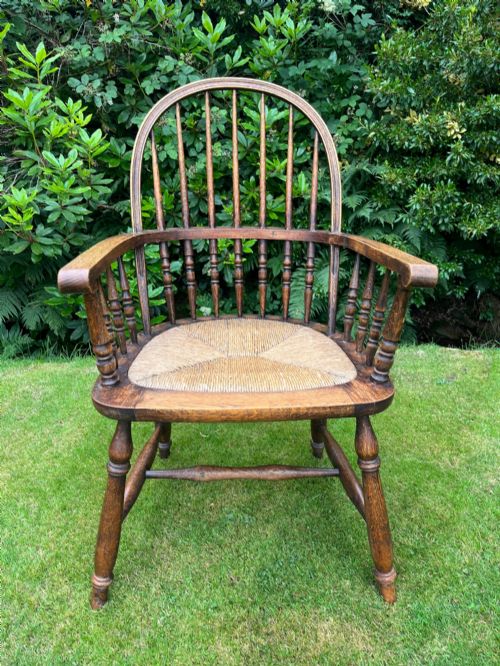
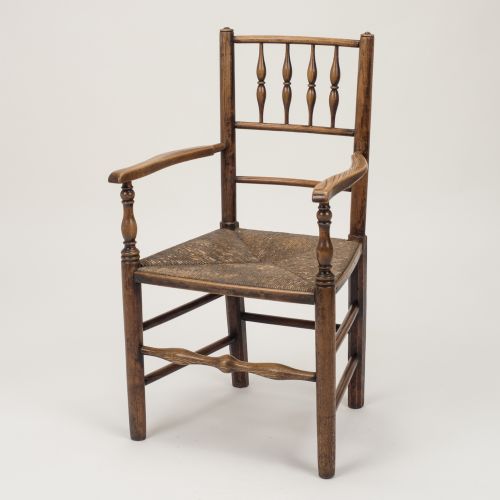
Construction relies on native hardwoods such as elm, ash, oak, beech, cherrywood, and fruitwood, shaped into turned spindles, curved ladder backs, and solid timber seats or frames. Carpenters turned upright posts and spindles on lathes while bending other sections to form supportive chair backs and armrests.
The characteristic seating surfaces are woven from natural rush or plaited straw, wound tightly around timber rungs to create a supportive grid. This weaving technique requires skilled hand labour to tension the material evenly across the frame for durability.
A child's high chair survives alongside full-sized benches, proving country craft was scaled down for the smallest household members.
Distinctions in quality and execution
Quality separates through the selection and matching of timber within a set, where uniform grain and cohesive wood types elevate matched dining chairs above mixed harlequin groupings. The fineness of the turning on spindles and ladder back rails also indicates the maker's skill and the workshop's ambition.
The tightness, regularity, and preservation of the woven rush surface define the condition and standard of the seat. Denser weaving and well-preserved natural fibres demonstrate superior execution compared to loose or uneven strands.
Philip Clissett
The Rustic Rush Seat Glossary
- Rush
- A pliable marsh plant woven tightly to form durable seating surfaces. It provides a natural texture characteristic of traditional country furniture.
- Ladderback
- A chair style featuring horizontal slats curved between the rear upright posts. These slats offer back support in vernacular seating.
- Spindleback
- A chair back constructed from multiple thin turned vertical wooden rods. This design lightens the frame while maintaining structural strength.
- Vernacular
- Everyday utilitarian furniture made by regional craftsmen using local materials rather than following high-style academic designs. These objects reflect local traditions and practical requirements.
- Carver
- An armchair, traditionally placed at the head of a dining table or used as an occasional seat. It typically matches the design of the smaller side chairs in a set.
Rustic Rush Seat: Frequently Asked Questions
How do I clean a rush seat?
Dust the woven surface gently with a soft brush or vacuum on a low setting to remove trapped debris.
Avoid using excess water or liquid cleaners, as moisture causes natural rush fibres to swell and weaken over time.
Are ladderback chairs comfortable for dining?
The horizontal slats are shaped to support the back during extended sitting at a table.
Many examples feature slightly angled upright posts to improve posture and daily usability.
Can I mix different country chairs together?
Harlequin sets containing varied individual chairs were common in country homes and create a collected appearance.
Matching heights and similar wood tones help unify a mixed group around a dining table.
How do I date an elm and ash chair?
Examine the tool marks, joinery methods, and wear patterns on the timber framework and legs.
Earlier eighteenth-century pieces often display hand-turned irregularities, whereas later nineteenth-century examples show more uniform machine assistance.