


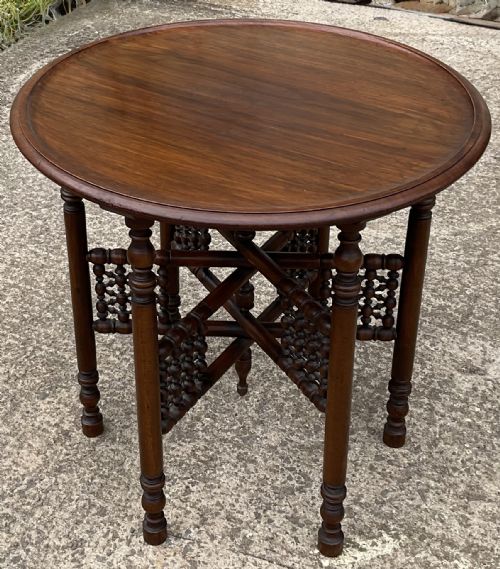
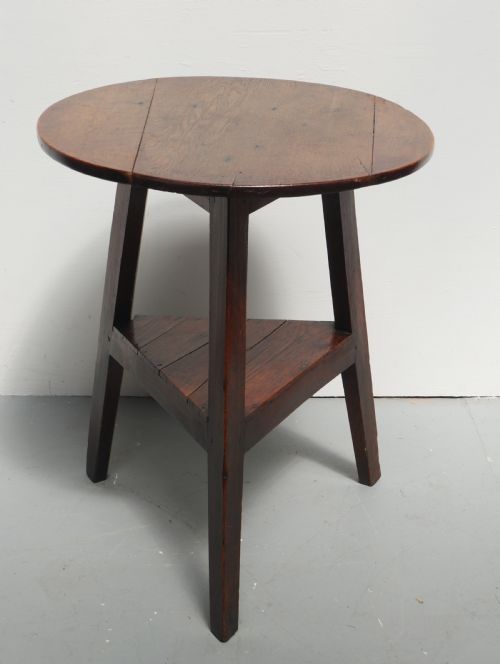
Round Wooden Occasional Table
A round wooden occasional table provides a surface that moves easily from a corner to a chair side.
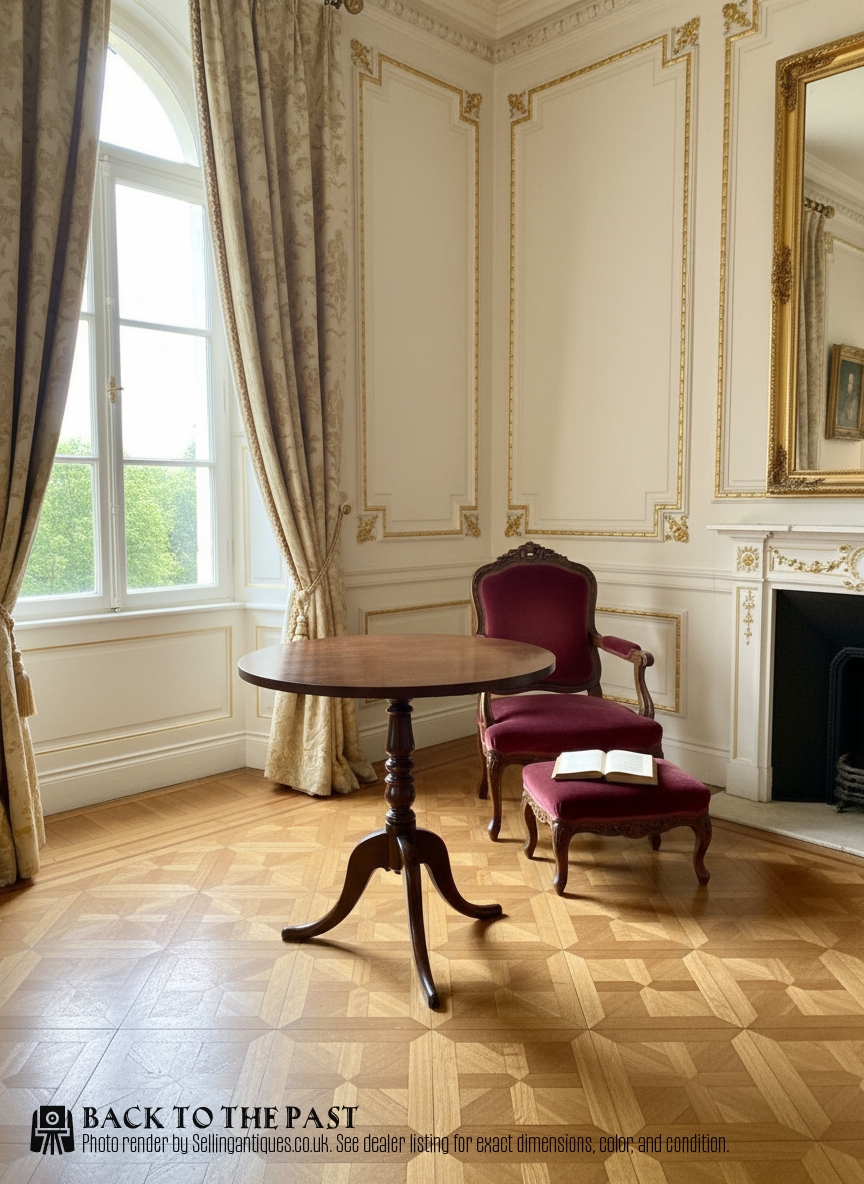
Round Wooden Occasional Table
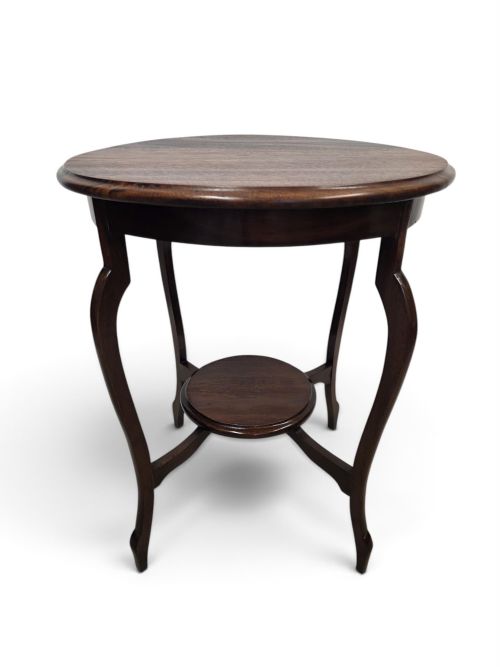
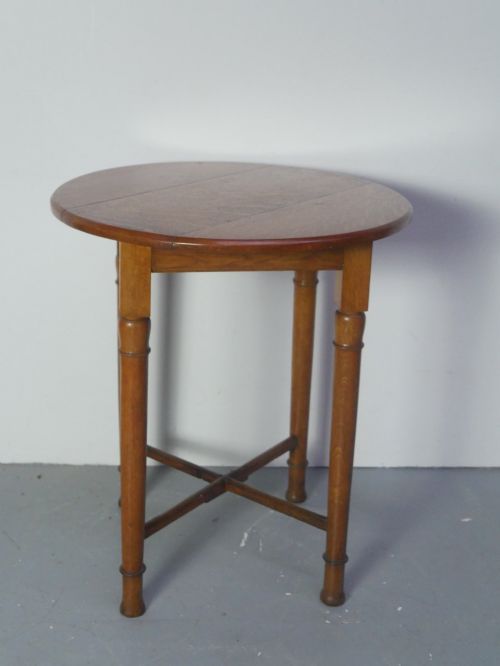
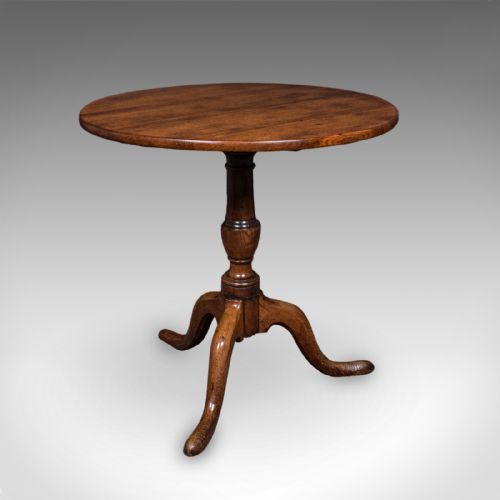
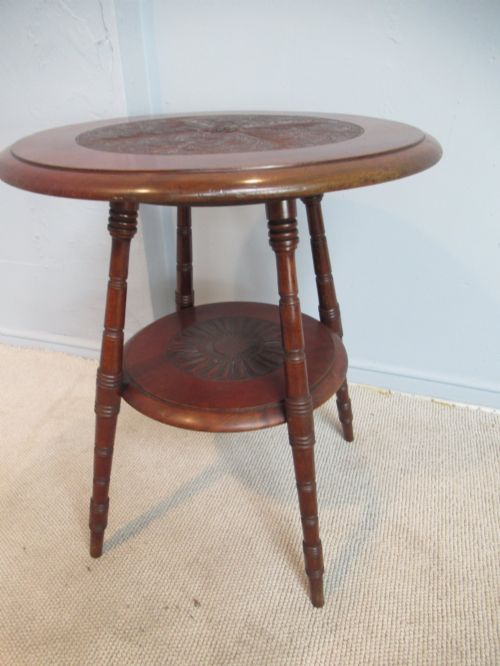
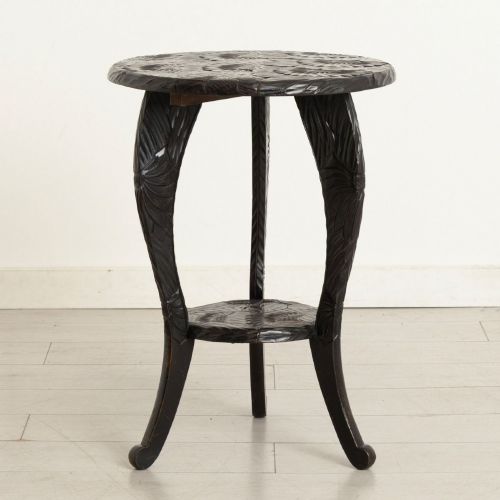
A round wooden occasional table is a versatile small surface built for flexible placement within a room. The selections here span the Georgian period, the nineteenth century, and into the twentieth century, bringing together forms used for wine, lamps, and bedside service.
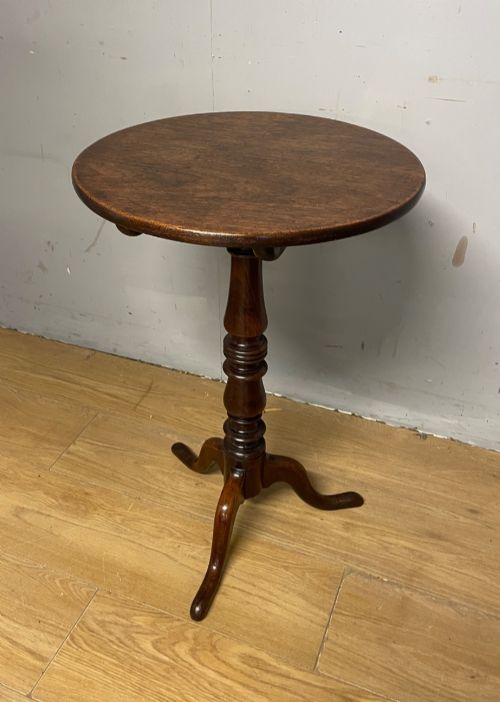
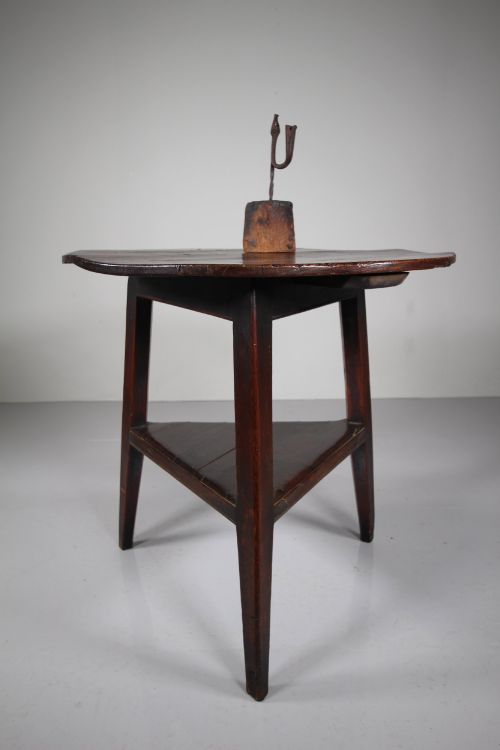
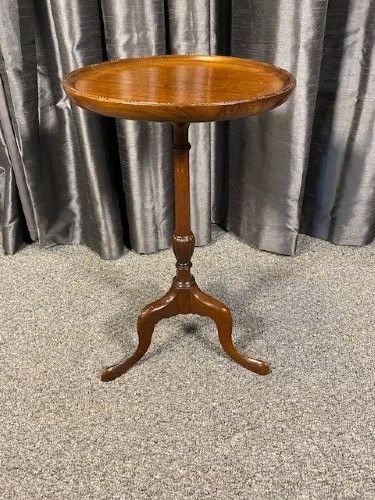
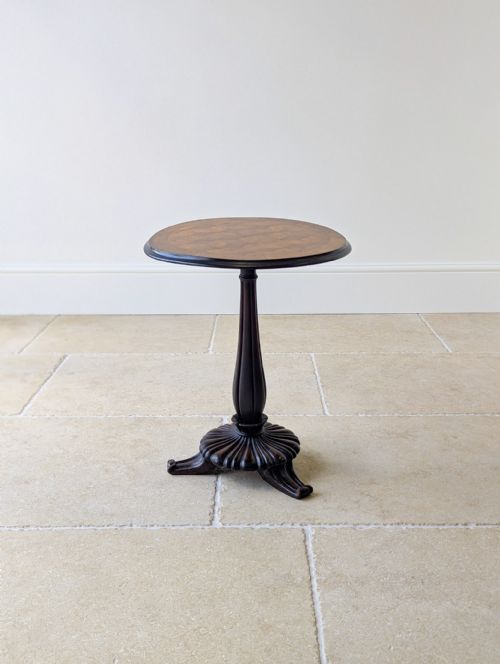
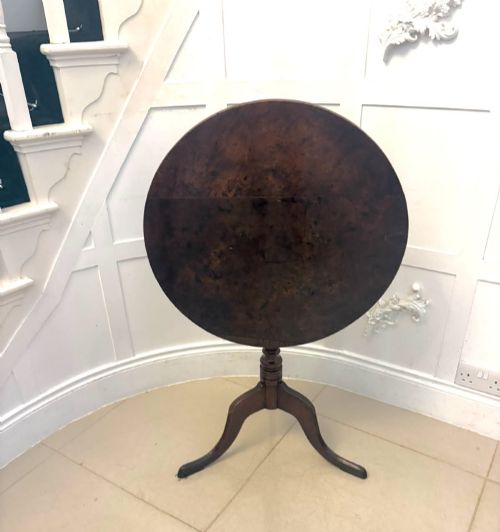
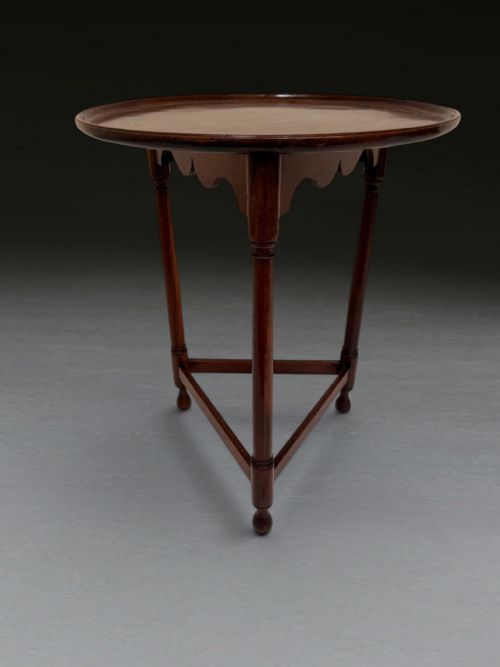
Most examples you encounter fall into distinct functional types, such as tripod wine tables with tilt tops, sturdy three-legged cricket tables, and low lamp tables. These pieces draw on styles ranging from plain English country vernacular to formal Georgian and Victorian cabinetmaking.
Makers utilised various native and exotic timbers to construct these tables, shaping tops that measure a modest diameter suited to holding a single book or glass. Their compact footprints make them straightforward to integrate into modern spaces without dominating a room.
Materials and construction
Makers relied heavily on dense hardwoods such as mahogany, oak, and walnut, selecting them for structural stability and rich grain patterns. Burr varieties and elm also appear frequently, offering distinctive surface figuring on circular tops.
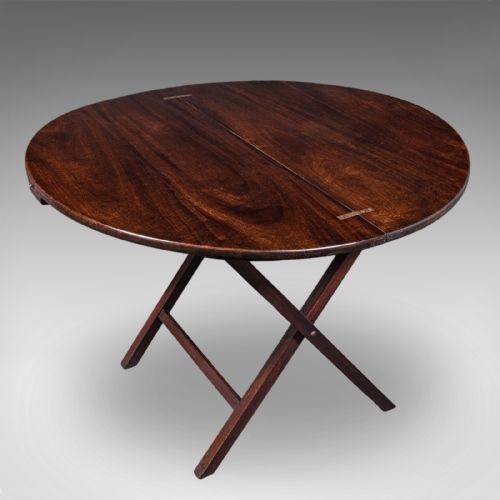
Turning and joinery defined the production of these pieces, from slender tripod legs fixed to central pillars to pegged joints on traditional cricket tables. Many examples feature clever mechanical elements like tilt-top mechanisms with brass catches or folding actions for storage.
Listings feature woods including mahogany, oak, walnut, elm, birch, and yew across multiple centuries.
Judging quality and proportion
Quality rests primarily in the harmony of proportions, where the diameter of the circular top balances precisely against the height and spread of the base. Finer examples display crisply turned pillars and secure leg junctions that prevent any lateral wobble.
The choice of timber heavily dictates the grade of the piece, with carefully matched mahogany veneers or richly patinated solid oak expressing greater consideration by the original maker. Retaining original tilt mechanisms and brass fittings further elevates the standing of an individual table.
Liberty of London
The Round Wooden Occasional Table Glossary
- Cricket table
- A small, three-legged occasional table traditionally featuring a round wooden top and pegged construction. This form originated in English vernacular furniture.
- Tilt top
- A tabletop mounted on a hinge mechanism that allows the surface to pivot vertically when not in use. This feature saved floor space in smaller period interiors.
- Tripod base
- A support structure comprising three distinct legs radiating from a central vertical column. It ensures stability on uneven floorboards.
- Wine table
- A diminutive round table designed specifically to hold a glass and bottle near a seated guest. They frequently appear with raised edges or birdcage mechanisms.
- Pad foot
- A rounded, enlarged foot resting flat on the floor at the base of a cabriole or straight leg. This design distributes weight evenly without sharp corners.
Round Wooden Occasional Table: Frequently Asked Questions
What is a cricket table?
A cricket table is a traditional three-legged round table with a wooden top, built to remain stable on uneven floors.
These pieces typically feature simple pegged joints and plain timber construction, making them a staple of English country interiors.
How do tilt top tables work?
A tilt top table uses a pivoting block beneath the circular surface connected to a central pillar.
A catch holds the top flat during use, and releasing it allows the surface to fold vertically for compact storage against a wall.
Where should I place a wine table?
Wine tables suit tight spots beside armchairs or sofas where a larger surface would obstruct movement.
Their small round tops easily accommodate a cup, glass, or small lamp without crowding a room.
How do I identify a Georgian table?
Georgian tables often display restrained classical proportions, premium mahogany or oak timbers, and straightforward tripod bases.
Detailing remains functional and clean, focusing on the natural grain of the wood rather than heavy ornamentation.