



Round Walnut Coffee Table
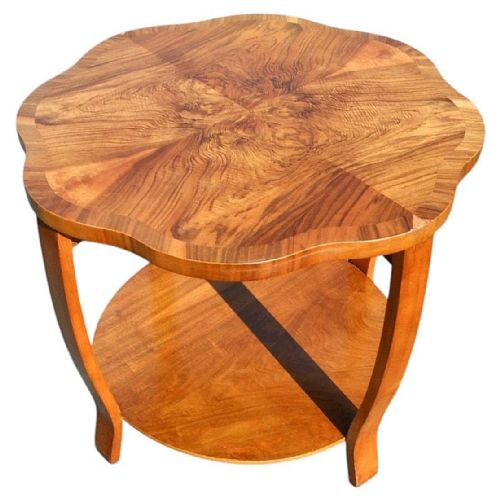
A round walnut coffee table brings warmth and distinct grain patterns to a seating area, drawing the eye with circular geometry.
Round Walnut Coffee Table
When searching for a round walnut coffee table, buyers encounter pieces spanning from the nineteenth century through the Art Deco period of nineteen thirty. These items often originate as lowered wine tables, occasional tables, or dedicated coffee tables created during the Edwardian and Victorian eras.
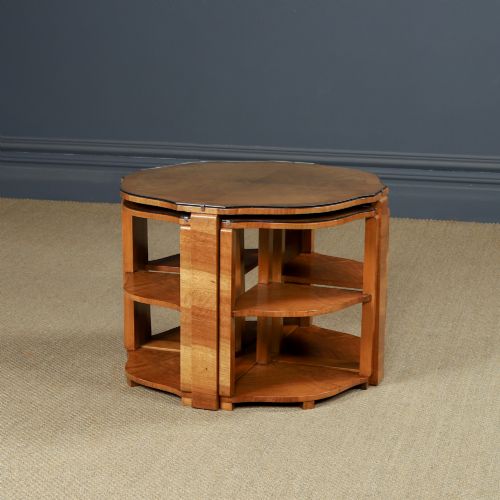
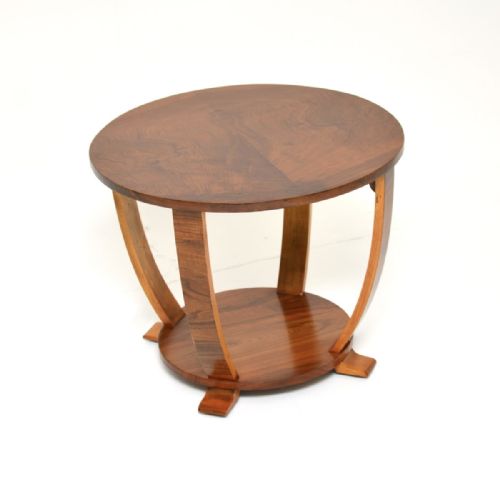
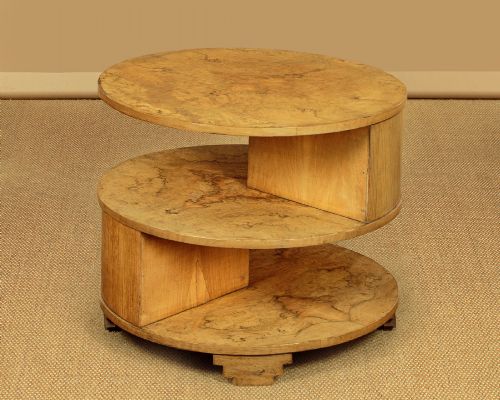
The most common examples on this page date from nineteen thirty, displaying the characteristic geometric lines of Art Deco design alongside earlier revival styles such as Queen Anne. Forms vary from simple circular tops on pillar bases to two-tier designs and nesting configurations.
Origins range across English workshops and French ateliers, adapting antique forms to suit modern domestic living spaces.
How they were made
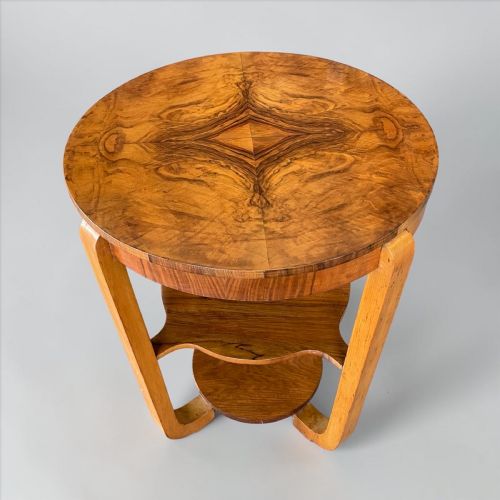
Construction relies heavily on walnut timber, utilised both as solid wood and as decorative veneer. Cabinetmakers applied figured walnut and burr walnut veneers to tabletops to showcase complex, swirling grain patterns.
Secondary timbers support the structure, while specialist techniques such as marquetry add inlaid decorative motifs to the surface. Tops occasionally incorporate contrasting materials like glass, marble, or maple to accentuate the primary walnut grain.
Some Art Deco tables arrive with illuminated tops, proving that lighting engineers and cabinetmakers occasionally conspired to make cocktail hour dramatic.
What varies in quality
The distinction between standard examples and superior items rests on the selection and matching of the wood veneer. Highly figured burr walnut requires skilled cutting and placement to achieve symmetrical patterns across a circular top.
Hand carving on the timber elements and the precision of marquetry inlay separate basic production pieces from finer artisan work. The overall structural integrity of the base and the condition of the surface finish dictate the standing of each piece.
The Round Walnut Coffee Table Glossary
- Art Deco
- A design style prominent around nineteen thirty characterised by sleek geometric shapes, streamlined forms, and modernist ornamentation. Tables from this period favour clean lines and striking wood veneers.
- Marquetry
- The art of applying small pieces of veneer to a structure to form decorative patterns or pictures. Craftsmen use contrasting woods to create intricate tabletop designs.
- Pie crust
- A carved, scalloped raised edge running around the perimeter of a circular tabletop. This traditional detail appears frequently on revival pieces.
Round Walnut Coffee Table: Frequently Asked Questions
How do I style a round walnut coffee table?
Pair the circular shape with linear sofas or angular seating to create visual contrast in a room. The warm tones of the wood complement both neutral upholstery and bolder colour schemes.
Utilise the surface for books or small objects while allowing the grain pattern of the walnut to remain visible. Two-tier versions provide additional space for organisation without cluttering the main tabletop.
Are these tables sturdy enough for daily use?
Most pieces are built from solid hardwood frameworks designed for everyday domestic functions such as holding drinks or books. Pedestal bases and four-legged designs offer reliable weight distribution.
Care should be taken with veneered surfaces to avoid moisture damage or deep scratches. Using coasters preserves the polished finish against daily wear.
How do I tell an Art Deco table from a Victorian one?
Art Deco tables dating around nineteen thirty feature streamlined silhouettes, minimal ornamentation, and geometric simplicity. The focus rests entirely on the natural figure of the burr walnut veneer.
Victorian and Edwardian examples often incorporate carved details, turned pedestals, or shaped edges like pie crust borders. These earlier pieces frequently begin life as wine or occasional tables before conversion to coffee height.
What is a nest of tables?
A nest comprises a set of graduated smaller tables that slide neatly beneath the primary larger surface when not in use. This clever configuration maximises floor space in compact rooms.
Art Deco sets often include up to five pieces sharing matching walnut or maple construction. They provide flexible surface area for entertaining guests.