




Round Glazed Display Cabinet
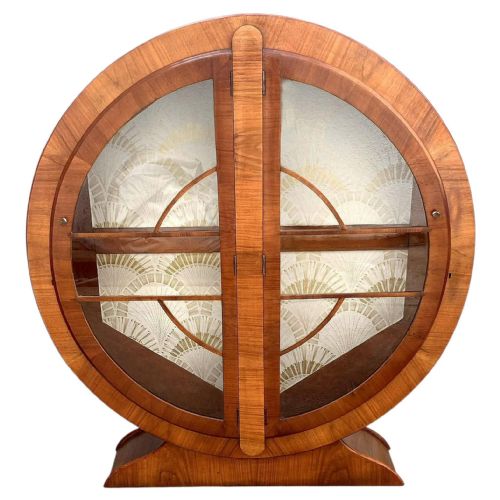
A round glazed display cabinet brings curved glass and rich timber together to frame your collection with genuine period character.
Round Glazed Display Cabinet
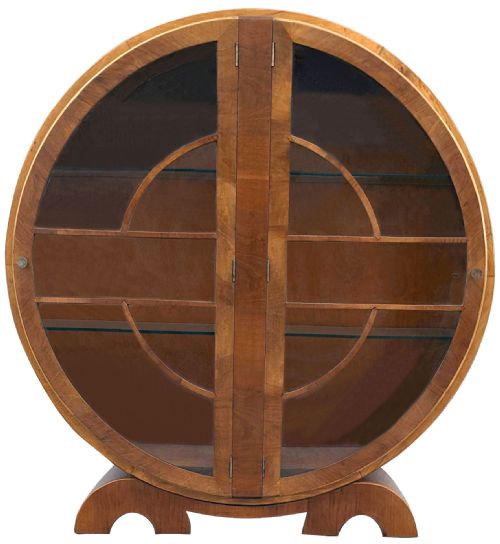
When you search for a round glazed display cabinet, you are looking at circular vitrines and display tables designed to showcase small treasures from every angle. These pieces stand as architectural focal points in a room, offering panoramic views of their contents through curved panes.
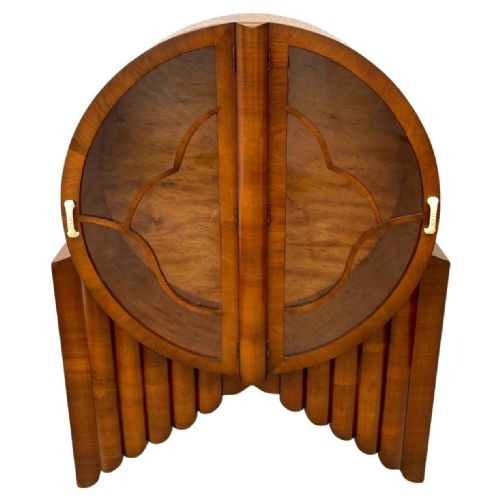
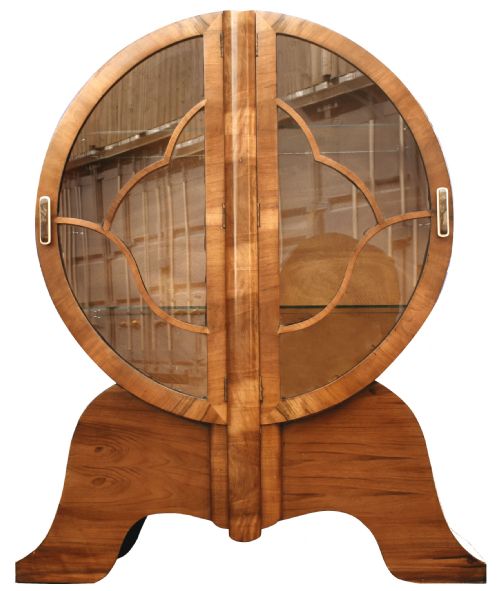
The version you are most likely to meet on this page originates from the Art Deco period around 1930, predominantly fashioned in England from walnut. Alongside these upright cabinets, you will encounter French Victorian bijouterie tables featuring glazed brass frames and kingwood timbers.
Makers shaped these forms into distinct silhouettes including circular towers, clove shapes, and rocket cabinets. Each design utilises glass and timber to maximise light penetration and visibility for precious objects.
How they were made
Cabinet makers built these circular structures using sturdy carcases of walnut, maple, or kingwood, often enhanced with figured veneers. Shaping timber into curves required specialist bending techniques and precise joinery to support heavy curved glass panels.
Glazing relies on lead and brass framework to secure the curved glass in place. Interiors were frequently lined with fabric or silk to provide a soft backdrop for displayed items, while metal mounts added structural definition.
If standard circular towers feel too predictable, seek out the cabinet shaped like a clove.
What varies in quality
The distinction between standard examples and superior pieces rests on the choice of timber and the complexity of the silhouette. Figured walnut and highly grained kingwood elevate an ordinary cabinet into a striking decorative object.
Superior construction is evident in the seamless integration of curved glass and the precision of the brass or lead framework. Elaborate forms such as clove shapes and rocket cabinets demonstrate greater ambition in design than simpler circular towers.
The Round Glazed Display Cabinet Glossary
- Vitrine
- A glass-fronted cabinet or display case designed specifically for showing porcelain, curiosities, or fine objects. The term derives from the French word for glass.
- Bijouterie table
- A low display table with a glazed top and sides, created for holding small valuable trinkets and jewellery at a comfortable viewing height.
- Rocket cabinet
- A colloquial term for a tall, tapered circular display cabinet whose silhouette resembles a mid-century rocket. These pieces are typically found in Art Deco furniture.
- Figured walnut
- Walnut timber that possesses an attractive, highly patterned grain figure resulting from unusual growth patterns. Cabinet makers prized this wood for decorative veneering.
- Kingwood
- A dense, richly coloured exotic timber from South America with dark violet-brown streaks. It was frequently utilised in high-status French Victorian furniture.
Round Glazed Display Cabinet: Frequently Asked Questions
What fits inside a round display cabinet?
These cabinets suit collections of small ceramics, glassware, silver, and curiosities that benefit from 360-degree visibility. The curved interior shelves are proportioned for compact decorative items rather than bulky books.
Display tables with glazed tops are specifically intended for flat treasures, medals, and jewellery viewed from above.
How do I clean curved glass?
Use a soft microfiber cloth and a mild glass cleaning solution sprayed onto the cloth rather than directly onto the cabinet. This prevents excess liquid from seeping into the surrounding wooden frame or lead and brass joints.
Take care around delicate fabric or silk interior linings when wiping near the edges of the glass.
Are these cabinets stable on carpets?
Tall circular cabinets have a narrow footprint and require a firm, level surface to stand securely. Placing them on thick carpets can cause a slight tilt, which places uneven pressure on the tall curved door hinges.
Using small, discreet furniture cups can help stabilise the base on uneven historic flooring.
How do I distinguish Art Deco from Victorian pieces?
Art Deco pieces dating to around 1930 feature streamlined circular silhouettes, plain figured walnut surfaces, and minimalist geometry. They emphasise clean curves without heavy ornamentation.
Victorian pieces from the 1870s tend to incorporate ornate brass mounts, French kingwood, and specialised formats like table vitrines.