




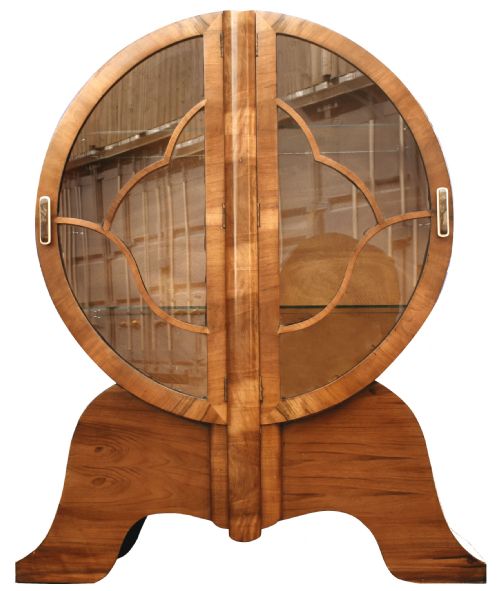

Circular Art Deco Cabinet
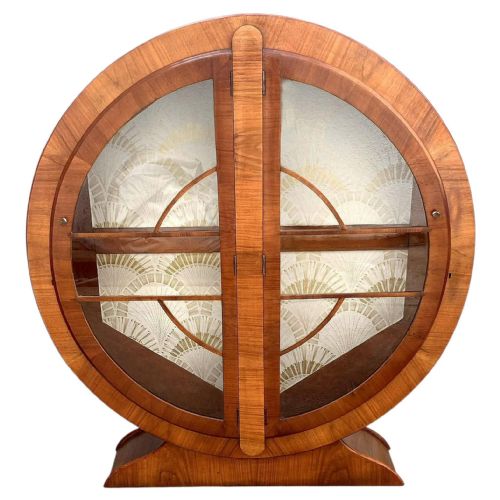
A circular art deco cabinet is a geometric triumph of 1930s design, offering curved storage and dramatic focal points for modern interiors.
Circular Art Deco Cabinet
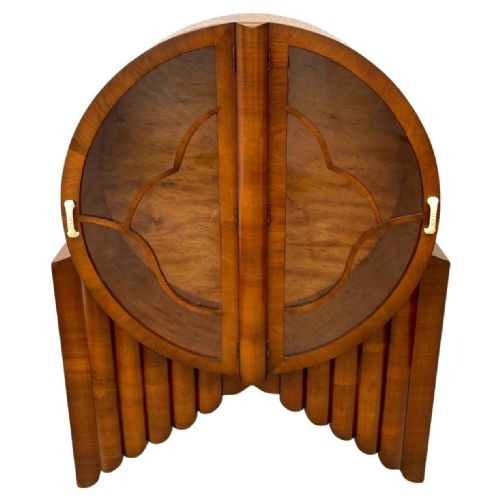
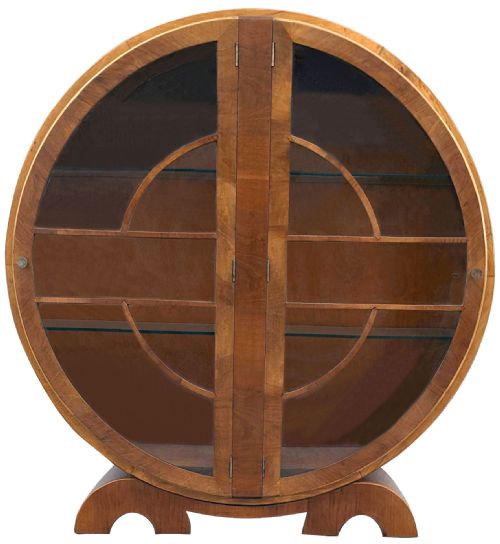
A circular art deco cabinet takes the curved geometry of the 1930s and applies it to display cabinets, drum shaped bedside tables, and cocktail bars. Most examples found here originate from English workshops during the nineteen thirties, favouring freestanding vertical silhouettes.
The form relies on cylindrical and drum shapes to soften room corners while providing functional shelving behind glass doors. Alongside dedicated display cabinets, variations include bookcase combinations and pop up drinks bars.
How they were made
Cabinet makers utilised solid timber frames finished with decorative veneers, notably walnut and burr walnut, alongside maple and oak. These surfaces were polished to accentuate the natural grain patterns across curved panels.
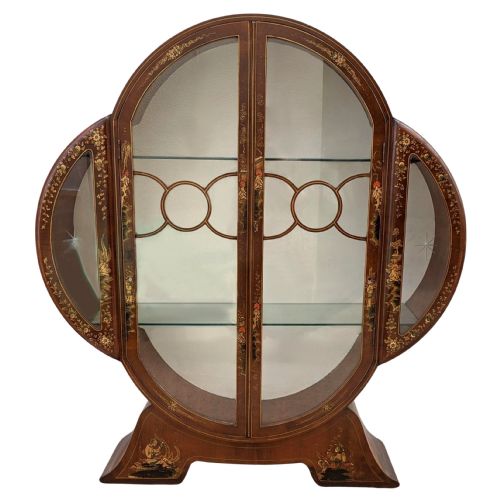
Detailing often incorporates leaded glass doors, brass hardware, and ebonised wood accents to define the geometric lines typical of the period. Specialised bending techniques allowed wood to maintain continuous curves around the cylindrical bodies.
Some cabinets utilise rocket and clove shapes to push the boundaries of 1930s geometry.
What varies in quality
The distinction between standard production and exceptional craftsmanship rests in the selection and matching of wood veneers. Master cabinet makers aligned figured grain symmetrically around the curved doors to create striking visual harmony.
Hardware integrity and the precision of the glass fitting also separate superior examples from ordinary ones. Well executed pieces maintain seamless door alignment and crisp integration of brass and leaded glass elements.
H&L Epstein
The Circular Art Deco Cabinet Glossary
- Burr walnut
- A figured wood veneer taken from the growth excrescences of walnut trees, prized for its swirling patterns. It provides intense visual texture on curved cabinet doors.
- Vitrine
- A glass fronted display cabinet designed for showing porcelain, glassware, or curiosities. These pieces use transparent panels to maximise light penetration.
- Ebonised wood
- Timber treated with a dark finish to resemble ebony. It serves as a sharp visual contrast against lighter walnut and maple veneers.
- Leaded glass
- Glass panes held together by narrow strips of lead into geometric patterns. This technique reinforces windows and cabinet doors while adding decorative detail.
- Pop up cocktail bar
- A specialised furniture mechanism that reveals bottle storage and mixing surfaces when opened. It reflects the era's focus on domestic entertaining.
Circular Art Deco Cabinet: Frequently Asked Questions
Where should I place a circular cabinet?
These pieces suit corners or open wall spaces where their curved profiles can be appreciated from multiple angles without blocking room flow.
Because of their distinct silhouette, they work well as standalone accent items in living rooms or bedrooms.
What can I store inside a display cabinet?
Glassware, ceramics, and small collectables fit neatly on the internal shelving behind the glazed doors.
The enclosed display protects delicate items from dust while keeping them visible.
How do I identify a nineteen thirties piece?
Look for characteristic materials like walnut veneer, leaded glass, and brass hardware combined with cylindrical or drum forms.
Construction methods typically involve period veneering techniques applied to core timbers common to English manufacturing of that decade.
Are bedside drum cabinets functional?
The cylindrical shape provides compact bedside storage with a small footprint alongside standard bed heights.
Enclosed compartments keep personal items hidden while offering a stable top surface for lighting and books.