




Retro Glass Display Cabinet
A retro glass display cabinet brings mid-century warmth and clear presentation to your home, making it a practical choice for showcasing collections.
Retro Glass Display Cabinet
A retro glass display cabinet serves as a functional storage piece designed to exhibit treasured objects while protecting them behind transparent panels. When you search for a retro glass display cabinet, you encounter versatile furniture spanning early twentieth-century designs through to mid-century forms.
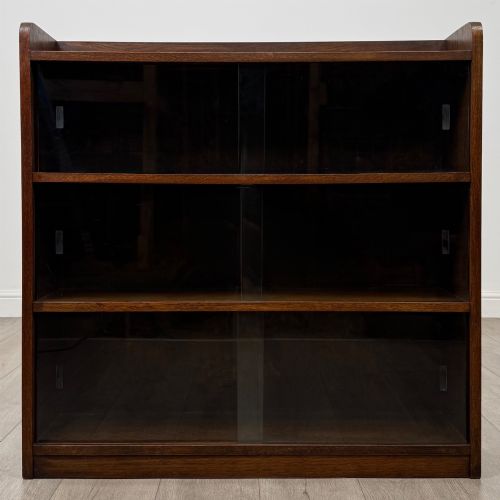
The selections on this page incorporate Edwardian craftsmanship, 1930s Art Deco pieces, and 1950s interpretations in walnut, oak, and aluminium. These variations range from domestic bookcases with glass doors to commercial counters and medical cabinets.
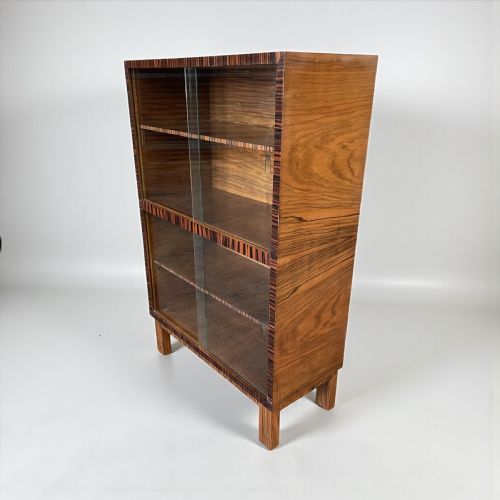
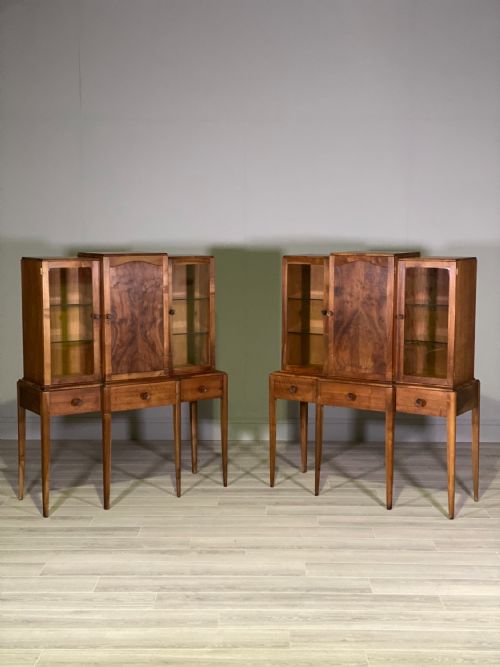
Art Deco examples dominate the available styles, often featuring distinctive geometric shapes, burr walnut veneers, and sycamore details. Meanwhile, mid-century pieces lean towards simpler teak construction and industrial frames suited to modern interiors.
How they were made
Construction relies heavily on timber frames combined with generous glass panels to maximise visibility of the interior shelves. Makers utilised solid woods such as oak alongside decorative veneers including burr walnut and birch to achieve striking visual textures.
Specialist techniques defined the era, from the curved woodwork of clove-shaped Art Deco cabinets to the precise metal framing seen in industrial and medical storage units. Fabric linings and tailored shelving were frequently integrated to complement the display function of each cabinet.
Materials documented across the current selection include oak, walnut, burr walnut, birch, aluminium, and fabric.
What varies in quality
Quality in these cabinets rests upon the choice of timber and the sophistication of the veneer work rather than sheer scale. Superior pieces demonstrate careful matching of burr walnut figures and robust joinery that maintains structural integrity over decades of use.
The refinement of hardware, the clarity of the original glass, and the attribution to known workshops or designers elevate specific examples above standard production items. Simpler utility pieces offer sturdy construction while retaining a more straightforward aesthetic.
Epstein·Heals·Phoenix Gallery·Arthur Reynolds Of Ludlow
The Retro Glass Display Cabinet Glossary
- Art Deco
- A design style prevalent in the nineteen-thirties characterised by sleek geometric shapes, stylised motifs, and modern industrial materials. It influences many of the display cabinets found in this selection.
- Burr Walnut
- A highly prized wood veneer derived from the growth excrescences of walnut trees, known for its swirling and complex grain patterns. Cabinet makers utilised it on prominent exterior surfaces for decorative impact.
- Veneer
- A thin layer of superior wood glued to a base timber core to provide a decorative surface without the cost or weight of solid exotic wood. This technique appears widely across twentieth-century case furniture.
- Display Counter
- A horizontal glass-topped storage unit originally utilised in shops to exhibit merchandise to customers. These industrial forms now find use in domestic settings as distinctive storage pieces.
Retro Glass Display Cabinet: Frequently Asked Questions
How do I style a retro glass display cabinet?
Arrange your chosen objects with varying heights and grouped materials to create visual balance behind the glass doors. Leaving some negative space prevents the interior from feeling overcrowded.
Consider the lighting in your room to ensure the glass reflects natural light effectively without creating distracting glares.
Can I use a medical cabinet as a display piece?
Industrial and medical cabinets provide a striking contrast in domestic settings, offering robust metal frames and transparent shelving for your collections. Their utilitarian origins bring a unique architectural element to living rooms or kitchens.
Ensure the interior surfaces are properly cleaned and lined if you intend to store delicate ceramics or glassware.
What is the difference between Edwardian and Art Deco cabinets?
Edwardian cabinets generally exhibit traditional proportions and classical wood framing, often utilising solid oak with subtle detailing. They reflect a more conservative domestic aesthetic.
Art Deco cabinets embrace sweeping curves, contrasting veneers like burr walnut, and bold geometric silhouettes that define the nineteen-thirties look.
Are these cabinets suitable for small spaces?
The glass panels in these cabinets help bounce light around a room, making even compact models feel visually lightweight. Tall, slender bookcase formats maximise vertical storage without occupying too much floor area.
Measure your available wall space carefully to ensure the door swing clears surrounding furniture.