


1930s Glass Vitrine
A 1930s glass vitrine offers an elegant enclosure for displaying cherished collections with period architectural character.
1930s Glass Vitrine
A 1930s glass vitrine serves primarily as a display cabinet for china, books, and decorative objects. These pieces originate predominantly from the 1930 period, with occasional examples from the Edwardian era.
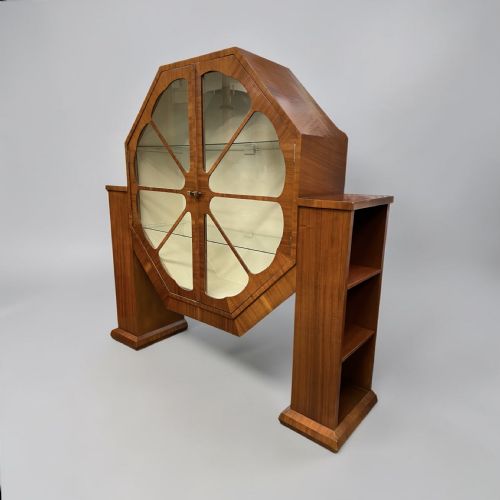
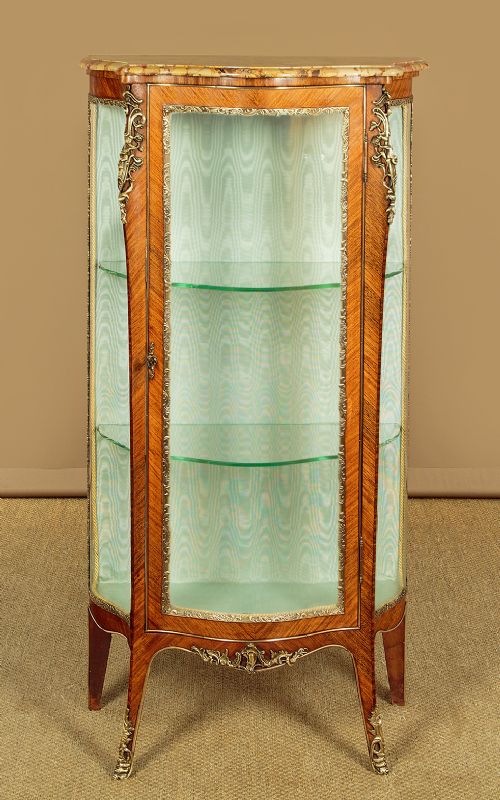
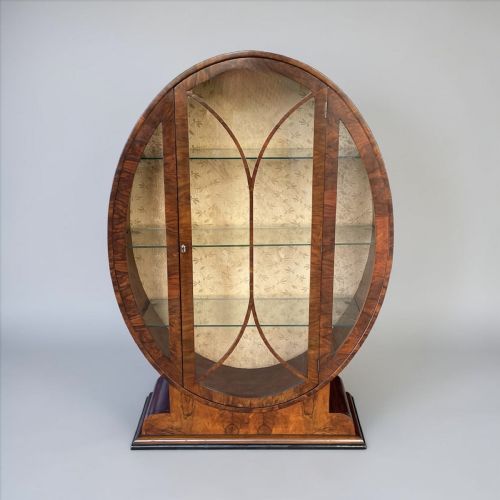
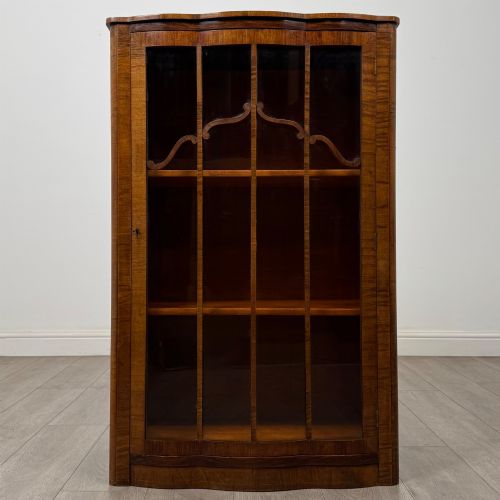
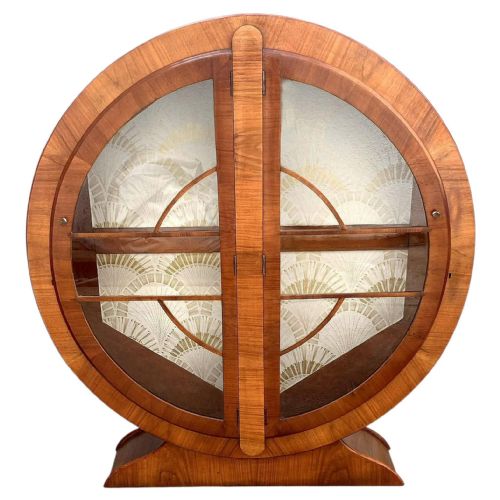
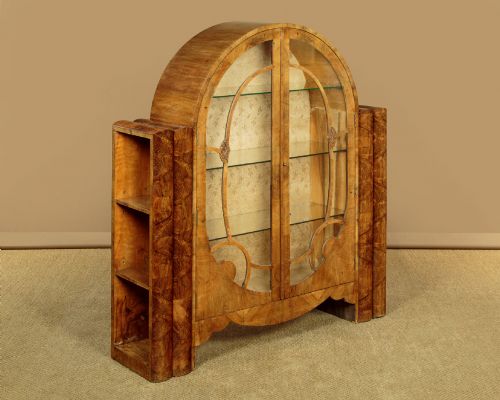
Buyers encounter distinct forms, including circular, oval, octagonal, and clove-shaped display cabinets alongside glazed bookcases. Many pieces reflect Art Deco design, while others display Louis XV Style, Neoclassical Revival, or Queen Anne Revival influences.
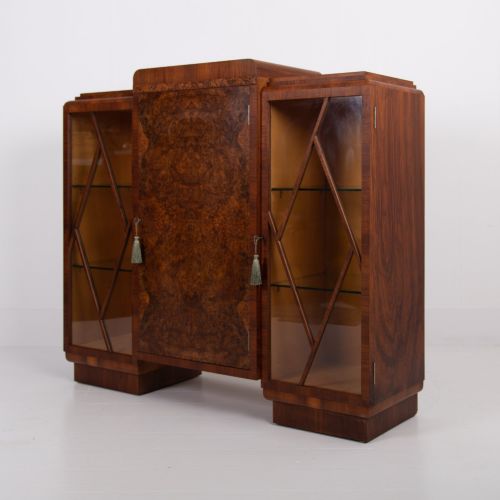
Originating largely from English workshops, these cabinets combine glazed doors and panels with substantial timber carcases. The inventory ranges from compact single vitrines to large triple shop display cabinets and sideboards.
How they were made
Cabinet makers utilised a palette of fine timbers, predominantly walnut and burr walnut, alongside mahogany, oak, maple, and sycamore. Figured grain patterns receive careful arrangement across curved and flat surfaces alike.
Glazing takes multiple forms, from simple clear panes to leaded glass windows set within timber framing. Brass mounts provide structural and decorative accents on selected mahogany and walnut carcases.
Internal elements sometimes incorporate fabric linings to complement the displayed contents. Solid oak and multi-timber constructions ensure lasting stability for these large glazed bookcase cabinets.
Walnut and oak dominate the timber palette across these listings, accompanied by brass, lead, and fabric details.
What varies in quality
The sophistication of the timber selection determines much of the distinction between pieces, particularly the choice of figured walnut or burr walnut veneers. Cabinet makers who matched grain patterns across curved doors and circular carcases achieved superior visual harmony.
Structural complexity also separates standard production from exceptional work, seen in challenging forms such as circular, octagonal, and clove shapes. The integration of specialty materials like brass mounts and leaded glass elevates the craftsmanship of individual pieces.
Rurka·Maurice Adams·Epstein·E. Pollard & Co. Ltd.
The 1930s Glass Vitrine Glossary
- Burr walnut
- A prized timber harvested from the wart-like growths on walnut trees, yielding swirling, knotty grain patterns. Makers applied this wood as veneer on prominent exterior surfaces.
- Leaded glass
- Small panes of glass joined together by narrow strips of lead into decorative geometric or figurative patterns. This technique appears frequently in period bookcase doors.
- Figured walnut
- Timber exhibiting distinctive, highly decorative grain variations caused by natural growth irregularities. It characterises the surfaces of many upscale display cabinets from this decade.
- Sideboard
- A long piece of furniture traditionally used for serving food and storing tableware. Large examples from this era incorporate glazed display sections.
1930s Glass Vitrine: Frequently Asked Questions
What fits inside a circular vitrine?
Circular cabinets accommodate small decorative items, porcelain figures, and glassware on tiered internal shelving. Their curved glass panels provide an unobstructed view from multiple room angles.
Larger cylindrical or oval versions house modest book collections alongside decorative objects. The curved geometry requires careful arrangement of taller items near the centre.
How do I clean wood and glass?
Maintain timber surfaces by dusting with a dry cloth and applying appropriate wax polish sparingly. Avoid chemical sprays that degrade antique finishes over time.
Clean glass panes using a mild solution applied to a cloth rather than sprayed directly onto the surface. This prevents moisture from seeping into surrounding wooden frames and lead cames.
Where should I place a vitrine?
Position glass cabinets away from direct sunlight to protect interior fabric linings and timber veneers from fading. Stable indoor environments prevent the wood from drying out or cracking.
Allow sufficient floor clearance around curved and octagonal models to appreciate their distinct profiles. Adequate room lighting enhances the transparency of the glazed doors.
Are these cabinets secure for heavy books?
Solid oak and mahogany bookcase cabinets provide robust shelving suitable for standard library volumes. Many pieces combine display space with enclosed storage below.
Lighter display vitrines featuring delicate walnut veneers suit decorative objects rather than heavy folios. Verify internal shelf construction before loading weighty volumes onto upper tiers.