
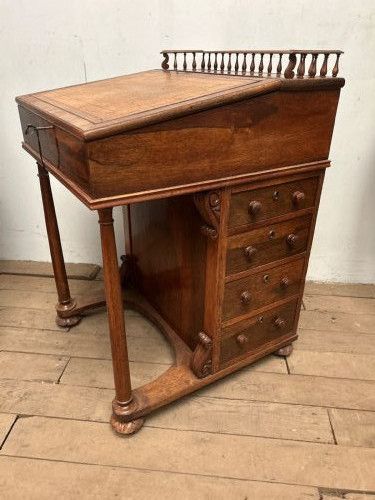
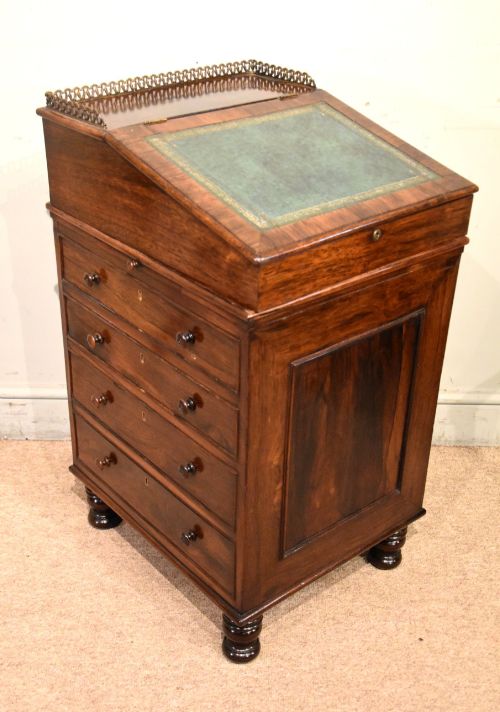

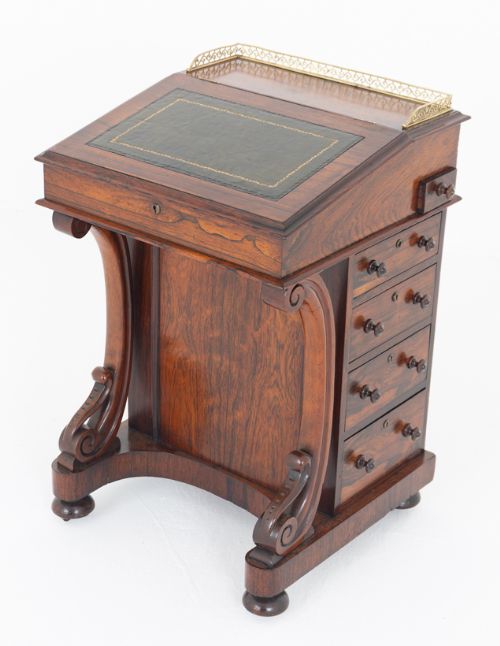


Rosewood Slant Top Desk
A rosewood slant top desk brings rich grain and practical writing space into a room.
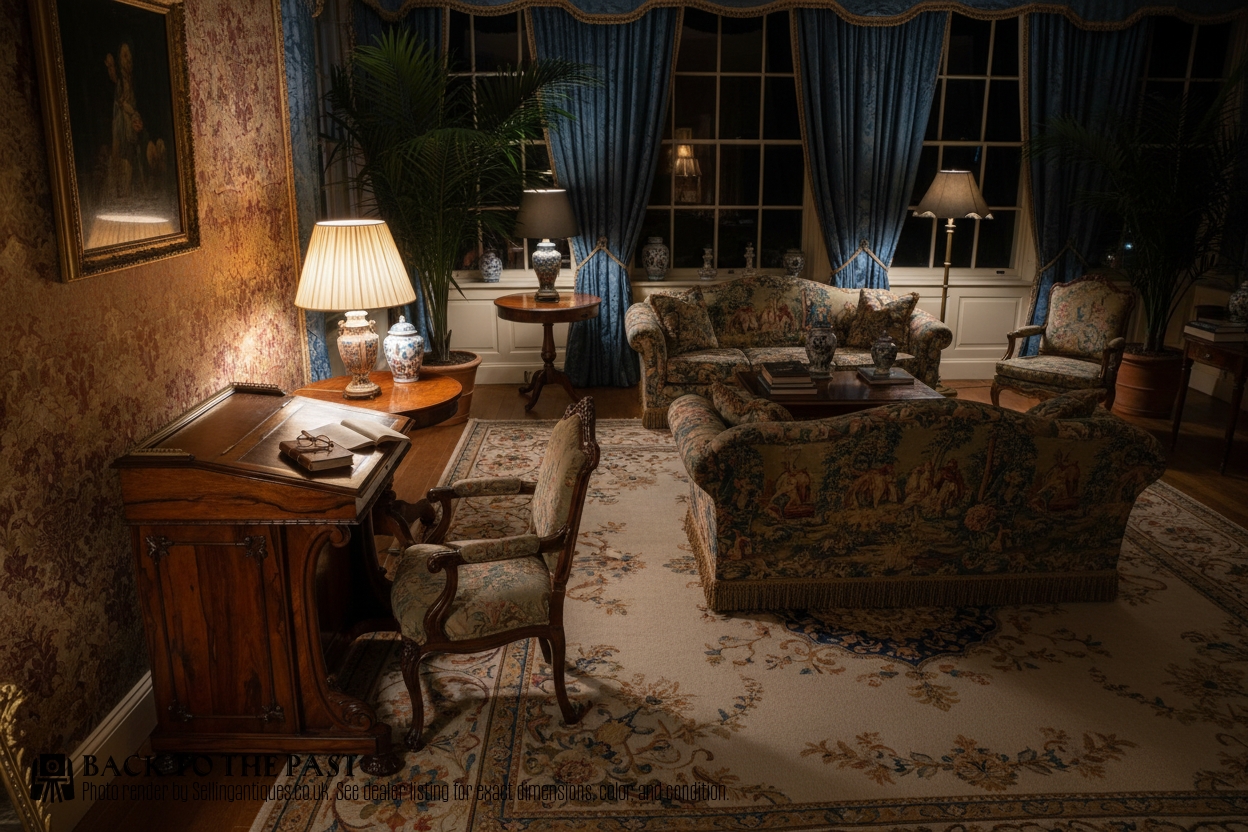
Rosewood Slant Top Desk
A rosewood slant top desk encompasses compact writing cabinets, davenports, and bureau desks designed for domestic correspondence and study. These pieces appear primarily in Regency, William IV, and Victorian periods, alongside later revival styles.
The davenport form dominates the selection, offering a sloped writing surface above a pedestal of drawers. Buyers frequently encounter French bureau de dame examples alongside English variants.
Origins stretch from English workshops to French cabinet makers and Anglo-Indian production, providing distinct regional interpretations of the form.
Distinctions in quality
Quality rests upon the selection of the rosewood timber and the precision of the grain matching across the fall front and drawers. Finer examples display crisp satinwood inlay and integrated sliding mechanisms that operate smoothly.
Proportion and decorative restraint separate standard production from superior pieces, particularly within Regency and Victorian items where brass detailing and secondary timbers reflect the cabinet maker's investment of time.
Several desks feature sliding tops designed to slide forward, giving nineteenth-century writers extra legroom without moving the inkwell.
The Rosewood Slant Top Desk Glossary
- Davenport desk
- A compact writing desk featuring a sloping top hinged over a pedestal of side drawers. This form became popular during the Regency period.
- Bureau de dame
- A lady's small writing desk, often French in origin, featuring decorative veneers and delicate proportions. These pieces frequently incorporate internal compartments.
- Satinwood inlay
- A contrasting decorative woodwork technique using light-coloured satinwood to create geometric or floral patterns within the darker rosewood surface. This detail enhances visual depth.
- Sliding top
- A mechanism allowing the upper writing section to extend forward for increased comfort while seated. It represents a sophisticated mechanical feature found in better desks.
Rosewood Slant Top Desk: Frequently Asked Questions
What is a davenport desk?
A davenport is a compact form of writing cabinet featuring a sloping lid that lifts or slants for correspondence. It typically incorporates a pedestal base with drawers opening to the side.
These desks were designed for domestic use in smaller rooms or ladies' boudoirs, combining storage with a dedicated writing surface.
How do I date a rosewood desk?
Dating relies on stylistic markers from periods such as the Regency, William IV, and Victorian eras. Cabinet making techniques and hardware styles provide further chronological clues.
English and French pieces from the nineteenth century display distinct aesthetic choices, from restrained Regency lines to elaborate Victorian revival work.
Where were these desks made?
Production occurred across English workshops, French studios, and Anglo-Indian centres. Each region imparted local design preferences onto the rosewood framework.
English pieces often follow Regency or Victorian forms, while French examples favour the bureau de dame and bonheur du jour styles.
How do I care for rosewood furniture?
Rosewood benefits from stable room temperatures and protection from direct sunlight to preserve its deep colour. Regular dusting with a soft cloth maintains the polished finish without chemical buildup.
Leather inserts on writing slopes require specific leather dressings to prevent cracking over time.