




Victorian Carved Davenport
A victorian carved davenport combines compact elegance with a sloping writing surface, offering a clever workspace for the home.
Victorian Carved Davenport
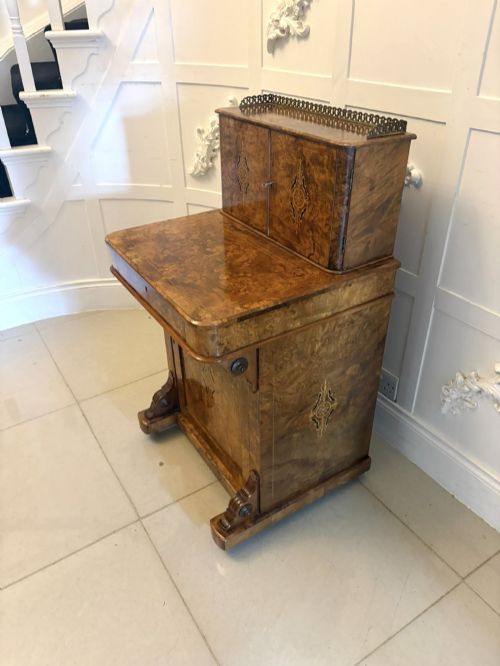
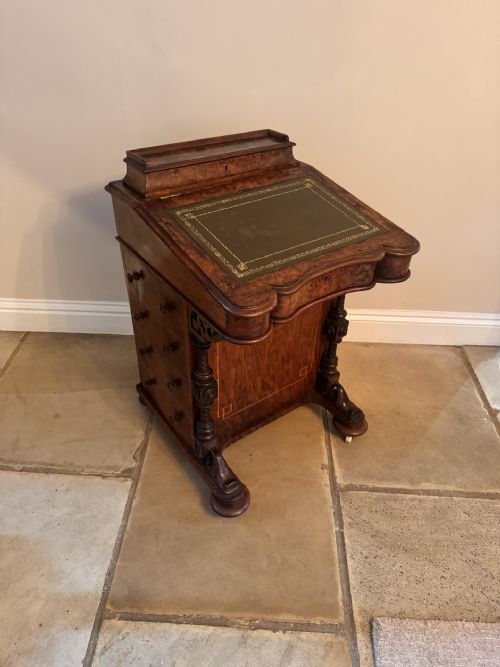
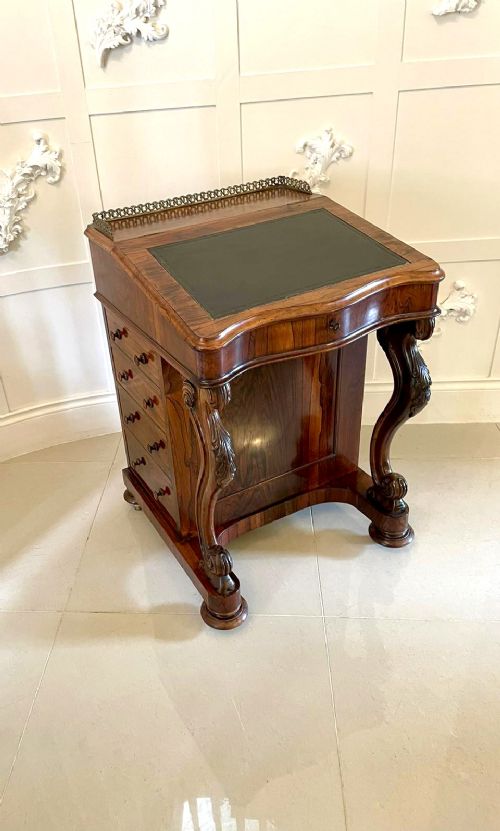
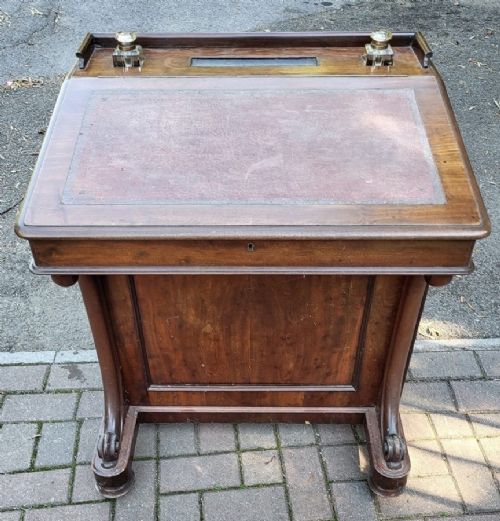
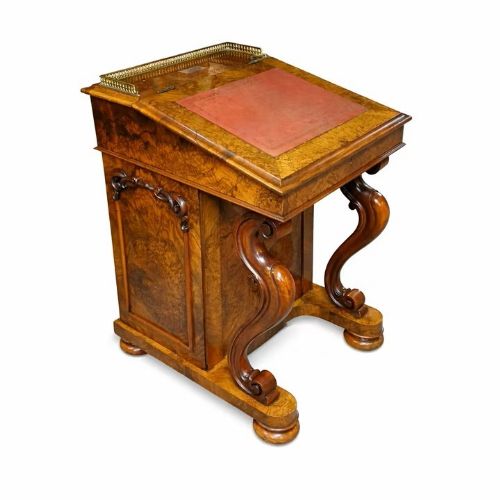
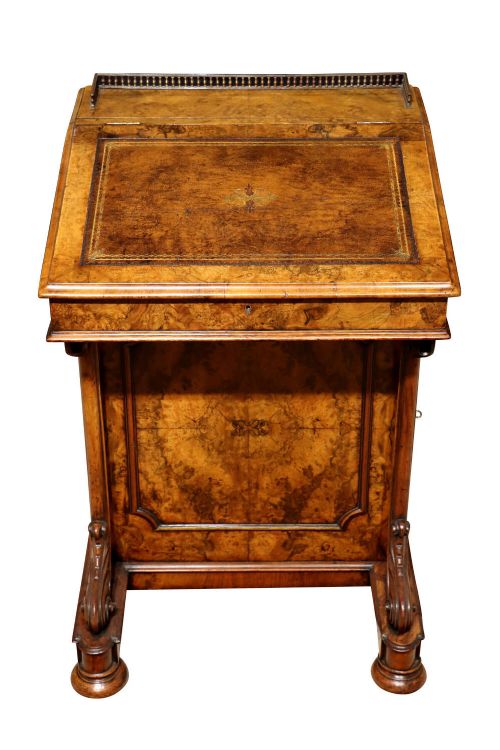
When you search for a victorian carved davenport, you encounter a compact writing desk designed during the nineteenth century, most commonly executed in burr walnut, rosewood, or oak. These pieces typically feature a sloped, leather-lined writing lid that conceals a fitted interior with small drawers and pigeonholes.
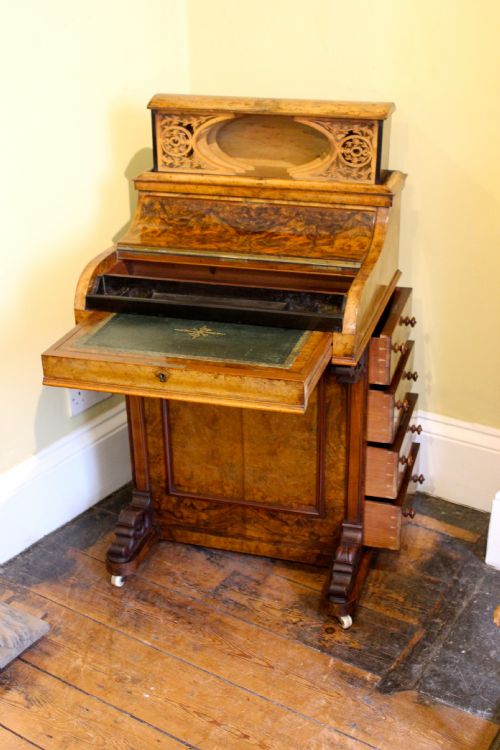
The version you are most likely to meet on this page is the walnut davenport dating from the middle decades of the nineteenth century, often decorated with marquetry inlay or intricate wood carving. Alongside these, variations such as the pop-up davenport and the freestanding davenport appear frequently in the listings.

Variations in quality
Quality in these writing desks is determined by the selection of timber veneers, the crispness of the carving, and the sophistication of the internal mechanism. Desks featuring high-figured burr walnut and detailed floral marquetry represent a higher grade of craftsmanship than plain timber examples.
Listings span the Victorian and Edwardian periods, showcasing woods from mahogany and oak to burr walnut and olivewood.
The Victorian Carved Davenport Glossary
- Burr walnut
- A prized timber veneer taken from the wart-like growths on walnut trees. It yields intricate, swirling grain patterns that define the appearance of many nineteenth-century writing desks.
- Pop-up davenport
- A specialised desk design featuring a secondary compartment or stationery box that rises from the top of the desk when a release mechanism is activated.
- Marquetry
- The art of applying pieces of veneer to a structure to form decorative patterns and pictures. Floral motifs frequently appear on the lids of walnut desks.
- Secretaire
- A piece of furniture containing a writing drawer or fold-down writing surface. In these desks, it refers to the primary writing compartment concealed beneath the sloping lid.
Victorian Carved Davenport: Frequently Asked Questions
How was a davenport used?
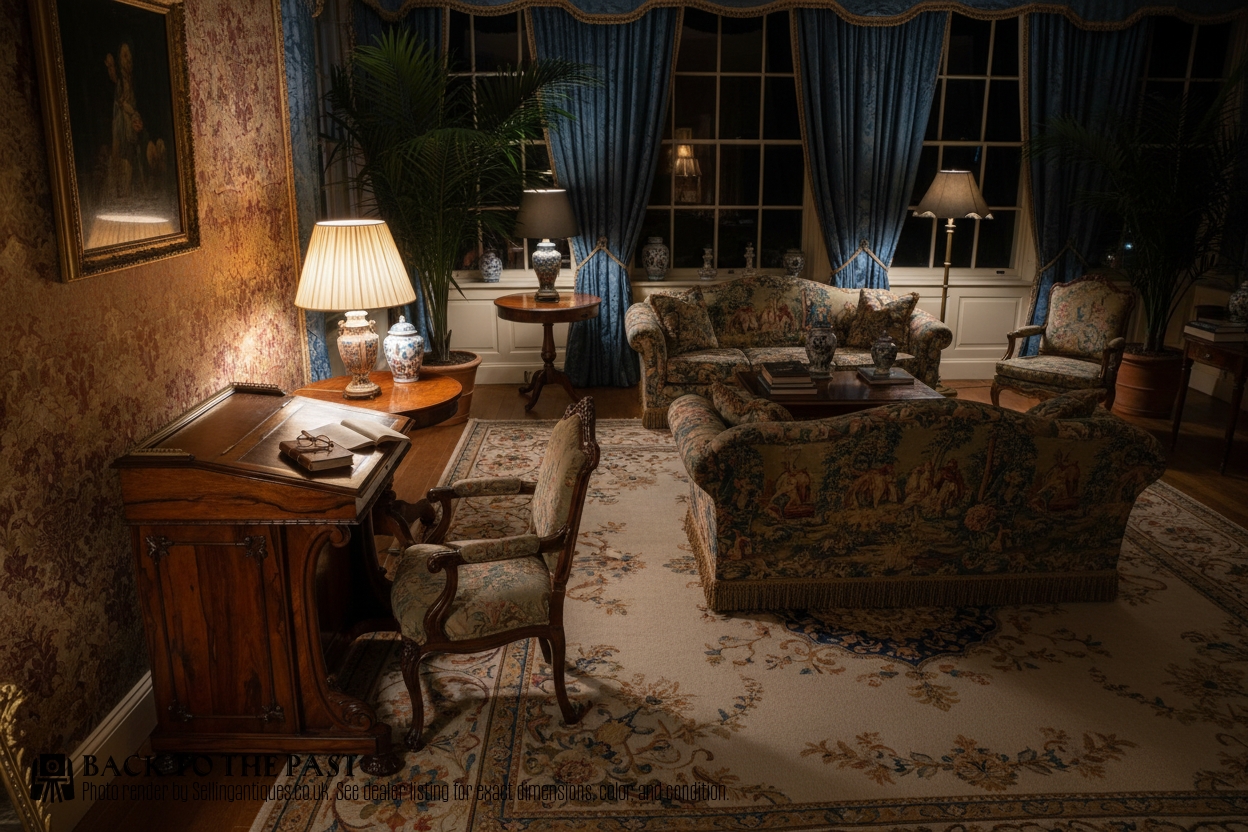
These compact desks served as private writing stations for correspondence and record-keeping in nineteenth-century drawing rooms and parlours.
The sloping lid provided a comfortable writing angle, while the side drawers and internal compartments held stationery, inkwells, and letters.
What timber was used most often?
Burr walnut is the primary timber seen across these nineteenth-century writing desks, valued for its complex and decorative grain patterns.
Mahogany, rosewood, and oak also appear regularly, sometimes enhanced with marquetry inlay or extensive woodwork carving.
How do you date a davenport?
Dating relies on stylistic clues, timber choices, and construction methods associated with the Victorian period and the wider nineteenth century.
Earlier examples often display Rosewood frames and William IV influences, while mid to late nineteenth-century pieces frequently feature burr walnut and fitted interiors.
Are drawers accessible from both sides?
Certain models incorporate drawers that pull out from both sides, while others feature a bank of working drawers on one side and dummy drawers on the other.
Freestanding versions were designed to sit away from the wall, allowing access to drawers or decorative panels on multiple sides.