

Traditional Captain Desk
A traditional captain desk search leads you directly to sturdy elm and mahogany seating made for writing and office work.
Traditional Captain Desk
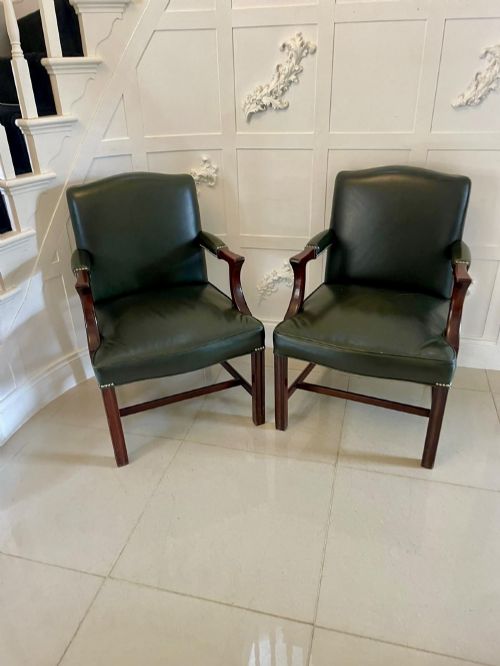
When you search for a traditional captain desk setup, you find robust armchairs, Windsor forms, and small writing furniture designed for studies and offices. The selection relies heavily on desk chairs, library armchairs, and Davenport desks rather than large stationery cabinets.
Victorian and Edwardian pieces dominate the offerings, spanning the nineteenth and early twentieth centuries. Elm, ash, beech, and mahogany appear frequently across sturdy country house and provincial English workshops.
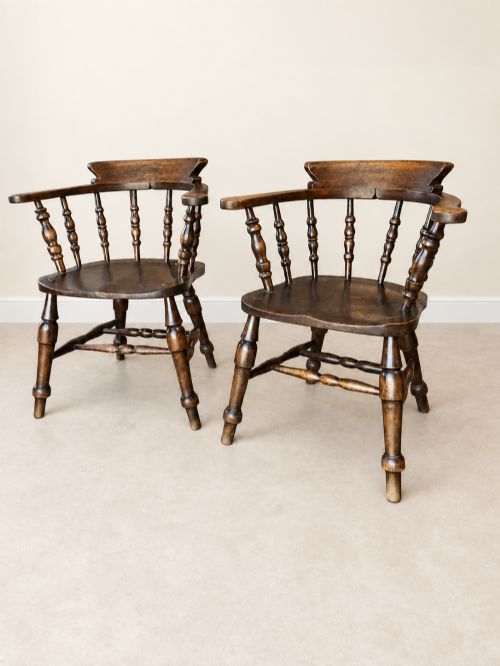
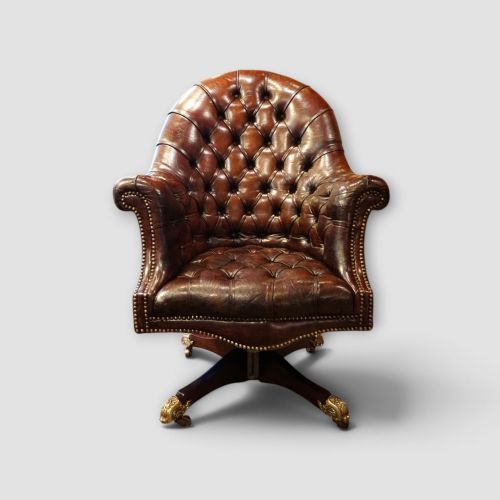
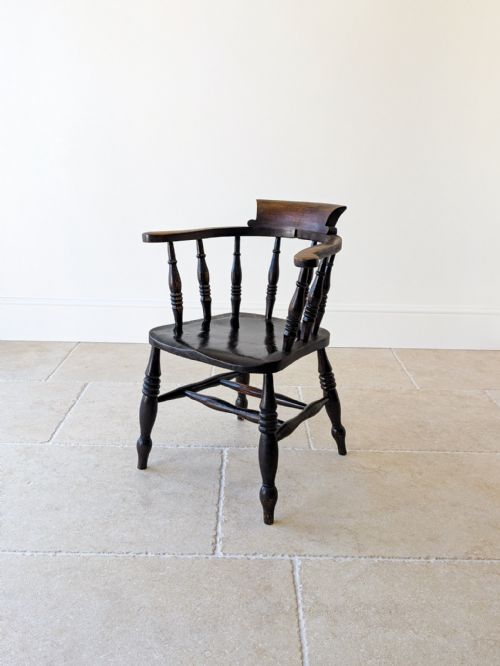
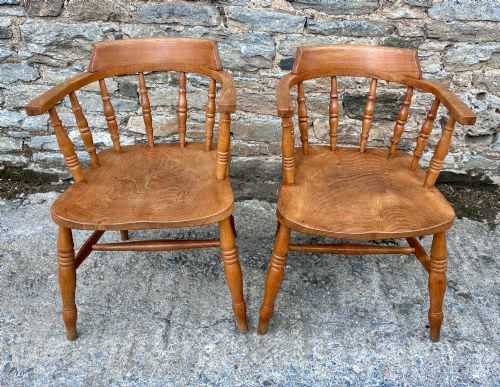
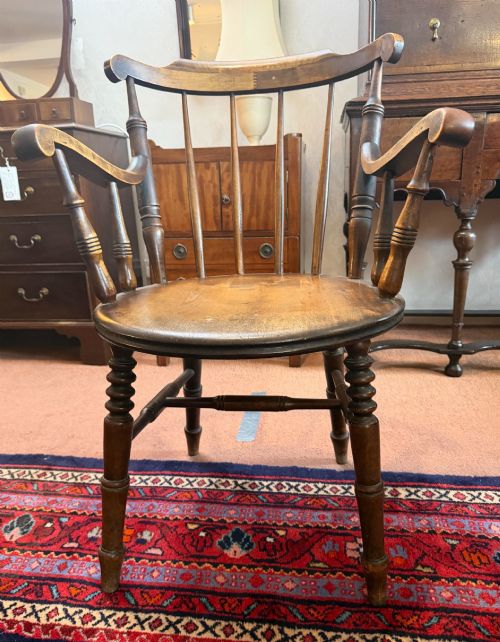
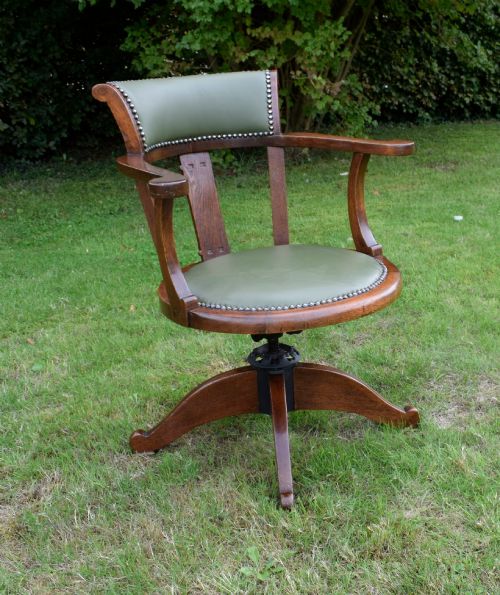
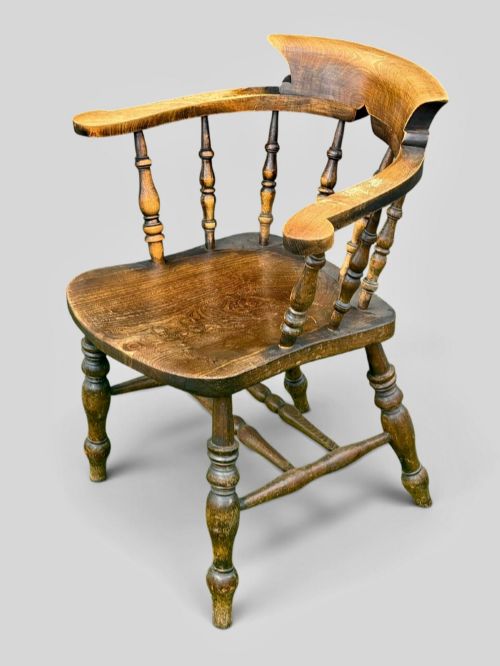
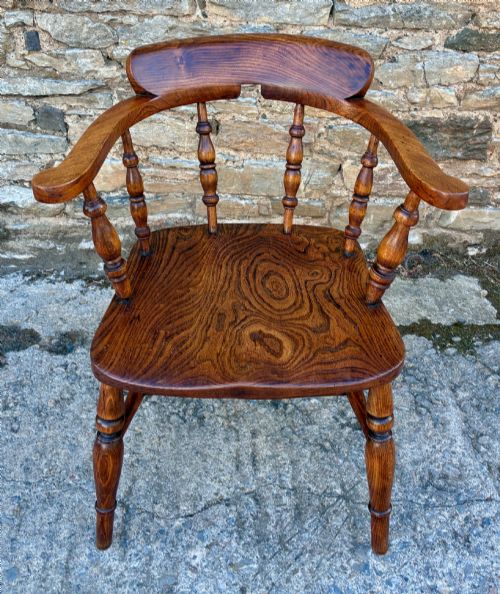
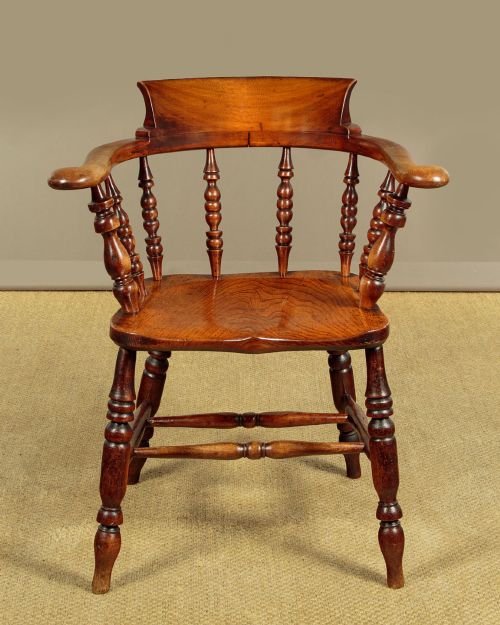
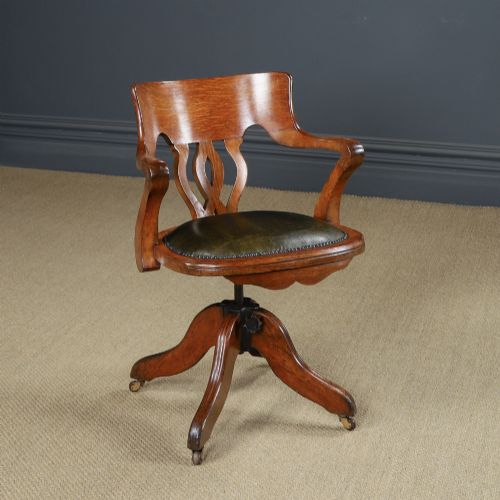
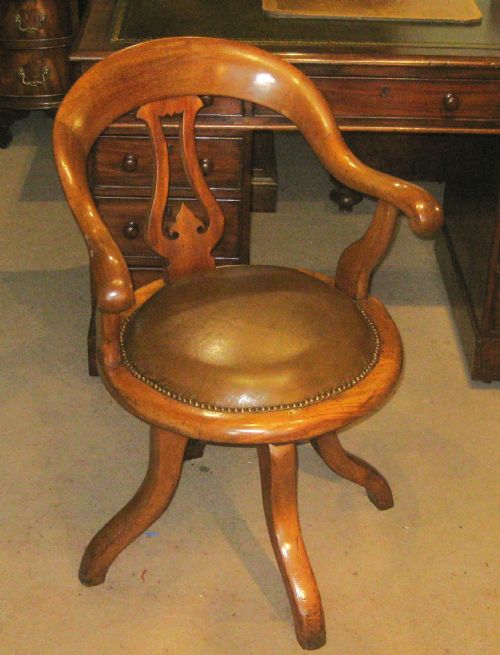
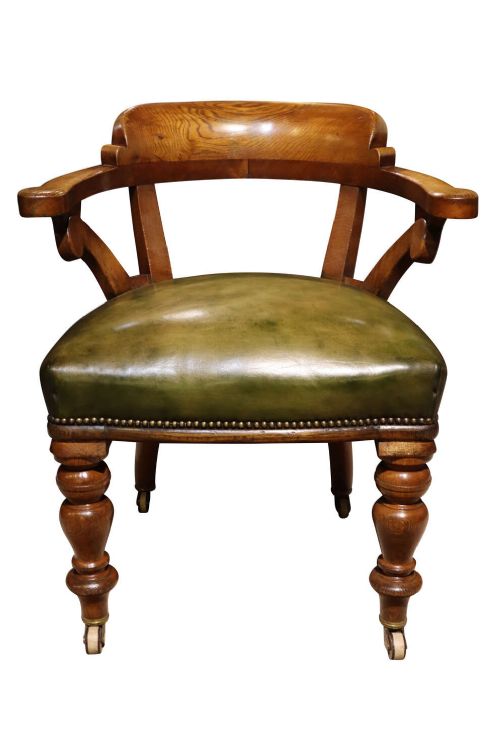
Smoker's bow armchairs and revolving desk chairs provide the primary seating choices for these workspaces. They combine low, curved backs with comfortable wooden seats or leather upholstery built for long hours at a table.
How they were made
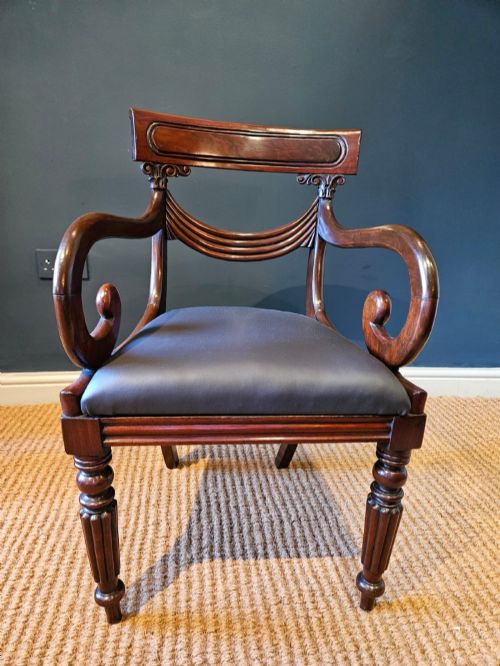
Cabinet makers and chair bodgers utilised solid timbers like elm, ash, and beech for the bent components and spindle backs of country seating. Mahogany and oak were reserved for finer library and office chairs, often paired with brass hardware and tooled leather pads.
Traditional joinery involved turning wooden spindles on lathes and bending thick wood sections using steam for continuous armrests. Swivel mechanisms in later office chairs incorporated iron and brass to allow smooth rotation.
Listings feature woods including elm, beech, mahogany, and oak across Victorian and Edwardian periods.
What varies in quality
The choice of timber creates a distinct difference, as dense figured mahogany or well-figured elm commands greater attention than plain utility woods. Rich surface patination developed through decades of use also separates ordinary examples from superior ones.
Construction methods dictate longevity, particularly in the stability of spindle joints and the smooth operation of revolving desk mechanisms. Original leather upholstery and intact brass castors add substantially to the integrity of a piece.
Gillow and Co
The Traditional Captain Desk Glossary
- Smoker's Bow
- A sturdy low-backed wooden armchair related to the Windsor tradition, commonly used in offices and country homes. These chairs feature continuous curved armrests supported by turned spindles.
- Davenport
- A compact writing desk featuring a sloping top and drawers accessed from the side. They emerged during the Georgian and Regency periods for correspondence.
- Windsor Chair
- A chair built with a solid wooden seat into which the legs and back spindles are directly fitted. Regional variations include low back and comb-back designs.
- Carver Chair
- An armchair designed to match a set of dining or office chairs, traditionally positioned at the head of a table. They share the decorative motifs of their smaller counterparts.
Traditional Captain Desk: Frequently Asked Questions
What is a traditional captain desk chair?
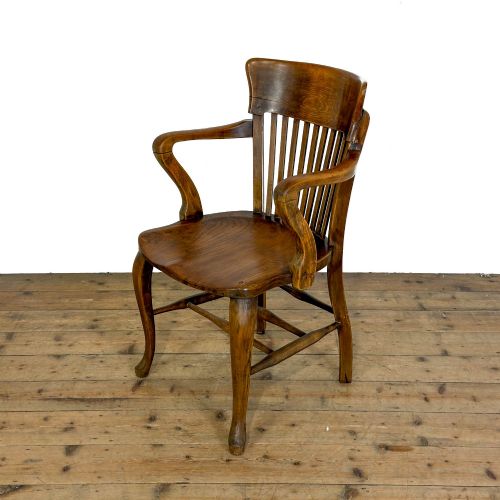
A traditional captain desk chair is a low-backed wooden armchair designed for comfort during writing or office tasks. Many examples incorporate revolving mechanisms or upholstered leather seats.
They draw on nineteenth-century Windsor and smoker's bow designs, offering sturdy armrests and solid timber construction.
How do I identify a Victorian desk chair?
Victorian desk chairs often feature turned wooden spindles, horseshoe-shaped armrests, and sturdy timber frames made of elm, ash, or mahogany. Swivel models from this era utilise iron and brass underframes.
Looking beneath the seat reveals traditional pegged joinery and evidence of hand-turning common to nineteenth-century workshops.
Are these chairs suitable for modern desks?
Many nineteenth-century desk chairs and revolving armchairs fit well beneath modern working surfaces, provided seat heights match. Their compact footprints suit smaller studies and home offices.
Swivel and height-adjustable models from the Edwardian period offer practical daily use alongside period character.
What is a smoker's bow armchair?
A smoker's bow is a sturdy vernacular armchair with a low spindle back and a thick elm or beech seat. They served as comfortable seating in country houses, offices, and inns.
Their robust construction makes them durable survivors from the nineteenth century.