






Rosewood Marble Top Table
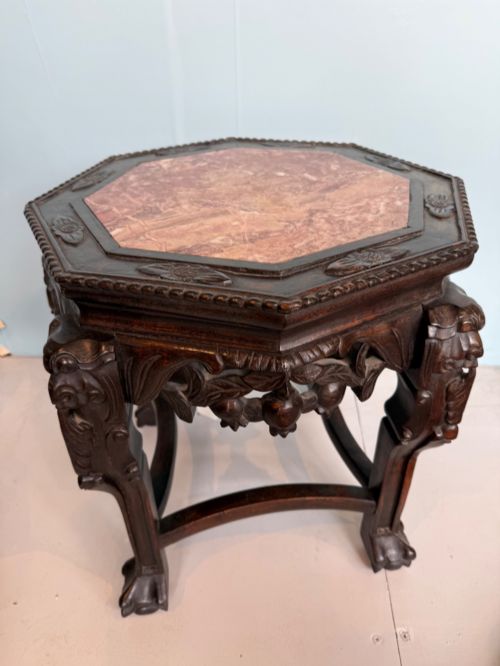
A rosewood marble top table brings together dense, richly figured timber and cool stone for a surface designed to anchor a formal interior.
Rosewood Marble Top Table
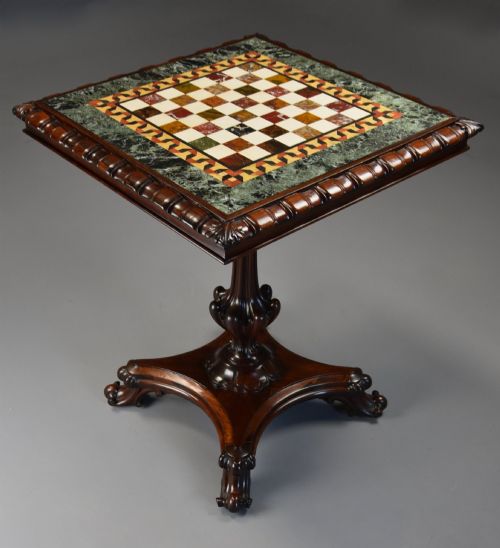
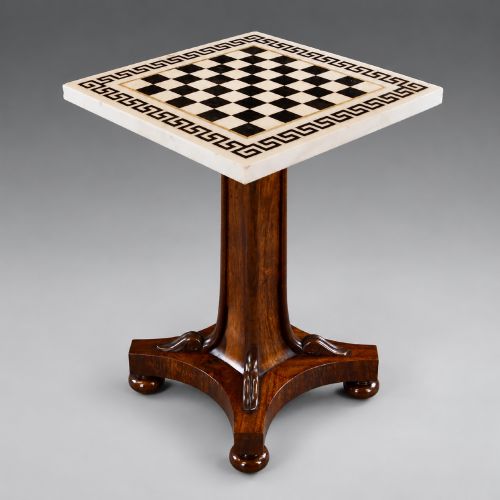
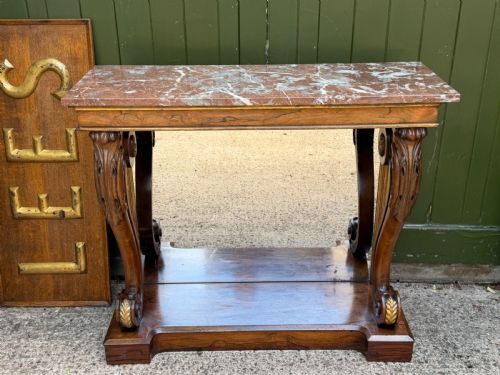
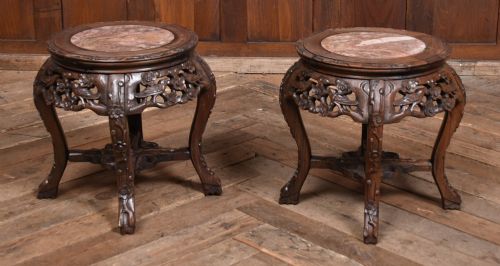
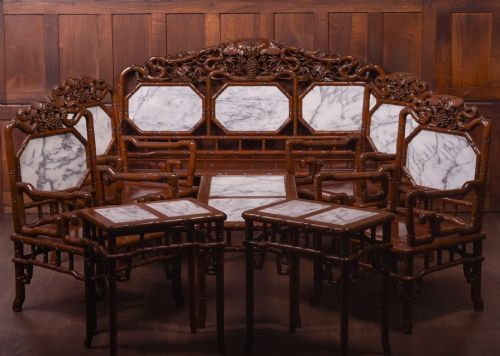
A rosewood marble top table combines a heavy timber framework with an inset stone surface, appearing in forms ranging from grand console and pier tables to compact lamp and occasional tables. These pieces span the Regency, William IV, and Victorian periods, alongside a substantial group of Chinese carved hardwood and export stands.
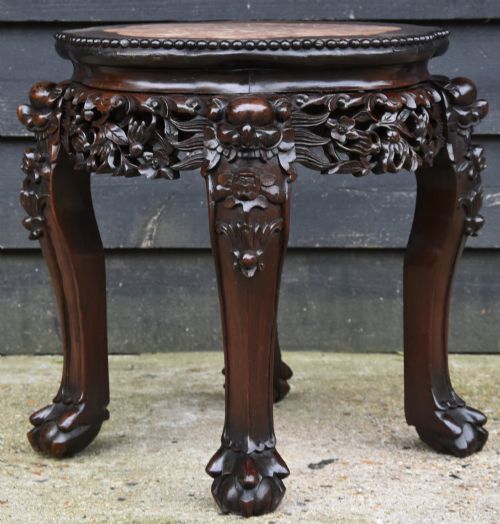
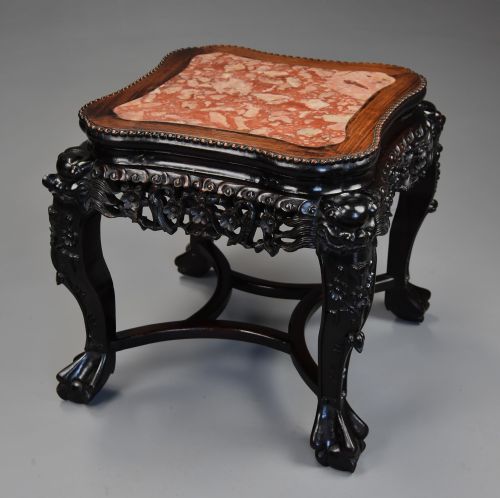
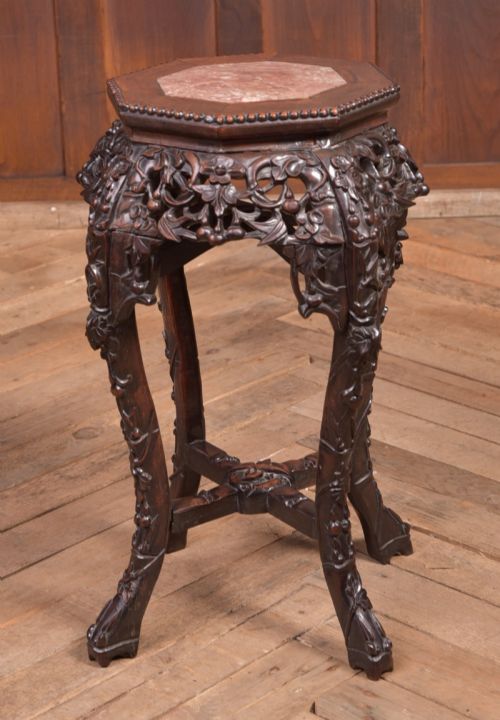
The Chinese export pieces typically serve as plant stands, jardiniere supports, and low tables, featuring pierced and carved aprons framing rouge or white marble panels. Meanwhile, European iterations from the nineteenth century often take the form of console tables placed against walls or circular centre tables designed for the middle of a room.
Buyers seeking a rosewood marble top table will find both British and Continental formal furniture and traditional Oriental hardwood furniture represented across the selection. The common thread among them is the pairing of polished dark timber with a cool, smooth stone slab.
How They Were Made
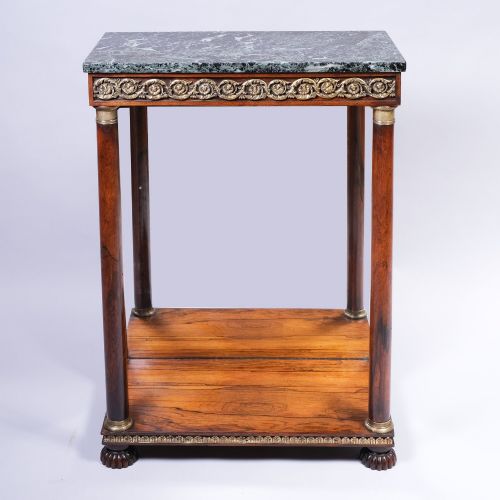
The construction relies on dense tropical hardwoods like rosewood, padouk, and other oriental timbers, frequently combined with brass mounts, ormolu, and parcel-gilding. Carvers shaped the timber frames by hand, producing intricate pierced scrollwork on plant stands or clean architectural lines on Regency console tables.
Stone slabs - ranging from plain white marble to rouge marble and intricate specimen or pietra dura panels - are rebated directly into the wooden tops to sit flush with the frame. Joinery techniques include sturdy tenon joints for load-bearing stands and precision framing to support the considerable weight of the stone.
Rosewood Marble Top Table Retail Price Guide 2026
Typical asking prices for rosewood marble top table among the pieces listed under this phrase on Sellingantiques today, from the lower quarter to the upper quarter. They describe what is for sale here now, not the wider market.
Periods range from early nineteenth-century Regency pieces to late Victorian and Edwardian stands.
What Varies in Quality
Quality rests on the depth of carving, the grain definition of the rosewood, and the choice of marble inset. Finer examples display crisp, undercut botanical carving on the aprons and legs, whereas simpler pieces rely on plain turned or square-section supports.
The selection of the stone panel also marks the distinction between standard and exceptional pieces, with multi-coloured specimen marbles, pietra dura work, and thick rouge marble slabs reserved for the most ambitious commissions. Additionally, the weight and stability of the frame indicate the level of joinery skill applied during manufacture.
The Rosewood Marble Top Table Glossary
- Console table
- A table designed to stand against a wall, frequently supported by front legs or brackets while relying on the wall for part of its stability.
- Jardiniere stand
- A tall, slender piece intended to elevate a plant pot or flower urn, often featuring a circular marble inset to resist moisture.
- Pietra dura
- An artistic technique using cut and fitted inlaid brightly coloured stones to create geometric or pictorial images.
- Pier table
- A low table specifically made to sit against the wall space between two windows, typically positioned beneath a wall mirror.
Rosewood Marble Top Table: Frequently Asked Questions
How were these tables used originally?
In nineteenth-century European drawing rooms, larger console and pier tables served as decorative display surfaces for lamps, clocks, and ornaments. Smaller versions functioned as wine or occasional tables for entertaining.
In Chinese interiors, the smaller stands and low tables elevated precious vases, bronze vessels, and large indoor plants to prominent heights within the room.
Where should I place a marble top table?
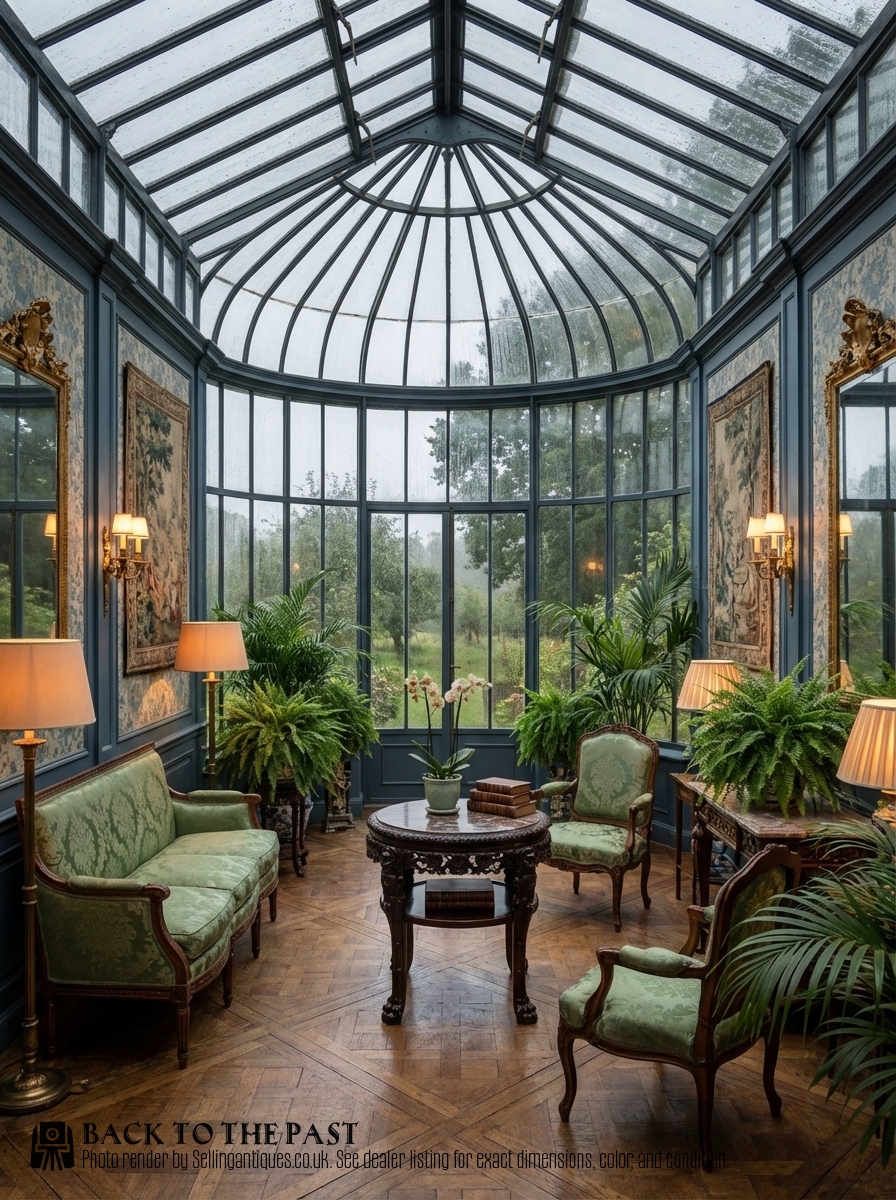
These tables suit hallways, living rooms, and dining areas where their strong silhouette can anchor a wall or corner. A console version works best against a clear wall space, perhaps beneath a mirror or painting.
Plant and jardiniere stands fit naturally into corners or window bays where they can support greenery without cluttering floor space.
How do I clean the marble top?
Wipe the stone surface regularly with a soft, damp cloth using mild, pH-neutral soap if necessary. Avoid acidic cleaners, vinegar, or harsh chemicals that can etch or dull the polished finish of the marble.
Dry the surface thoroughly afterwards to prevent water marks from settling into the stone.
How do I distinguish Regency from Victorian examples?
Regency pieces, dating from the early nineteenth century, tend to feature cleaner architectural lines, classical mounts, and restrained brass or parcel-gilded detailing. They often reflect French Empire influences.
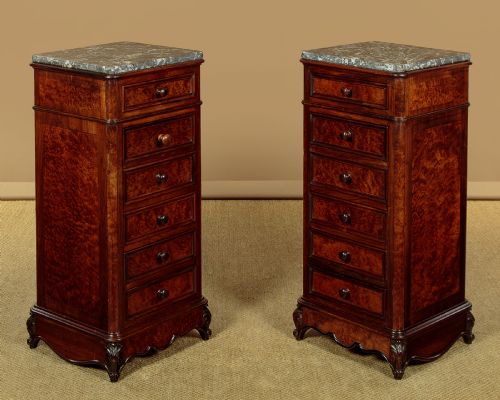
Victorian pieces, produced later in the century, frequently display heavier proportions, more exuberant carving, and a wider variety of exotic wood veneers and serpentine shapes.