
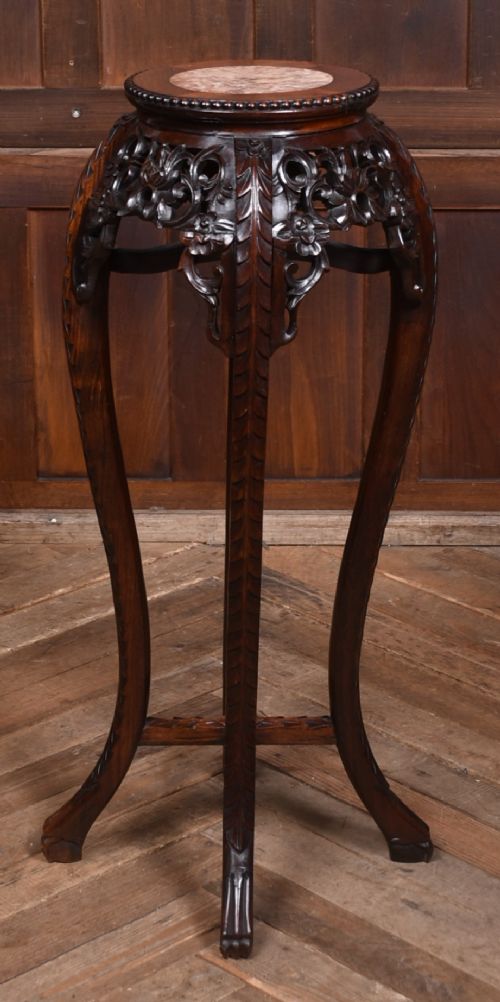


Rosewood Marble Plant Stand
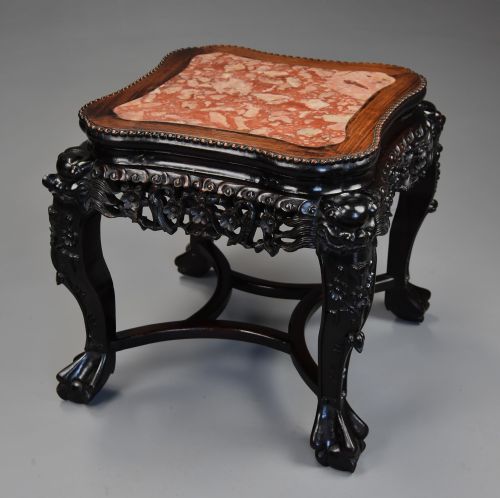
These rosewood marble plant stand pieces unite dense timber and cool stone to elevate urns and jardinieres.
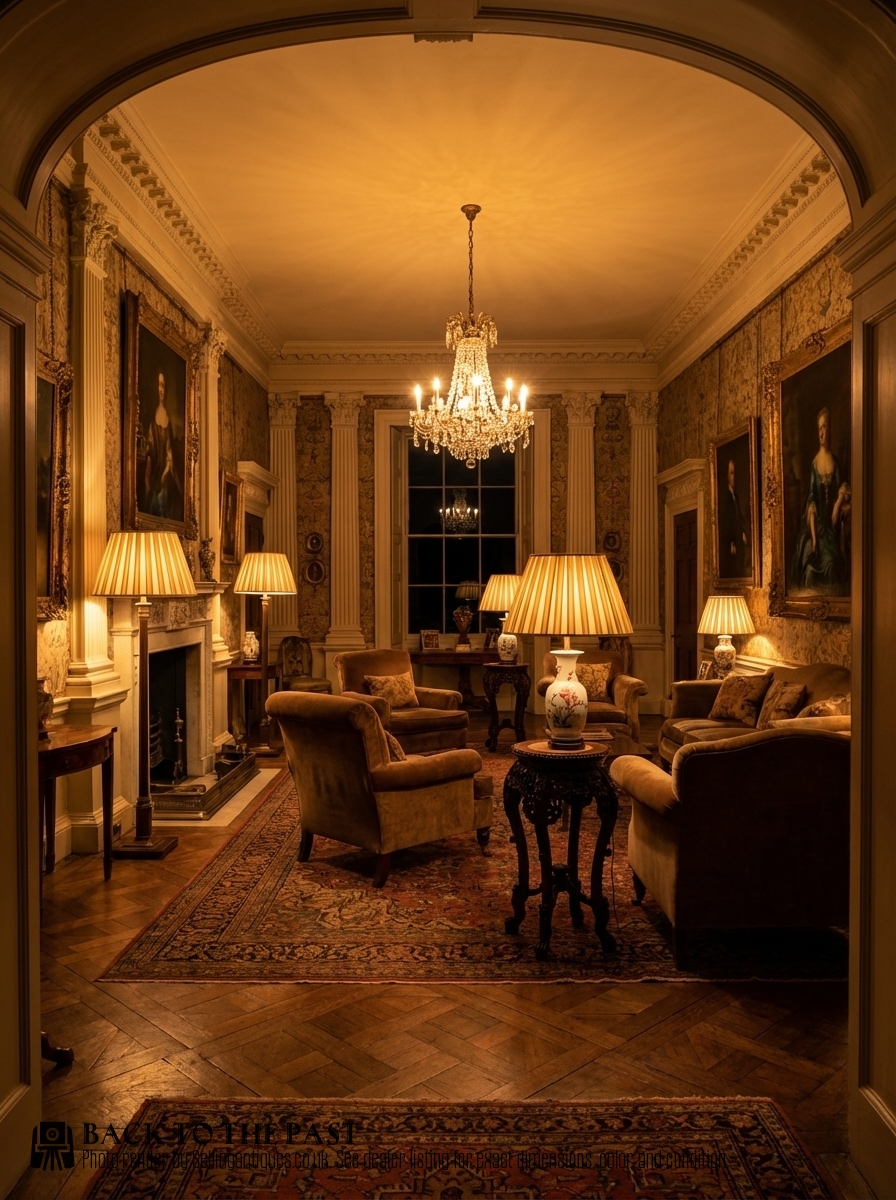
Rosewood Marble Plant Stand
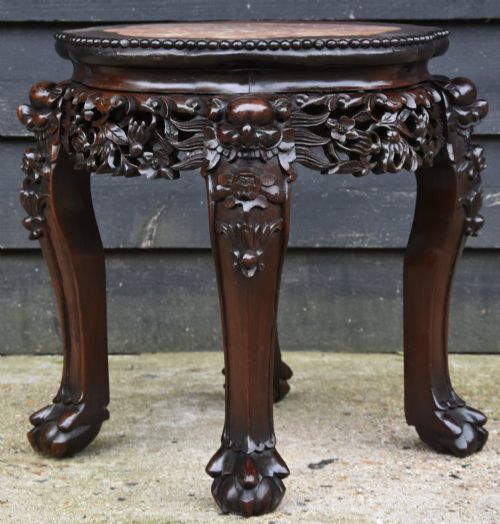
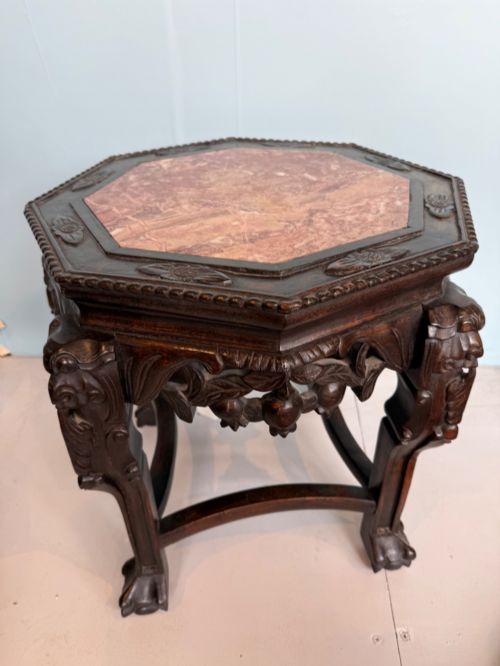
A rosewood marble plant stand brings together a heavy timber frame and a fitted stone insert designed to hold large pots and urns. Most examples found here originate from nineteenth-century Chinese workshops or adopt traditional Qing Dynasty aesthetics alongside occasional Regency forms.
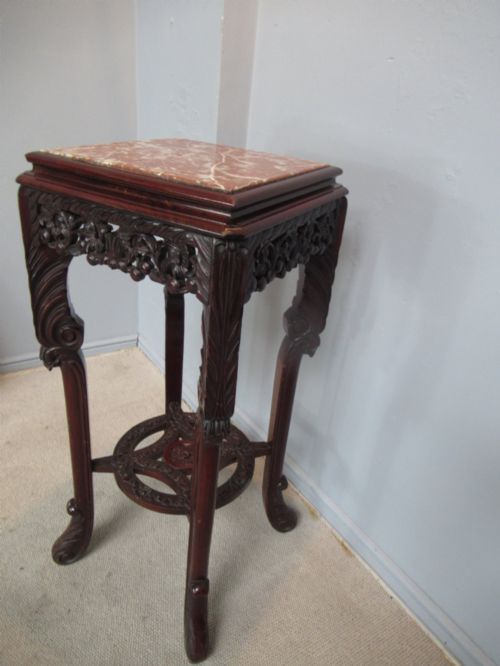
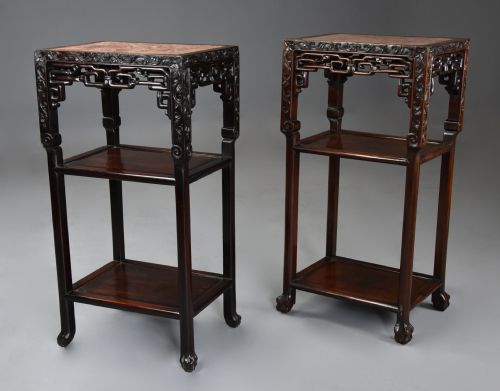
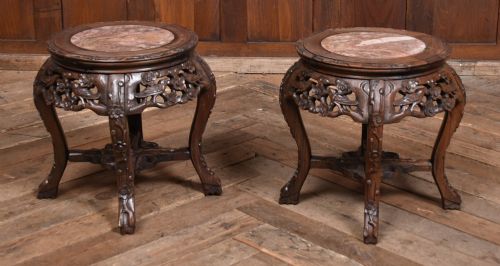
The inventory ranges from low occasional tables and small side stands to tall pedestal designs meant for corner display. These items served practical roles in domestic interiors as stable platforms for heavy floral displays and interior greenery.
How They Were Made
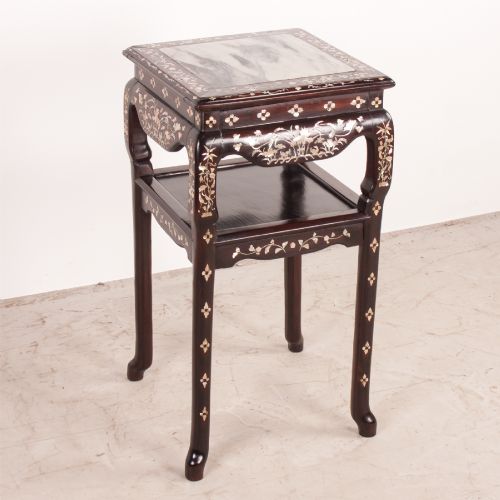
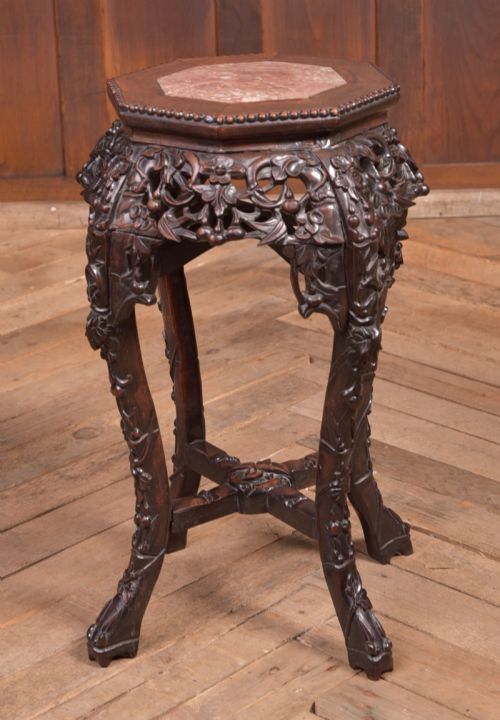
Carved structural frames rely on dense timbers including rosewood, padouk, and hongmu, often detailed with intricate openwork foliage or geometric motifs. Some examples incorporate mother-of-pearl inlay to accent the dark grain of the wood.
Marble inserts, including rouge varieties, are carefully rebated into the timber tops to provide a cool, water-resistant surface. Joinery is typically executed without modern metal fasteners, relying instead on traditional framing techniques.
The inventory records forms ranging from low pot stands and urn pedestals to occasional side tables with mother-of-pearl inlay.
What Varies in Quality
Depth and crispness of the hand carving distinguish standard production from superior examples, where relief work exhibits sharp undercut details. The figure of the timber and the uniformity of the inset marble slab further set pieces apart.
Proportion and structural rigidity dictate overall merit, as taller stands require precise joinery to remain stable under heavy ceramic vessels.
The Rosewood Marble Plant Stand Glossary
- Jardiniere stand
- A tall or low table specifically built to support a decorative ceramic flower pot or plant container.
- Hongmu
- A dense traditional Chinese hardwood often selected for dark furniture and carved display stands.
- Rouge marble
- A deep reddish variety of stone frequently utilised for contrasting inset tops in nineteenth-century tables.
- Padouk
- A heavy, durable exotic timber with reddish-brown tones used in traditional oriental cabinetmaking.
Rosewood Marble Plant Stand: Frequently Asked Questions
How were these stands originally used?
These pieces functioned primarily as elevated platforms for heavy ceramic planters, jardiniere bowls, and decorative urns within the home.
They allowed homeowners to display indoor greenery and heavy floral arrangements safely off the floor while protecting surrounding surfaces from moisture.
What woods do makers utilise?
Makers predominantly select dense tropical hardwoods such as rosewood, hongmu, and padouk for their structural strength and deep colour.
These heavy timbers support the weight of stone inserts and large ceramic pots without warping over decades of use.
How do I date a stand?
Dating relies on assessing the style of the hand carving, the type of joinery, and the specific characteristics of the timber.
Nineteenth-century examples often display traditional Qing Dynasty motifs and heavy gauge construction compared to later adaptations.
Can these hold heavy plants?
The robust hardwood frames and solid marble inserts are specifically engineered to bear substantial weight from large ceramic pots.
The combination of dense timber and fitted stone provides a stable, balanced centre of gravity for heavy indoor foliage.