


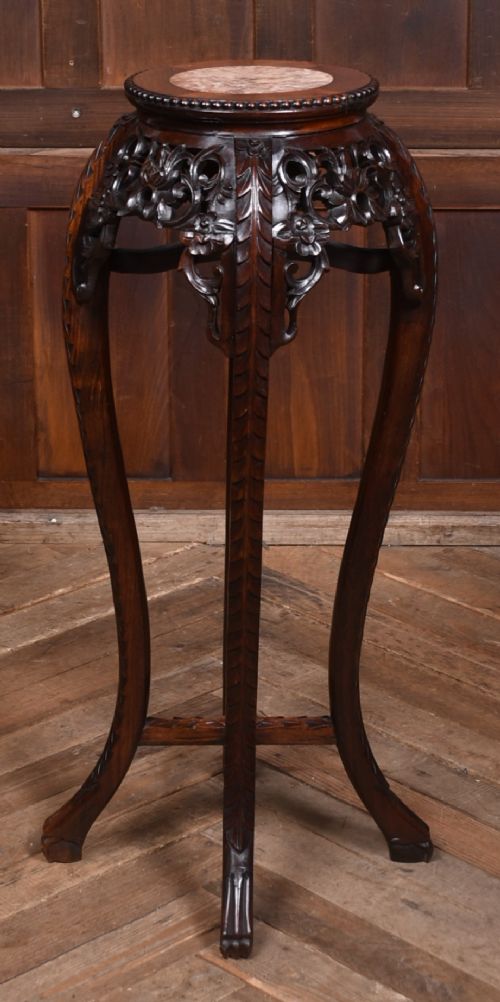


Carved Rosewood Jardiniere Stand
A carved rosewood jardiniere stand elevates your greenery and brings structured focal points to a room.
Carved Rosewood Jardiniere Stand
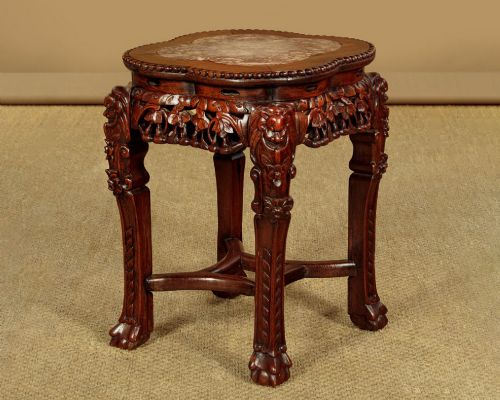
A carved rosewood jardiniere stand functions primarily as an elevated platform for heavy ceramic pots, urns, and decorative plants. These pieces appear across the nineteenth century and into the Edwardian and Republic periods, reflecting global trade and shifting interior tastes. British examples sit alongside Chinese export items, creating a diverse selection of forms designed specifically to display botanicals.
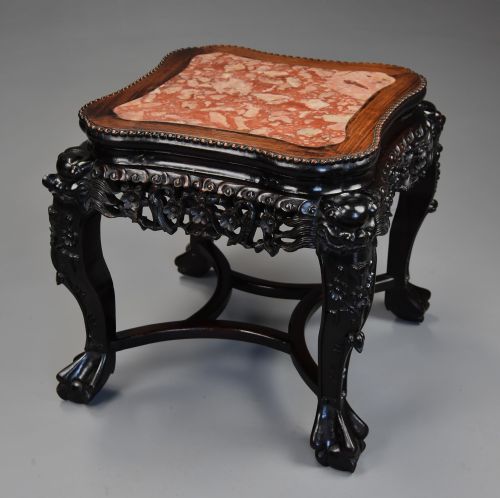
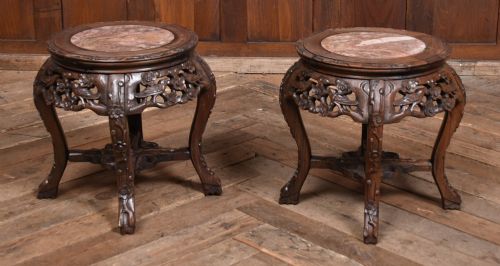
Most items on this page lean heavily towards Chinese export production, particularly pieces from the Qing Dynasty and late nineteenth century. These forms frequently incorporate circular or shaped tops inset with stone. Alongside these, British iterations from the William IV and early Victorian periods emerge, showing distinct European interpretation of floral display furniture.
Makers constructed these stands to serve multiple domestic functions beyond holding plants. Listings show forms operating as vase stands, lamp tables, low tables, and occasional side tables. The overarching design priority remains stability combined with intricate carved ornamentation to support heavy ceramic vessels safely.
Materials and construction methods
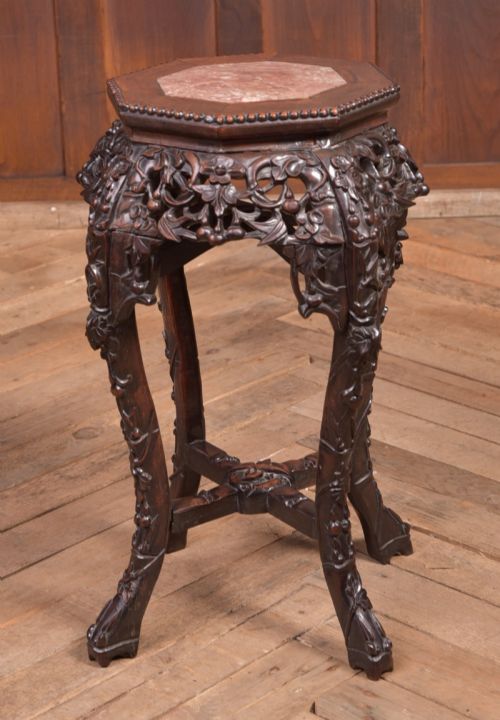
Craftsmen relied on dense imported timbers such as rosewood, padouk, and hongmu to construct these sturdy supports. These heavy hardwoods resisted warping under the damp weight of large potted plants and allowed for deep, crisp carving. Workshops occasionally utilised mother-of-pearl inlay to accent the dark surfaces of the hongmu frames.
Many examples integrate inset marble tops directly into the hardwood framing to protect the wood from spilled water during plant watering. Carving techniques varied from restrained floral edging to deep pierced relief work depicting traditional motifs. Joinery had to remain exceptionally robust to bear the concentrated weight of stone panels and ceramic jardiniere pots.
Carved Rosewood Jardiniere Stand Retail Price Guide 2026
Typical asking prices for carved rosewood jardiniere stand among the pieces listed under this phrase on Sellingantiques today, from the lower quarter to the upper quarter. They describe what is for sale here now, not the wider market.
Early nineteenth-century British makers occasionally called these items crocus tables, imagining parlours overflowing with spring bulbs rather than modest ferns.
Distinctions in quality
The crispness and depth of the timber carving separate standard production items from exceptional workshop pieces. High-end examples feature undercut relief work with smooth finishes that demonstrate complete control over stubborn hardwoods. Lesser pieces rely on shallow surface incisions and repetitive moulding that lacks sculptural weight.
The quality of the integrated marble insert significantly influences the overall standard of the stand. Superior items feature stone with distinct natural veining fitted flush into the timber rebate without gaps. Inferior construction shows loose fitting, dry timber shrinkage, or brittle marble prone to structural vulnerability.
The Carved Rosewood Jardiniere Stand Glossary
- Jardiniere
- A large ornamental pot or container for holding flowers or plants. The stands listed here specifically elevate these heavy ceramic vessels.
- Padouk
- A heavy, durable tropical hardwood with reddish tones. Craftsmen utilised this material for its exceptional strength and rich colour.
- Hongmu
- A translation meaning red wood used to describe dense, dark Asian hardwoods. This material frequently hosts intricate carving and mother-of-pearl inlay.
- Qing Dynasty
- The final imperial dynasty of China, spanning from sixteen-forty-four to nineteen-twelve. Many export stands originate from the later decades of this period.
- Crocus table
- A nineteenth-century British term for a small plant or flower table. These early pieces mirror the proportions of rosewood jardiniere stands.
Carved Rosewood Jardiniere Stand: Frequently Asked Questions
What is a jardiniere stand?
A jardiniere stand is a dedicated piece of furniture designed to elevate heavy plant pots and floral urns. They provide a stable, decorative platform that protects interior flooring and furniture surfaces from moisture.
These stands range from compact British occasional tables to substantial Chinese export pedestals. Their primary purpose is to display botanical specimens at an optimal viewing height within a room.
How do I style a jardiniere stand at home?
Placing a potted plant or ceramic bowl on top remains the most authentic way to use these stands. The sturdy marble or timber tops handle damp pottery bases safely when paired with a protective saucer.
Alternatively, these pieces function effectively as lamp tables or display surfaces for decorative objects. Their compact footprints allow them to occupy corners and empty wall spaces without crowding a room.
How do I tell Chinese export stands from British Victorian pieces?
Chinese export stands often feature dense hardwoods like padouk and hongmu paired with inset marble panels. The carving typically displays traditional Asian motifs, pierced aprons, and claw-and-ball or bulbous feet.
British Victorian and William IV examples usually employ rosewood with more formal European turnings, fluted legs, and stretcher bases. They reflect cabinet-making traditions of nineteenth-century Britain rather than Eastern export workshops.
Why do many stands have marble tops?
Marble inserts provided a practical waterproof surface for resting damp plant pots. Gardeners could water plants directly on the stand without risking water damage to polished wood.
Beyond utility, the cool stone surface offered a striking textural contrast against dark carved hardwoods. This combination remained a favoured convention in both Victorian parlours and Chinese export workshops.