



Rosewood Hall Chairs
Rosewood hall chairs are striking hardwood seats designed for grand entryways, offering a formal statement of architectural style and historical craftsmanship.
Rosewood Hall Chairs
When you search for rosewood hall chairs, you encounter a selection of dense timber seating spanning the Regency, Victorian and later nineteenth-century periods. These items were originally placed in hallways or entrance spaces to impress visitors upon arrival.
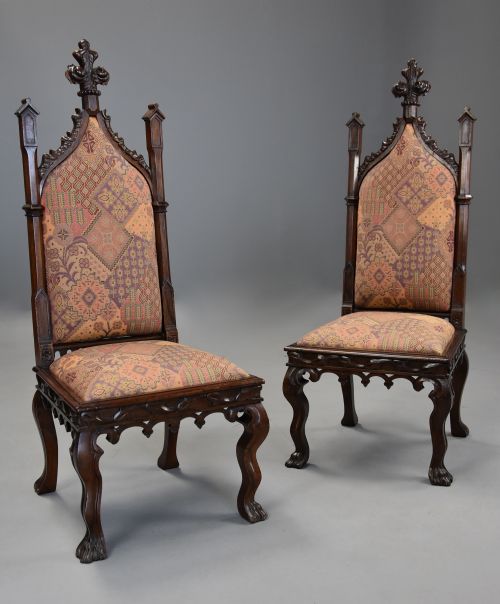
The options here range from British Gothic Revival and Rococo styles to Chinese Qing Dynasty carved hardwood pieces and Anglo-Indian designs. You are most likely to meet Victorian and mid-nineteenth-century examples alongside pairs of simulated or faux rosewood items.
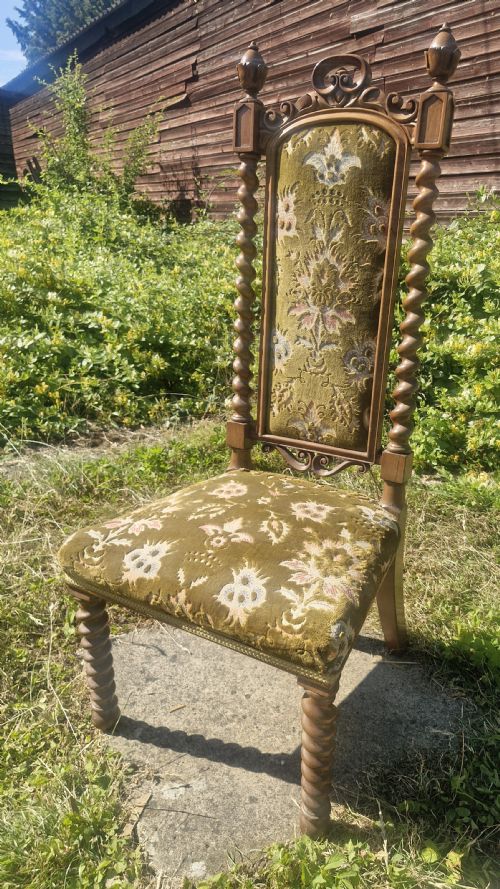
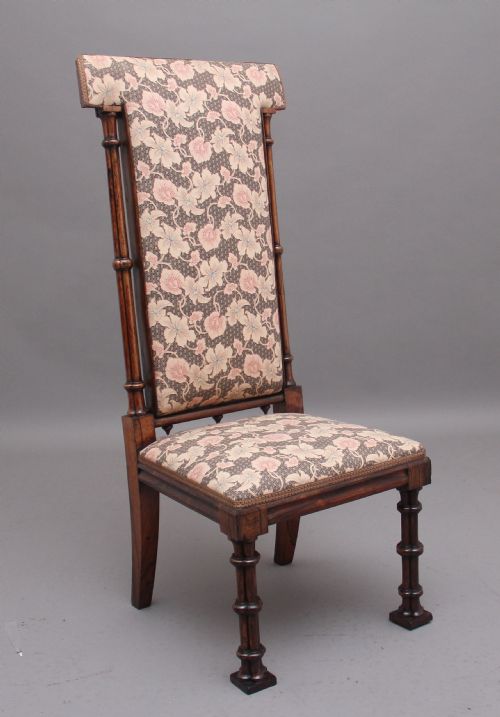
Many listings incorporate textile upholstery, needlepoint or velvet pads, while others present solid timber seats with intricate carved backs. The selection also includes armchairs, side chairs and occasional settles intended for dramatic entranceways.
Materials and construction
The construction relies heavily upon dense rosewood and related hardwoods, frequently augmented by brass inlay or structural elements of fabric and velvet upholstery. Makers utilised turning, barley twist framing and detailed hand carving to achieve ornate pierced backs.
Faux and simulated rosewood finishes appear alongside genuine timber, demonstrating the period desire for rich grain patterns and dark red-brown hues. Joinery techniques varied from traditional pegging to robust nineteenth-century framing methods designed for heavy daily use.
Upholstered elements across these items utilise velvet, needlepoint and traditional textile fabrics set into robust hardwood frames.
Judging quality and character
The standard of a piece rests in the crispness of its hand carving and the integrity of the dense hardwood frame. Superior examples display deep, sharp relief work on high backs and clean joints without excessive timber shrinkage.
The choice of secondary materials, such as heavy brass inlay or intact period upholstery fabrics, elevates certain pieces above standard production. Original finish and surface patina also distinguish exceptional seating from later alterations or heavily restored items.
W.A. Willcocks
The Rosewood Hall Chairs Glossary
- Rosewood
- A heavy, dense tropical timber prized for its dark red-brown colour and distinct grain pattern. It takes a high polish and provides exceptional structural strength for formal seating.
- Simulated rosewood
- Timber painted or stained to imitate the appearance of genuine rosewood grain. This technique was common during the Regency period to achieve a luxurious look with alternative woods.
- Gothic Revival
- An architectural and decorative style drawing inspiration from medieval design. Pieces often feature pointed arches, trefoils and heavy vertical lines.
- Barley twist
- A decorative turning technique resembling a twisted rope. It appears frequently on the legs and uprights of nineteenth-century chairs.
- Settle
- A wooden bench with a high back and solid arms, often incorporating panel storage or elaborate carved woodwork. They stood in large halls to block draughts from doors.
Rosewood Hall Chairs: Frequently Asked Questions
What is a rosewood hall chair?
A rosewood hall chair is a formal wooden seat designed for entryways and passages in grand homes during the eighteenth and nineteenth centuries.
These chairs often feature stiff upright backs, heraldic carving or decorative splats intended to impress guests rather than offer lounging comfort.
How were these chairs used?
They served as decorative furniture in entrance halls where visitors waited before being received into the main rooms of the house.
Servants and callers utilised them briefly, which explains their upright posture and sturdy timber construction.
How do I style them at home?
You can place a single rosewood chair in a narrow hallway, bedroom or landing as an architectural accent piece.
Pairs look effective positioned symmetrically against a wall beneath a mirror or artwork.