



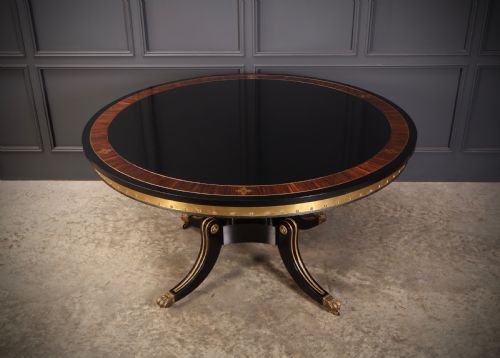


Rosewood Foyer Table
A rosewood foyer table anchors an entrance hall with deep grain, rich dark tones and substantial presence.
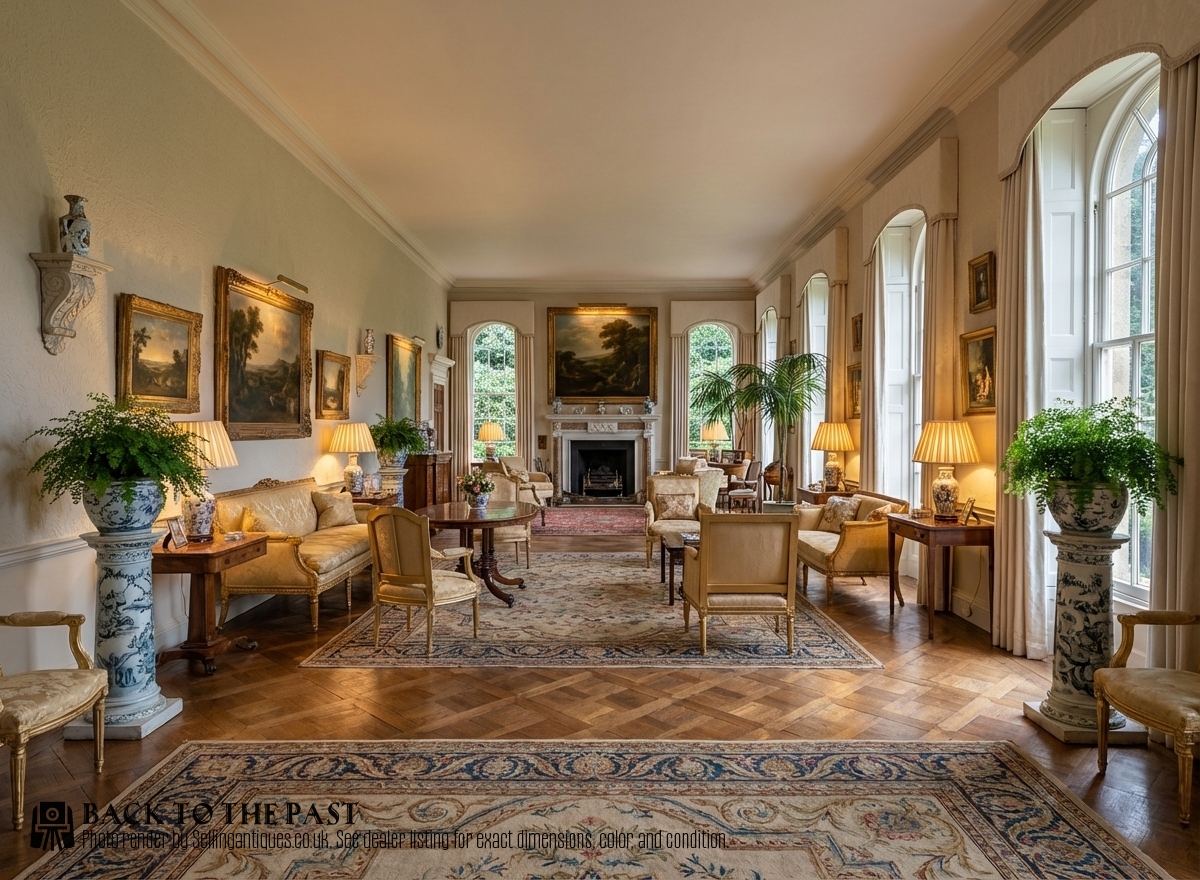
Rosewood Foyer Table
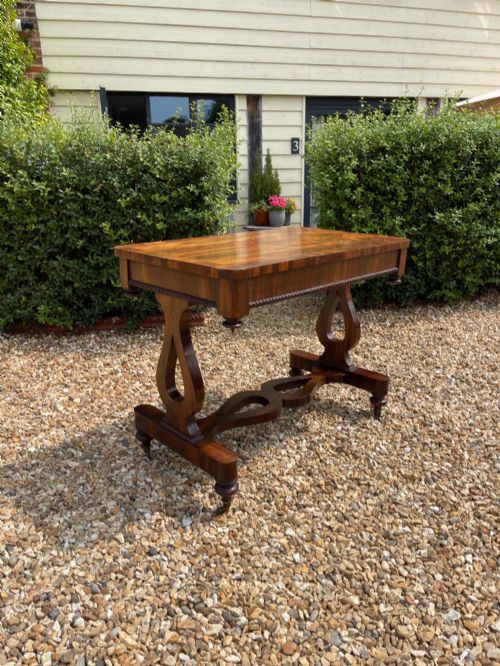
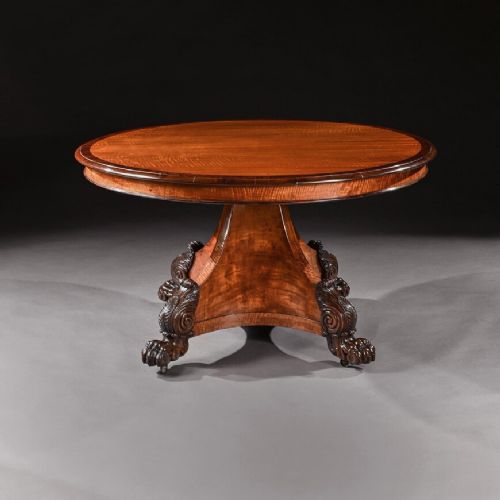
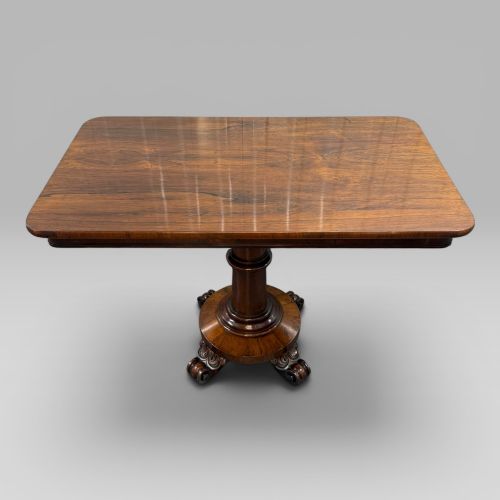
A rosewood foyer table typically takes the form of a centre table, library table, or hall table designed to stand prominently in an entrance or principal room. These surfaces served historically to receive callers, display decorative objects, or hold lamps.
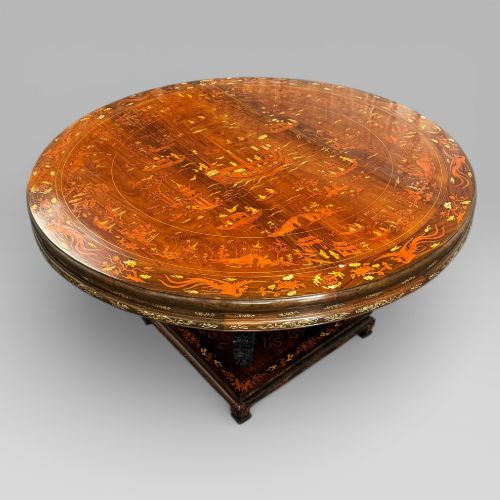
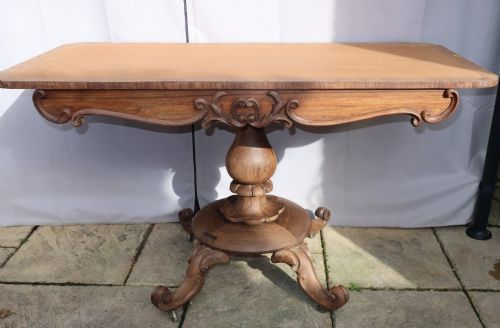
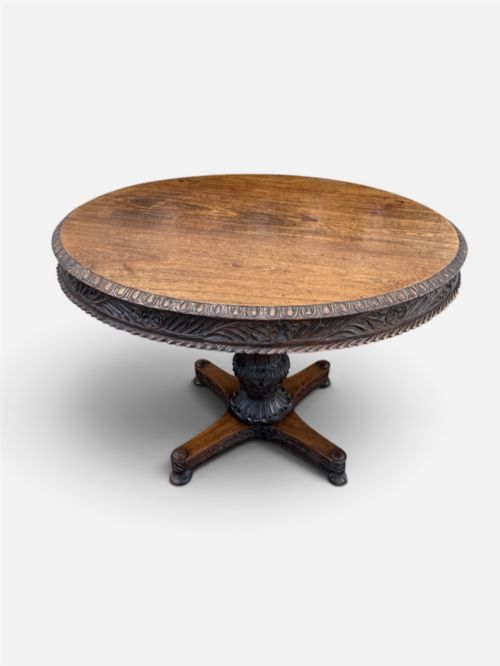
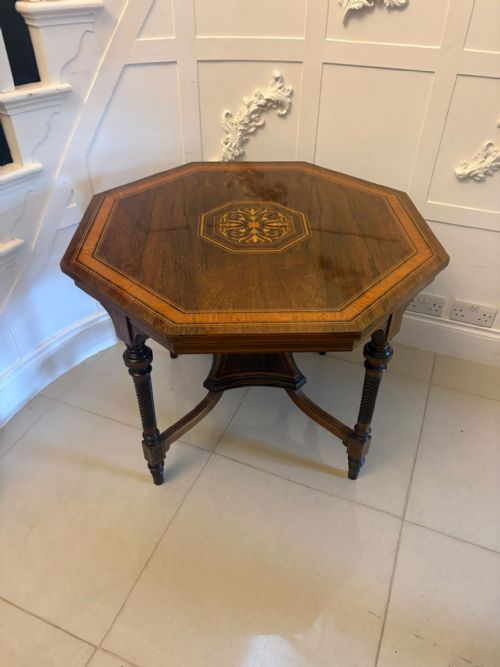
The pieces on this page span the Regency, William IV, and Victorian periods, alongside Anglo-Indian and Chinese Export examples. You will frequently encounter circular or octagonal centre tables supported by heavy pillar pedestals or intricate legs.
Construction relies heavily on solid rosewood and timber veneers applied to secondary woods, often complemented by marble tops or elaborate marquetry. Makers ranging from provincial workshops to noted firms such as Edwards & Roberts produced these varied interpretations.
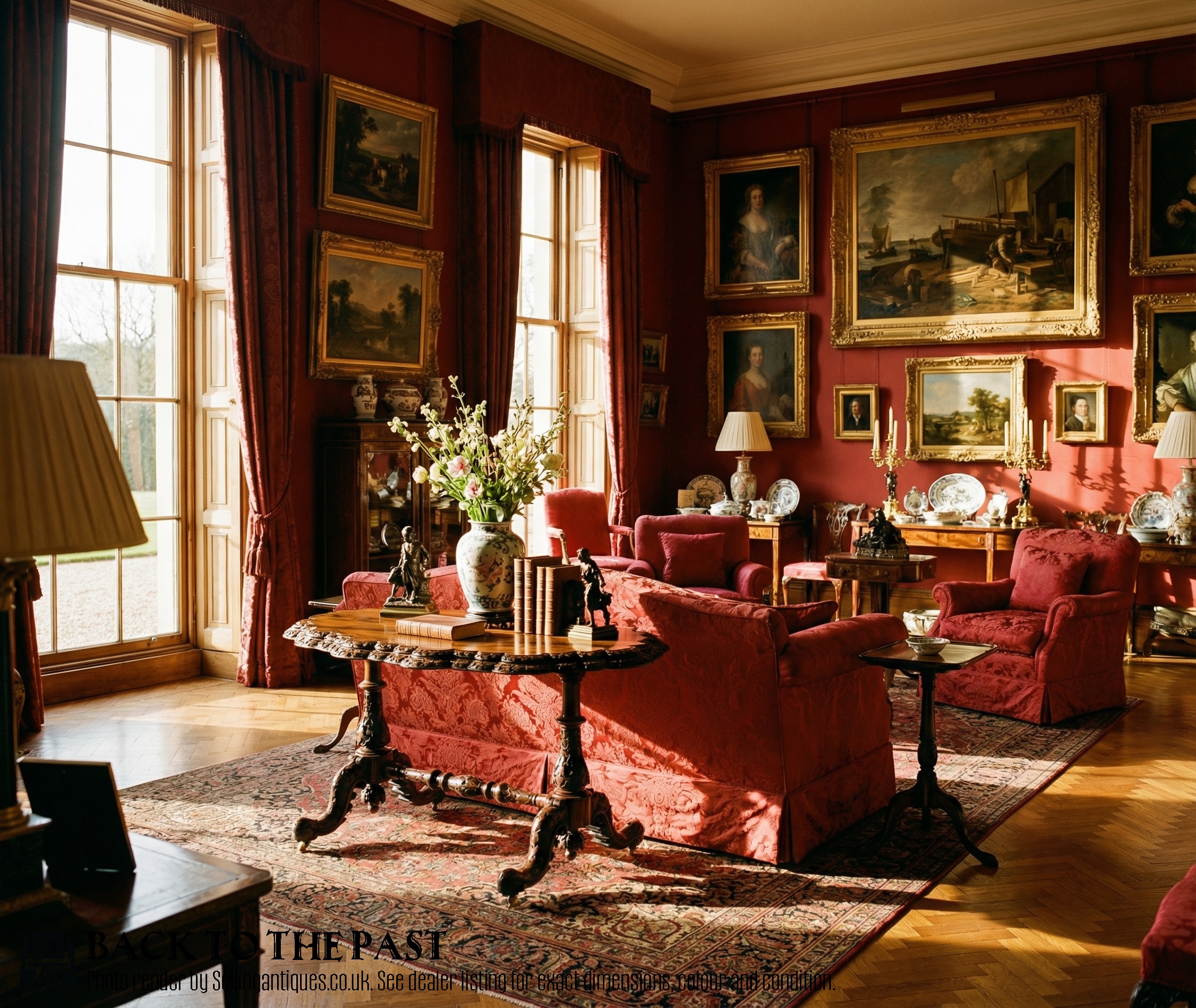
How they were made
Cabinetmakers utilised dense rosewood timber, frequently cut as fine veneer to display striking grain patterns across large tabletops. This technique allowed craftsmen to cover stable secondary woods while achieving deep, lustrous surfaces.
Decoration often involved intricate brass inlay, fruitwood inlay, and marquetry set directly into the timber. Ormolu mounts and marble inserts appear on select French and English examples, adding structural weight and contrasting textures.
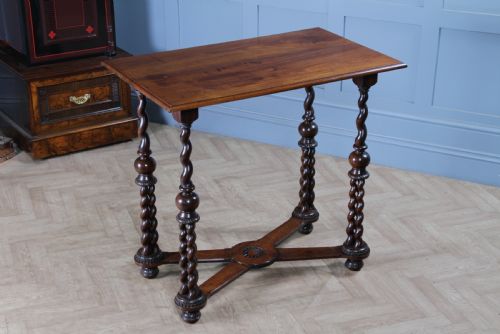
Joinery for the heavy pedestals and tilt-top mechanisms required robust internal framing to support the substantial weight of the timber and stone tops. Turning and carving formed details such as barley twist columns and parcel gilt accents.
Rosewood Foyer Table Retail Price Guide 2026
Typical asking prices for rosewood foyer table among the pieces listed under this phrase on Sellingantiques today, from the lower quarter to the upper quarter. They describe what is for sale here now, not the wider market.
Listings feature rosewood foyer tables spanning the Regency, William IV, and Victorian periods, alongside nineteenth-century Anglo-Indian and Chinese Export pieces.
What varies in quality
The standard of timber selection largely dictates the visual impact of a piece, separating exceptional grain matching from standard veneering. Finer examples display continuous, symmetrical patterns across the entire tabletop rather than disjointed sections.
The execution of inlays and metalwork reveals the hand of the maker, distinguishing precise brass stringing and detailed marquetry from simpler, heavier ornamentation. Carved elements on pedestals and legs show varying degrees of depth and crispness.
Structural integrity in tilt-top mechanisms and pedestal joints separates utilitarian items from masterworks. Tables that retain their original support stability without excessive movement reflect superior period engineering.
Edwards & Roberts·Peters of Genoa·James Winter of Wardour Street·Francois Linke
The Rosewood Foyer Table Glossary
- Rosewood
- A dense, heavily figured timber valued for its dark reddish-brown colour and contrasting dark grain lines. It takes a high polish and was heavily utilised in elite nineteenth-century cabinetmaking.
- Marquetry
- The art of applying decorative veneer pieces to a structure to form intricate pictorial designs or geometric patterns. Different woods and materials are cut and fitted together precisely.
- Ormolu
- Gilded bronze used for decorative mounts, feet, and edge details on furniture. It provides a bright metallic contrast against dark rosewood surfaces.
- Tilt-top
- A tabletop hinged to its pedestal so it can be tipped vertically when not in use. This mechanism saved space in smaller rooms during the nineteenth century.
- Pier Table
- A table designed to stand flat against a wall, frequently placed between two windows beneath a mirror. These often feature marble tops.
Rosewood Foyer Table: Frequently Asked Questions
How were rosewood foyer tables used?
These tables served as central statement pieces in grand entrance halls and reception rooms. Visitors placed visiting cards upon them, and homeowners used them to display decorative bronzes, clocks, or floral arrangements.
Larger versions functioned as library or breakfast tables when needed, adapting to the daily routines of nineteenth-century households.
How do I care for a rosewood surface?
Keep the wood away from direct sunlight and strong heat sources to prevent the veneer from drying out or splitting. Dust regularly with a soft, dry cloth and avoid modern silicone polishes.
Apply a traditional beeswax sparingly if the finish appears dry, buffing it gently to maintain the natural sheen of the timber.
How do I distinguish Regency from Victorian examples?
Regency tables, dating from the early nineteenth century, tend to feature cleaner architectural lines, classical brass inlay, and restrained use of parcel gilding. The influence of ancient Greek and Roman design dominates their silhouettes.
Victorian pieces from the mid to late nineteenth century often display heavier proportions, more exuberant carving such as barley twists, and complex floral marquetry.