
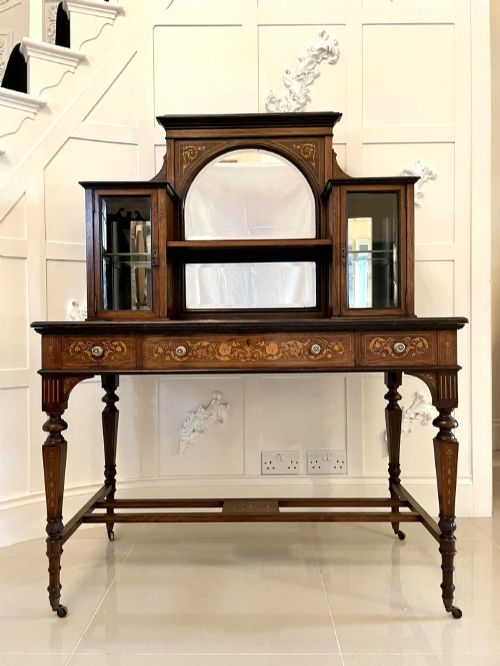
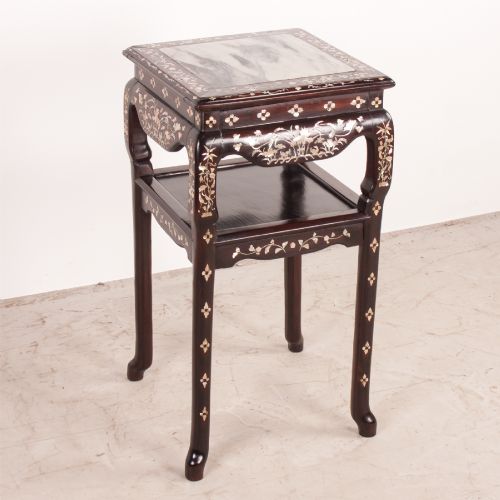
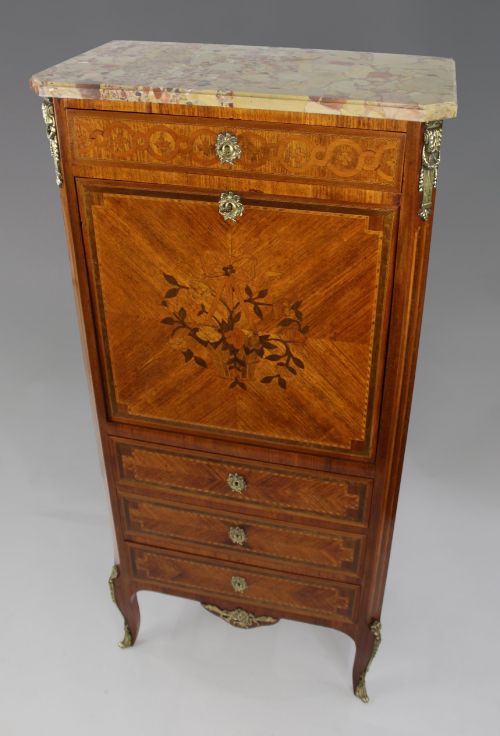
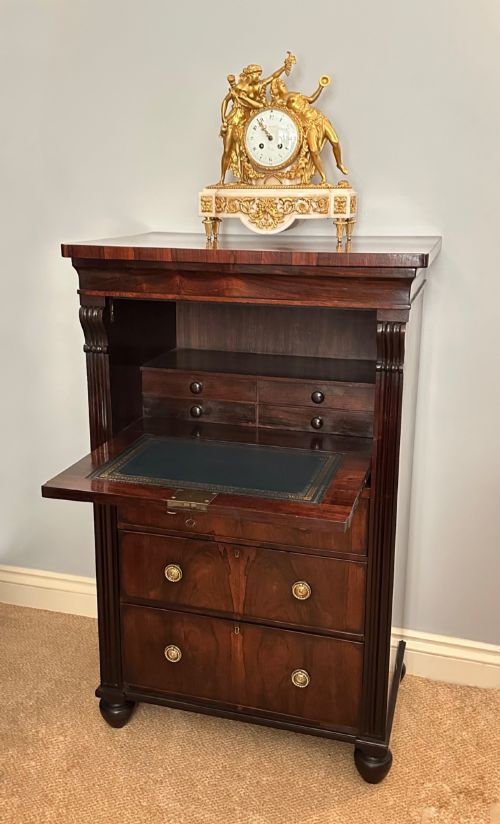

Rosewood Desk Cabinet
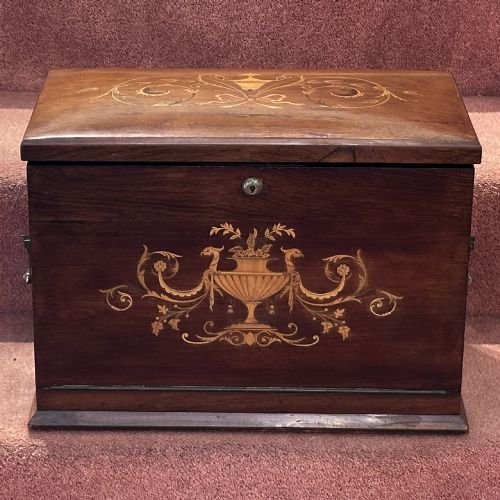
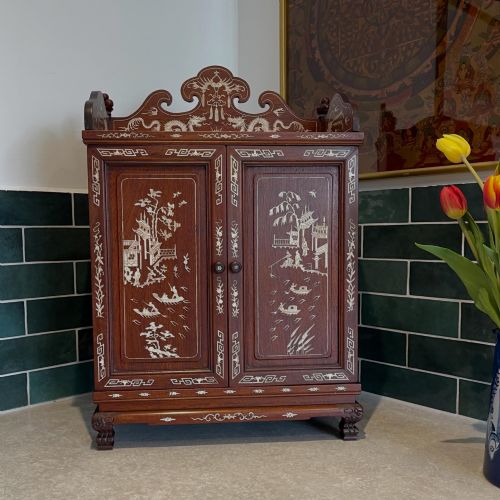
A rosewood desk cabinet brings together dark timber and fitted writing compartments, offering a neat station for letters and papers.
Rosewood Desk Cabinet
A rosewood desk cabinet encompasses compact writing furniture, from Davenport desks with sliding tops and stationery boxes to tall escritoires and bureau bookcases. These pieces originate across the nineteenth century, taking in Regency, Victorian, Edwardian and Continental revival periods.
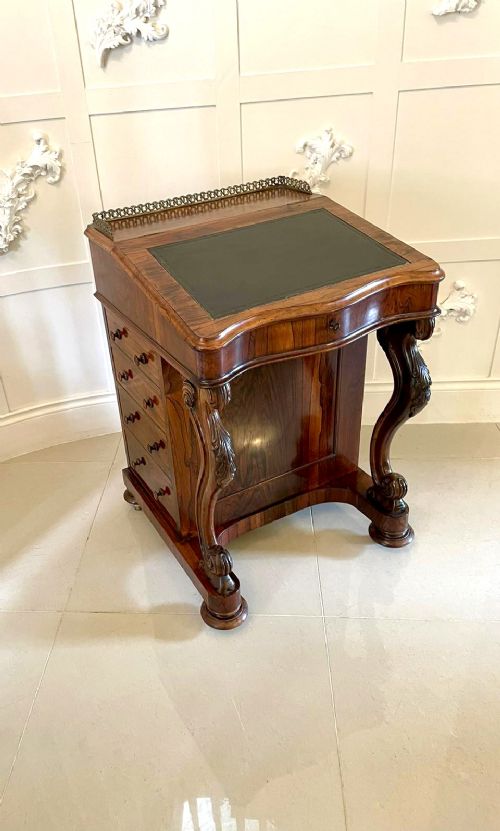
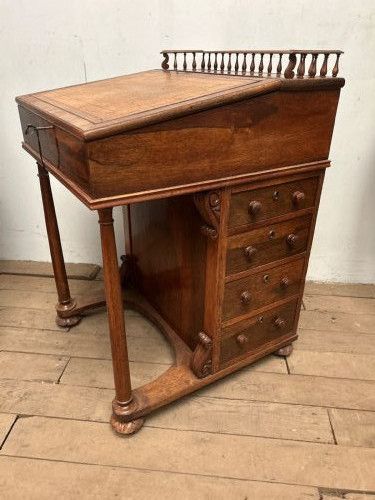
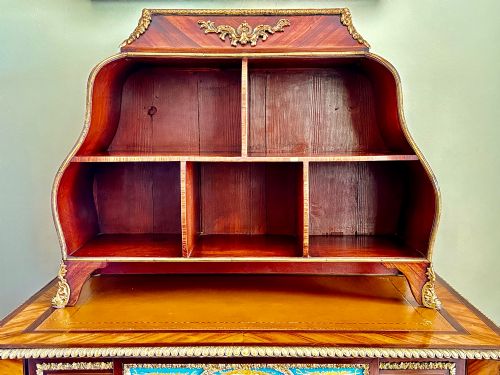
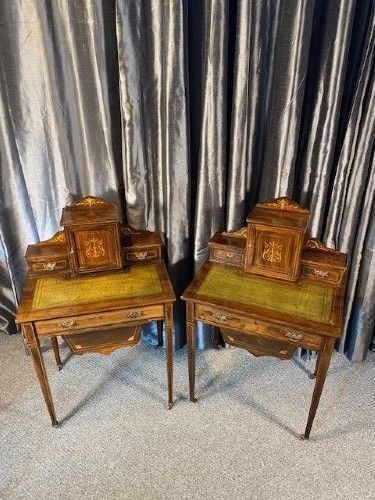
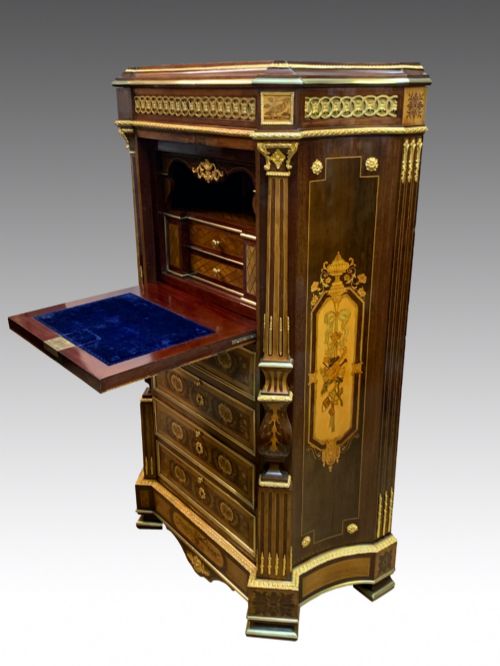
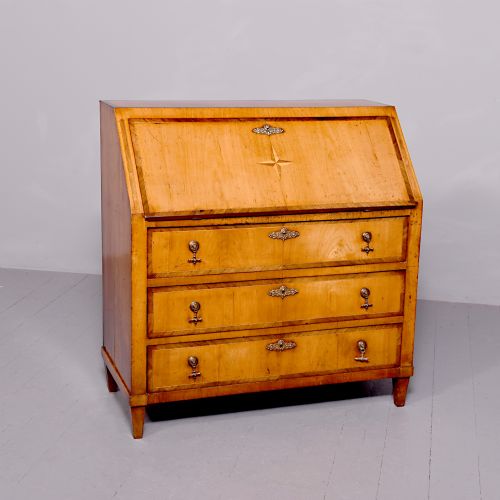
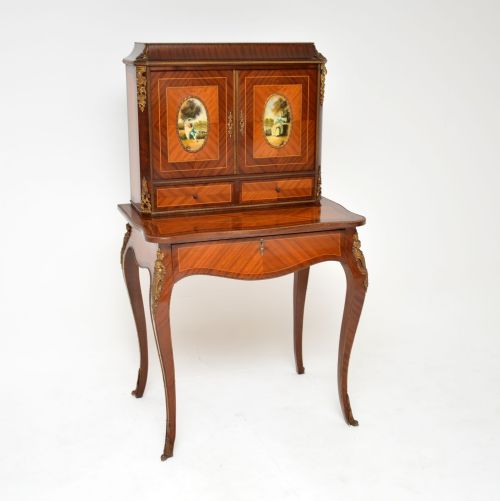
The version most commonly met on this page is the Davenport desk or the small secretaire cabinet, designed for domestic correspondence and fitted with interior drawers. Alongside these sit desktop cartonniers, bonheur du jour writing tables and bureau bookcases combining storage with a fall-front writing surface.
Materials and construction
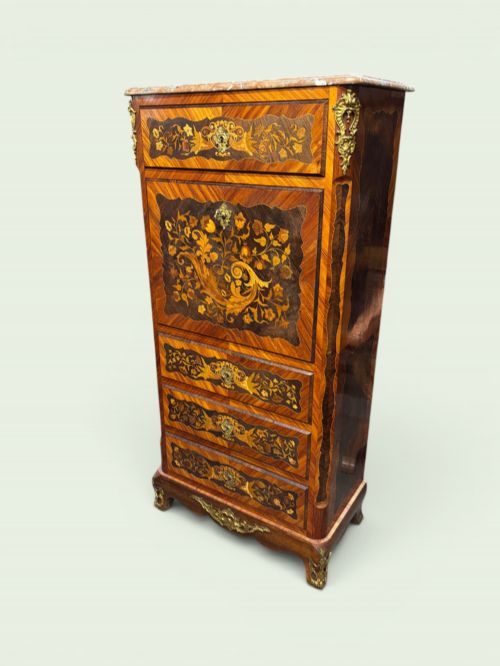
Makers built these pieces using dense rosewood veneers and solid timbers, frequently employing satinwood, boxwood and kingwood for contrasting marquetry inlay. Brass mounts, ormolu hardware and marble tops appear regularly on French and English examples, adding structural weight and decorative contrast.
Joinery methods combined traditional carcase construction with complex interior compartments, sliding tops and secret drawers operated by hidden catches. Marquetry panels demanded precise cutting of diverse wood species to form floral and geometric motifs across the front and sides.
Listings feature pieces spanning the eighteenth century through to the Art Deco period, constructed in rosewood, satinwood and marble.
Distinctions in craftsmanship
Quality rests in the precision of the timber selection, where highly figured grain and book-matched rosewood veneers create a continuous pattern across drawers and doors. Lesser pieces rely on plain timber with simpler construction, while superior examples feature meticulous boxwood inlay and crisp ormolu mounts.
The integrity of the internal mechanisms, from smooth sliding desk lids to well-fitted secret drawers and original brass locks, separates standard production from exceptional cabinet-making. Original marble tops and intact fitted stationery interiors further elevate the standing of a piece.
Maison Krieger·John McClean
The Rosewood Desk Cabinet Glossary
- Davenport
- A compact pedestal desk featuring a sloping writing surface and side drawers. It typically incorporates a stationery compartment on the upper section.
- Escritoire
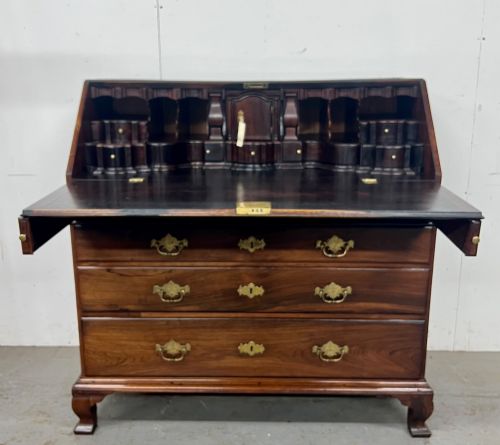
- A writing cabinet with a fall-front flap that conceals a collection of small pigeonholes and drawers. These pieces often stand on tall legs or form part of a larger chest.
- Cartonnier
- A desktop cabinet designed specifically for holding papers, documents and stationery. It often includes multiple vertical compartments or drawers.
- Marquetry
- Decorative veneer work forming pictures or patterns using various coloured woods. Craftsmen cut thin pieces of timber to fit precisely into a prepared background.
Rosewood Desk Cabinet: Frequently Asked Questions
What is a Davenport desk?
A Davenport desk is a small, compact writing piece featuring a slanted top and drawers opening to the side.
First appearing during the Regency period, it provided a practical writing station that occupied minimal floor space in a drawing room or boudoir.
How do I identify a secretaire cabinet?
A secretaire cabinet contains a hinged drop-front panel that conceals a fitted interior of small drawers and pigeonholes.
When closed, the piece resembles a standard chest of drawers or a bookcase, concealing its writing function entirely.
Where were these cabinets placed?
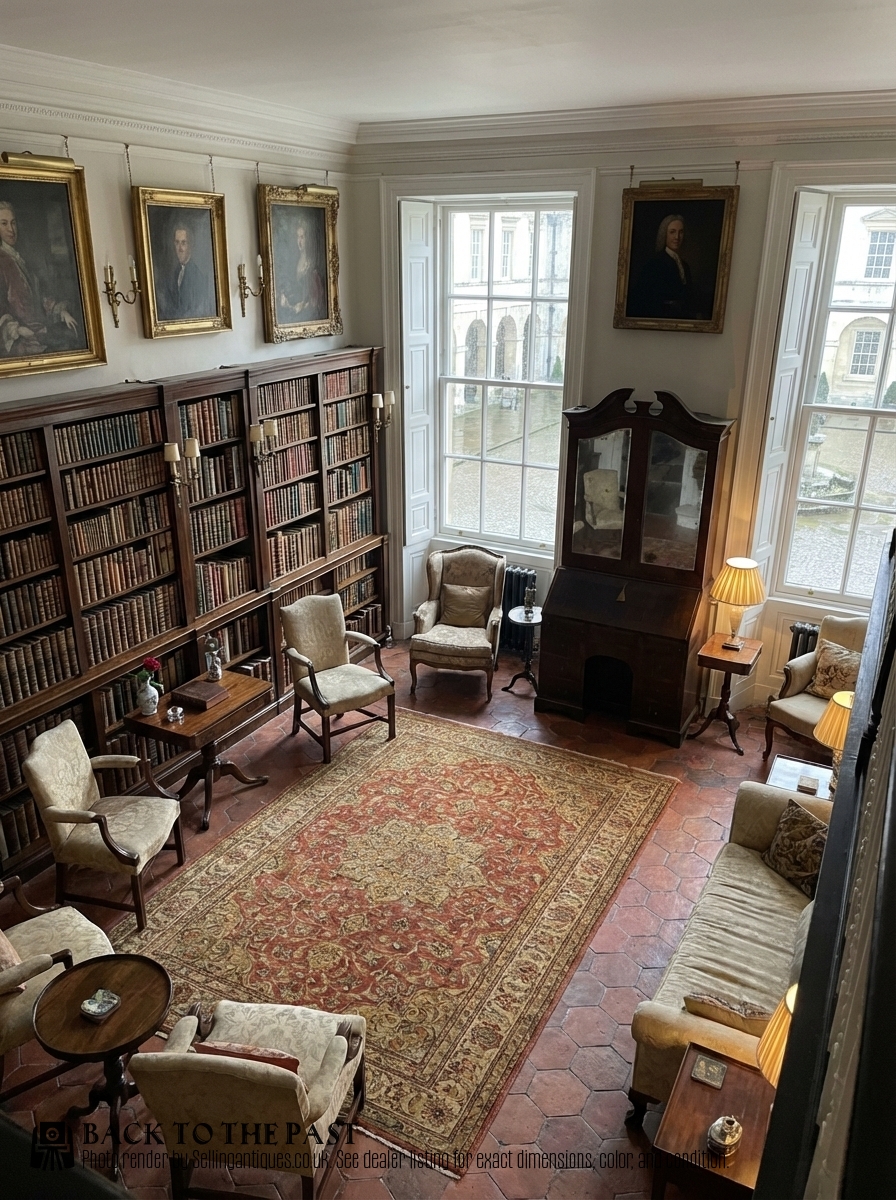
These cabinets sat in private studies, drawing rooms and bedrooms for handling personal correspondence and keeping stationery.
Freestanding models allowed placement away from walls, displaying finished rosewood grain on all sides.
How do I care for rosewood furniture?
Rosewood benefits from stable room temperatures and protection from direct sunlight to prevent the timber from fading.
Applying a light coat of appropriate wax helps maintain the lustre of the polished surface without building up residue.