


Rosewood Chiffonier with Shelf
A rosewood chiffonier with shelf is a compact nineteenth-century side cabinet built for display and storage, bringing rich grain and brass detail to a reception room.
Rosewood Chiffonier with Shelf
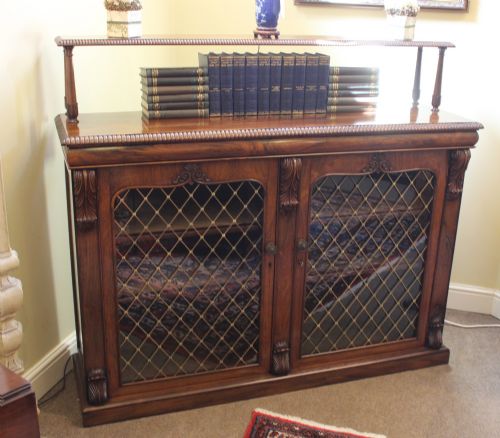
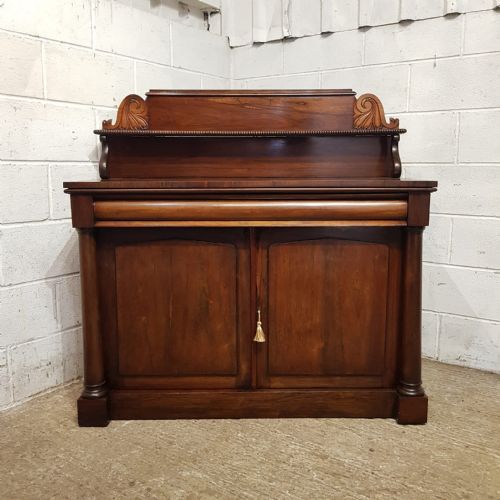
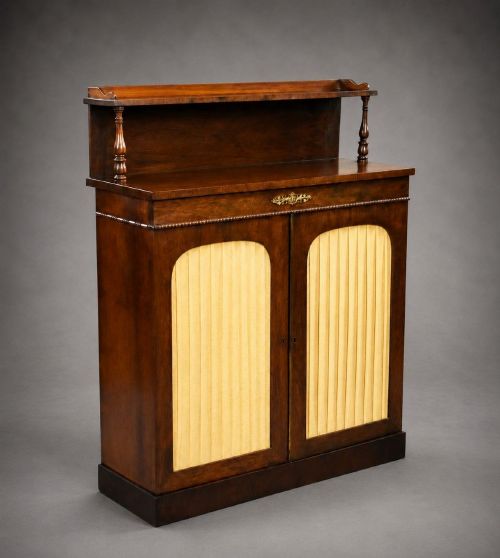
A rosewood chiffonier with shelf serves as a low cabinet typically topped by an open tier supported on pillars, designed for nineteenth-century parlours and drawing rooms. These pieces combine enclosed lower shelving behind panelled or glazed doors with upper display space for small ceramics and ornaments.
The examples found here span the Regency, George IV, and Victorian eras, reflecting shifts in taste from architectural brass inlay to simpler carved forms. Most pieces adhere to classic nineteenth-century proportions, offering a low profile that leaves wall space unobstructed above.
Makers and cabinet makers of the period utilised richly figured timbers to catch the light in formal interiors. Side cabinets and sideboards appear alongside traditional chiffoniers, sharing the same low stature and timber palette.
How they were made
Cabinet makers constructed these pieces using dense rosewood veneers applied to secondary softwood or hardwood carcasses, often accented with contrasting boxwood or brass stringing. Selected timber was chosen for its dark figuring, then polished to a deep sheen that highlighted the natural grain.
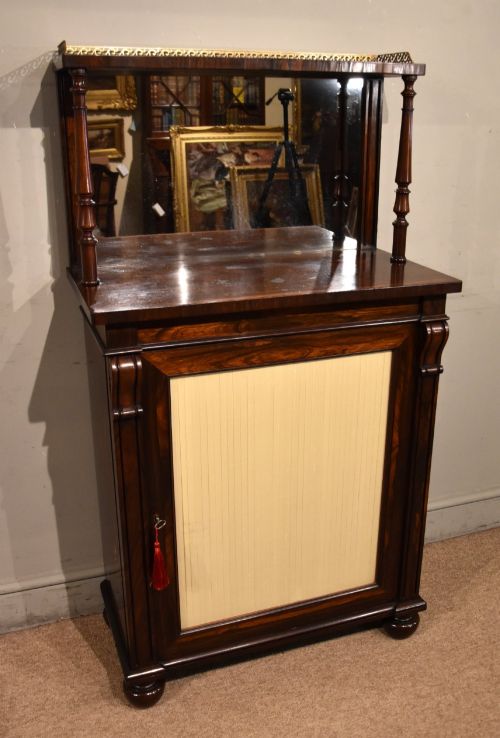
Structural elements such as the upper shelf rely on turned or slender pillars fixed securely to the marble or timber top below. Lower compartments incorporate panelled wooden doors, and occasionally fabric-backed or mirrored glass inserts, fitted with simple brass locks and hinges.
Current listings feature pieces spanning the Regency, George IV, and Victorian periods, constructed primarily in rosewood with brass, marble, and mirror glass elements.
What varies in quality
Quality rests in the selection of the rosewood veneer and the precision of any brass inlay, stringing, or ormolu mounts. Finer examples display continuous grain matching across the doors and crisp carving on the structural pillars.
The interior fit-out and secondary timbers also signal distinction, where well-figured solid backs and adjustable shelving elevate a piece above standard workshop production.
John McLean
The Rosewood Chiffonier with Shelf Glossary
- Chiffonier
- A low nineteenth-century sideboard or cabinet featuring enclosed lower shelves and an upper display tier. This form became a staple of the Victorian and Regency drawing room.
- Regency
- An English design period spanning the early nineteenth century defined by classical restraint and archaeological revival. Pieces from this era often incorporate brass inlay and simulated rosewood finishes.
- Stringing
- A narrow inlay of contrasting timber or metal used to outline panels and borders on cabinet furniture. This technique adds linear definition to dark rosewood surfaces.
- Breakfront
- A cabinet design where the central section projects forward from the flanking wings. This architectural arrangement creates depth and shadow on sideboards and large chiffoniers.
Rosewood Chiffonier with Shelf: Frequently Asked Questions
What is a rosewood chiffonier with shelf?
A rosewood chiffonier with shelf is a low nineteenth-century storage cabinet featuring an elevated open tier supported by small columns. It functions as a compact sideboard designed for formal reception rooms.
These pieces provide both concealed lower storage behind doors and open surface space above for displaying decorative objects.
Where were chiffoniers used in the home?
Chiffoniers stood primarily in nineteenth-century drawing rooms, parlours, and dining rooms against plain walls. Their low profile ensured they did not block windows or paintings.
The upper shelf held small books, porcelain, or ornaments within easy reach of the room's occupants.
How do I date a Regency chiffonier?
Regency pieces often display classical proportions, brass inlay, and simulated rosewood finishes dating from the early nineteenth century. Cabinet makers of this era drew heavily on Greek and Roman design motifs.
Later Victorian examples tend to feature heavier carving and darker, unadorned timber surfaces without the delicate brass stringing characteristic of the Regency period.
Are marble tops original to these cabinets?
Marble tops appear on select nineteenth-century chiffoniers and side cabinets to provide a durable, cool surface. Cabinet makers fitted them to protect the timber underneath from hot dishes or spilled liquids.
Wood tops remain equally common, featuring polished rosewood veneers that match the rest of the carcass.