


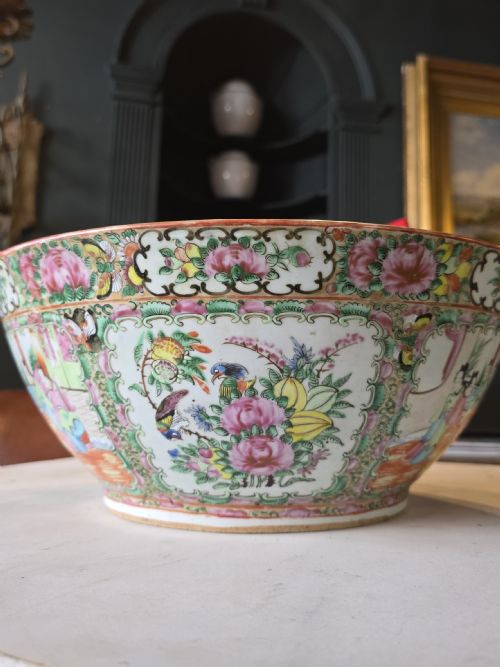


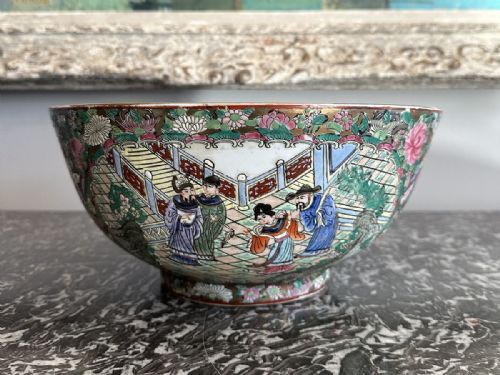
Rose Canton Porcelain Bowl
These rose canton porcelain bowl examples bring vibrant hand-painted enamel and gold leaf into rooms, offering traditional Chinese export craftsmanship.
Rose Canton Porcelain Bowl
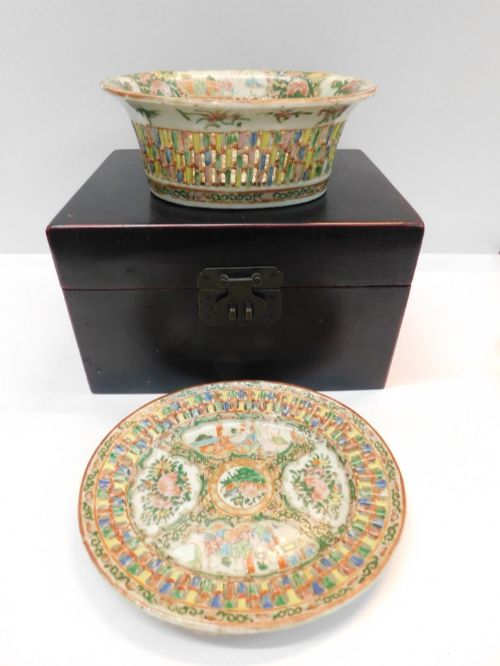
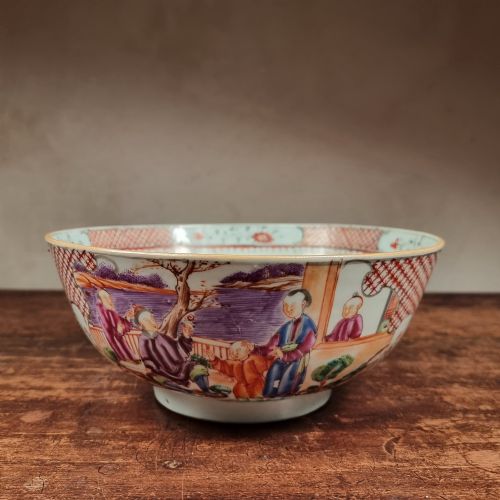
A rose canton porcelain bowl embodies the traditional artistry of Chinese export ceramics, frequently associated with the Qing Dynasty and Victorian periods. These vessels appear in forms such as punch bowls, jardinières, pedestal dishes, and large decorative basins.
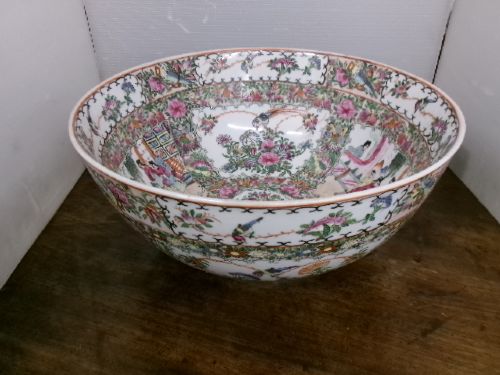
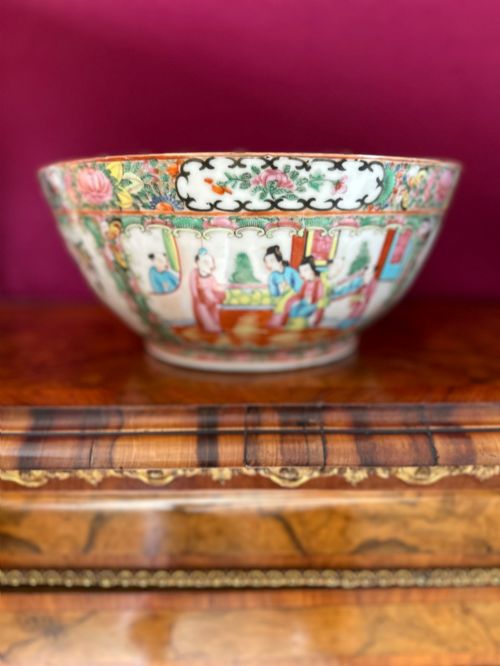
The version most commonly met on this page is the nineteenth-century piece, often spanning significant diameters up to twenty inches and decorated with intricate Cantonese famille rose or rose medallion patterns. Such objects reflect historical trade links between China and Western markets, shaped by distinct regional painting traditions.
Makers and decorators produced these pieces for export using porcelain bodies suited to elaborate overglaze enamelling. Buyers encounter items ranging from lobbed rectangular bowls to deep centrepiece vessels resting on hardwood stands or fitted with ormolu mounts.
How They Were Made
Potters shaped fine porcelain bodies before applying vibrant overglaze enamel palettes in shades characteristic of Cantonese workshops. Artisans integrated gold leaf and gilding to highlight floral panels, figures, and geometric borders across the exterior and interior surfaces.
Selected examples incorporated structural hardware such as gilt bronze or ormolu mounts, pairing ceramic basins with metal frames. Finished pieces often sat on bespoke hardwood stands designed to support the weight of large punch bowls and decorative dishes.
Several bowls measure up to twenty inches across, demanding tables strong enough to carry heavy historic punch.
What Varies in Quality
The refinement of the hand-painted detailing distinguishes superior examples from standard production work, particularly in the precision of figural scenes and botanical motifs. Finer pieces display crisp definition across crowded enamel panels and generous applications of bright gold leaf.
Proportion and scale also separate the range, with exceptionally large punch bowls and finely potted jardinières demanding greater technical skill from the potter. The presence of original hardwood stands or period ormolu mounts adds a further layer of distinction to the finished object.
The Rose Canton Porcelain Bowl Glossary
- Famille Rose
- A palette of opaque pink and rose enamel colours introduced to Chinese ceramics during the Qing Dynasty. This colouring defines much of the export ware produced in Cantonese kilns.
- Rose Medallion
- A specific style of Chinese export porcelain decoration featuring alternating panels of birds, flowers, and figures. The pattern is arranged around a central medallion motif.
- Chinese Export
- Ceramics manufactured in China specifically for overseas markets in Europe and America. These goods combined traditional domestic techniques with Western stylistic preferences.
- Ormolu
- Gilded bronze mounts applied to the rims, bases, or handles of decorative porcelain bowls. This French mounting technique frequently appeared on pieces destined for European drawing rooms.
- Jardiniere
- A large ornamental pot designed to hold growing plants or floral arrangements. In export porcelain, these take the form of heavy, deep basins decorated with enamel panels.
Rose Canton Porcelain Bowl: Frequently Asked Questions
How were rose canton porcelain bowls used originally?
These large vessels served practical functions at dining tables and social gatherings, particularly as punch bowls for serving mixed drinks during large receptions. Smaller or shallower dishes functioned as centrepieces, fruit bowls, or basin displays in formal reception rooms.
Over time, many of these bowls transitioned into purely decorative objects. Their vibrant enamel panels and substantial scale made them ideal for display on sideboards, tables, or specialised stands.
How do I care for a porcelain bowl with gold leaf?
Cleaning requires only a soft, dry cloth to remove dust from the surface without disturbing the delicate overglaze enamels. Moisture and chemical cleaning agents can damage historical gilding and enamel pigments over extended periods.
Placement matters just as much as cleaning, so position the bowl away from direct sunlight and high-traffic edges where it might suffer accidental impact. Secure, stable surfaces protect both the ceramic body and any associated hardwood stands or ormolu mounts.
How can I tell the period of a Canton bowl?
Dating relies on examining the characteristics of the porcelain body, the depth of the enamel colours, and the style of the hand-painted motifs. Nineteenth-century pieces often exhibit dense medallion or figural compositions executed in rich famille rose palettes.
Reference to specific eras like the Qing Dynasty or the Victorian period helps establish a chronological context. Variations in the weight of the porcelain and the brilliance of the gilding further assist in distinguishing earlier export wares from later reproductions.