

Rococo Writing Desk
These rococo writing desk examples combine fluid serpentine lines with rich veneers, offering an elegant surface for correspondence that anchors a period room.
Rococo Writing Desk
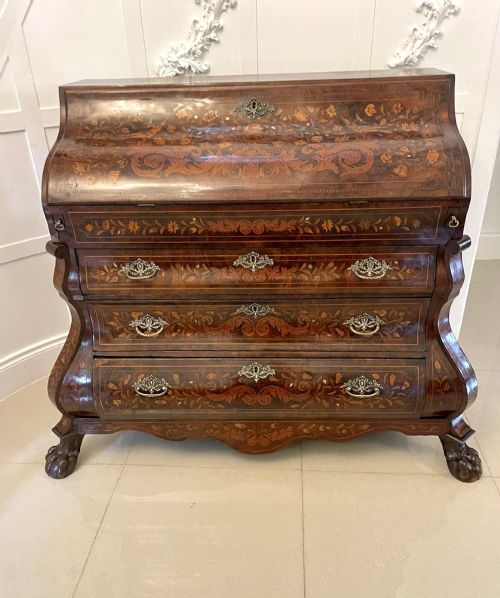
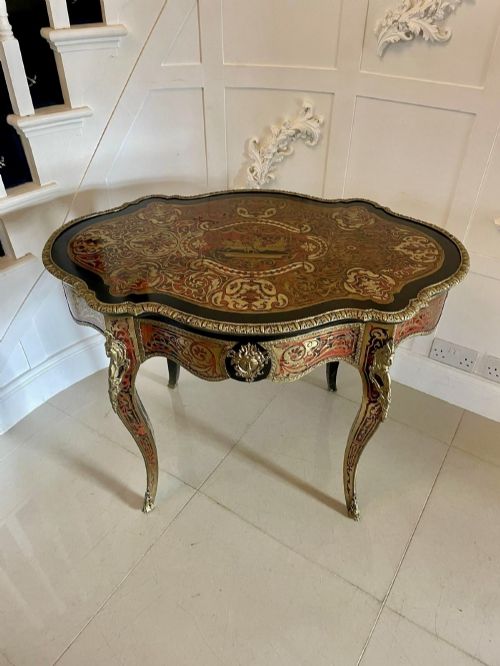
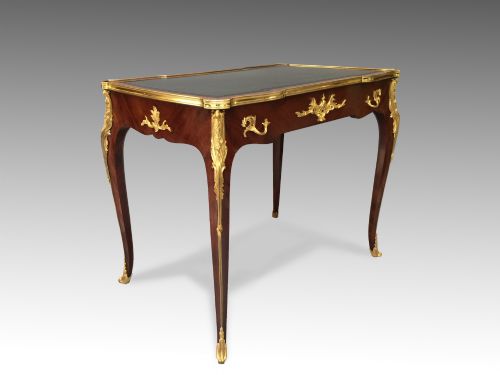
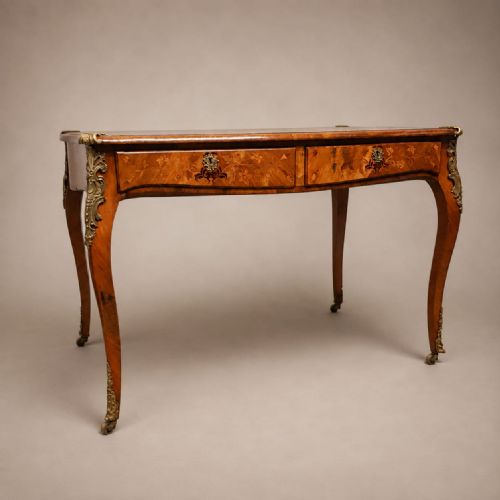
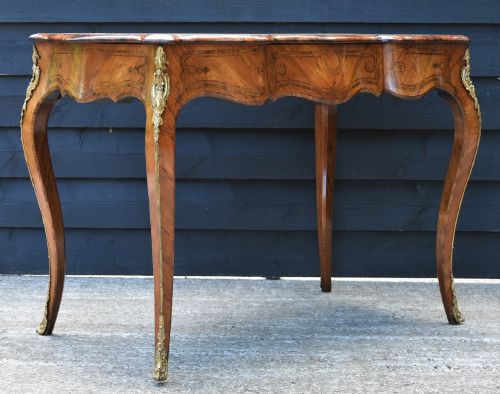
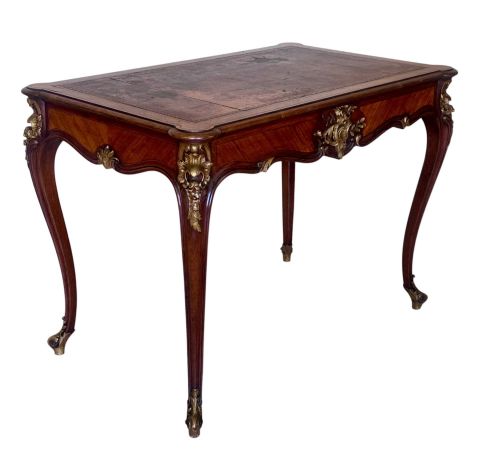
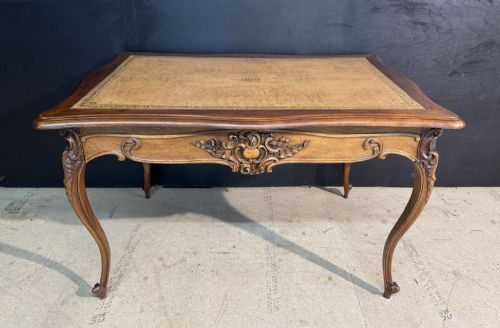
A rococo writing desk encompasses various forms designed for correspondence, including bureau plat writing tables, bureau bookcases, and compact kneehole desks. These pieces originate from eighteenth-century continental workshops and nineteenth-century revival periods, reflecting the enduring appeal of asymmetrical curves and naturalistic ornamentation.
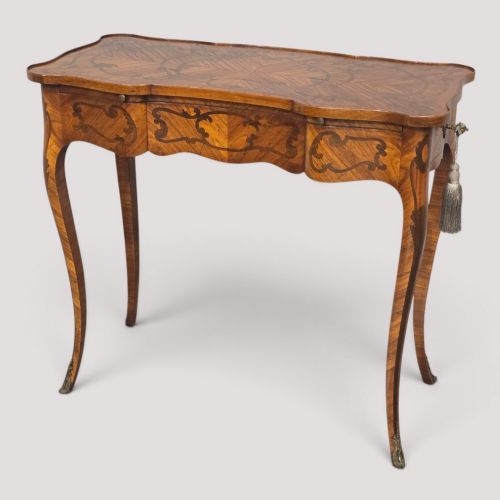
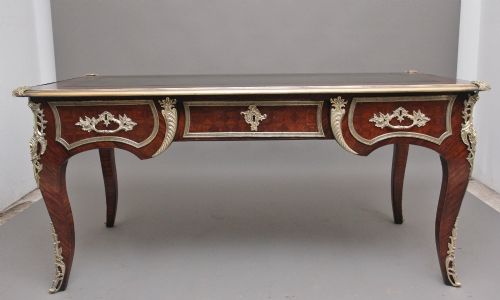
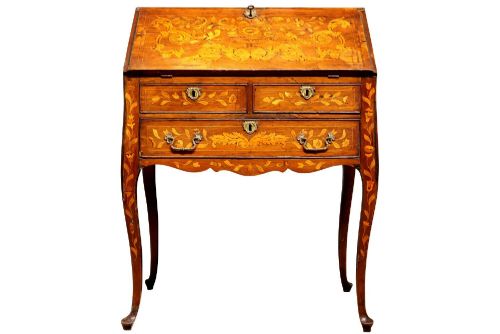
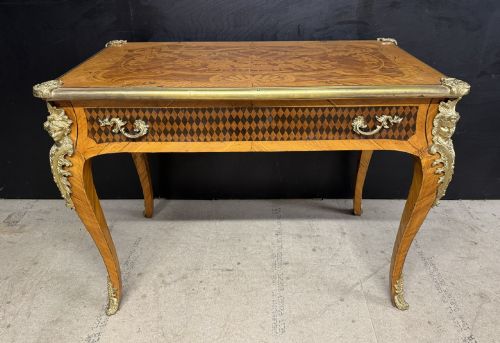
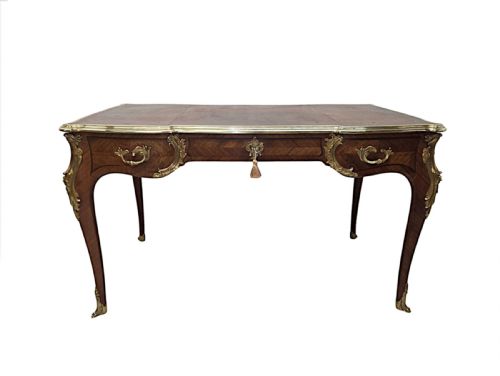
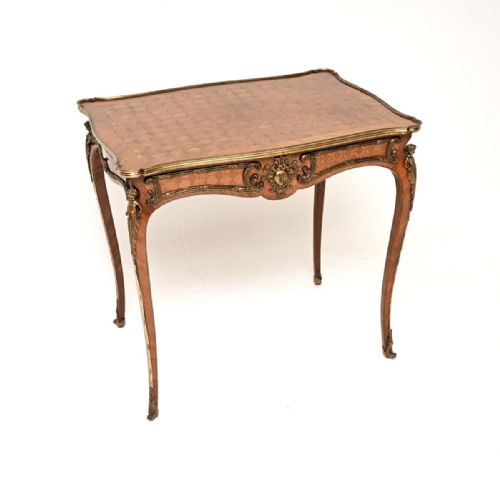
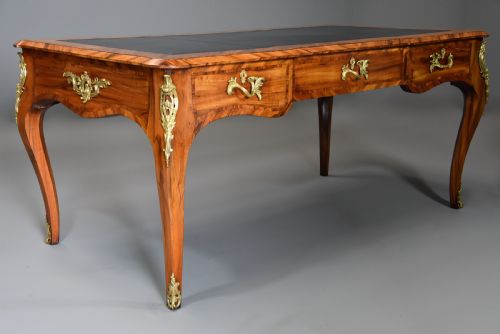
The pieces met most frequently on this page belong to the nineteenth century, executed in the French Louis XV style or Rococo Revival taste. Alongside freestanding tables with leather writing inserts, buyers encounter sloping front bureaux and side tables featuring characteristic serpentine outlines.
How they were made
Cabinet makers utilised dense hardwoods such as kingwood, walnut, rosewood, and satinwood as the foundation for elaborate floral marquetry and geometric parquetry patterns. These timber surfaces were frequently enhanced with cast ormolu and gilt bronze mounts that accentuated the flowing contours of the aprons, corners, and legs.
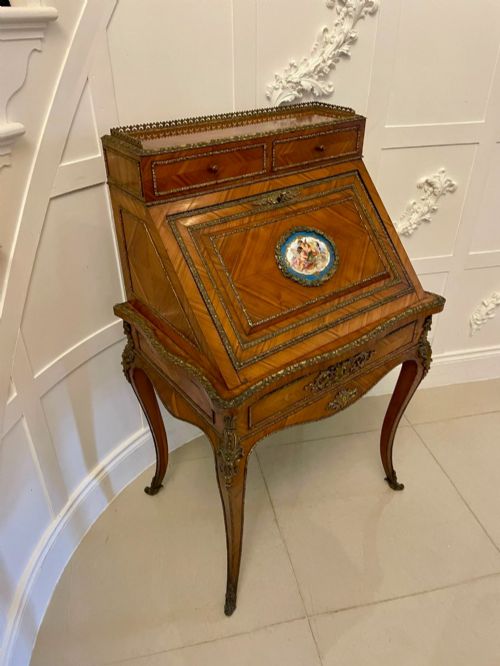
Writing surfaces incorporated inset panels of tooled leather, whilst specialised cabinet pieces utilised intricate brass inlay, Vernis Martin panels, and porcelain plaques. Construction techniques combined solid framing with precision veneering to achieve the dramatic bombé shapes and curving cabriole supports characteristic of the style.
Rococo Writing Desk Retail Price Guide 2026
Typical asking prices for rococo writing desk among the pieces listed under this phrase on Sellingantiques today, from the lower quarter to the upper quarter. They describe what is for sale here now, not the wider market.
Some desks hide secret compartments behind spring-loaded panels, perfect for storing clandestine love letters away from prying eyes.
What varies in quality
Quality reveals itself in the crispness of the gilt bronze or ormolu mounts and the precision of the timber marquetry. Finer examples display harmonious grain selection, seamless veneer matching across curved surfaces, and sculptural mounts that fit the wooden carcass without excess gap.
The structural integrity of the cabriole legs and the depth of hand-chasing on the hardware distinguish superior pieces from standard production. Interior arrangement, secondary timber choice, and the retention of original leather writing surfaces further separate exceptional workshops from ordinary manufacture.
François Linke·Edwards and Roberts·CH Jeanselme and Co·Durand·Millet
The Rococo Writing Desk Glossary
- Ormolu
- Gilt bronze applied to furniture mounts. This technique provides metallic highlights that complement the rich tones of kingwood and walnut.
- Marquetry
- Veneering technique creating pictorial designs using various coloured woods. Floral motifs dominate the surfaces of these revival desks.
- Bureau Plat
- A freestanding double-sided writing table fitted with drawers. These tables typically feature a leather-lined top and elaborate metal mounts.
- Secrétaire à Abattant
- A tall writing cabinet featuring a drop-down fall-front panel. This form conceals small drawers and pigeonholes for correspondence.
- Cabriole
- S-shaped furniture leg referencing animal limbs. It curves outward at the knee and tapers inward toward the foot.
Rococo Writing Desk: Frequently Asked Questions
How do I care for the leather top?
Clean the leather gently with a slightly damp cloth and nourish the surface periodically with a suitable wax or leather cream. Avoid placing liquid containers directly on the writing surface to prevent staining.
Keep the desk away from direct sunlight and heat sources to prevent the leather from drying, cracking, or shrinking within its wooden border.
Can I use these desks daily?
These pieces function well for daily writing and laptop use provided sensible precautions are observed. The sturdy construction of nineteenth-century revival tables suits regular office tasks.
Protect the polished timber and veneer surfaces from scratches by using appropriate blotters or desk pads when writing or placing heavy items.
How do I distinguish eighteenth-century pieces?
Eighteenth-century examples display construction methods, tool marks, and timber ageing consistent with early European cabinet making. Secondary woods and framing techniques differ significantly from later Victorian revival equivalents.
Examine the carcass construction and interior drawer linings to understand the period of manufacture, noting that most items on the market represent later revival movements.
Where should I place a freestanding desk?
A bureau plat or freestanding writing table looks best positioned toward the centre of a room rather than pushed against a wall. Because these pieces are finished on all sides, they create an impressive focal point from any angle.
Ensure adequate clearance around the table for chairs and movement, allowing the curving cabriole legs and ormolu mounts to remain fully visible.