

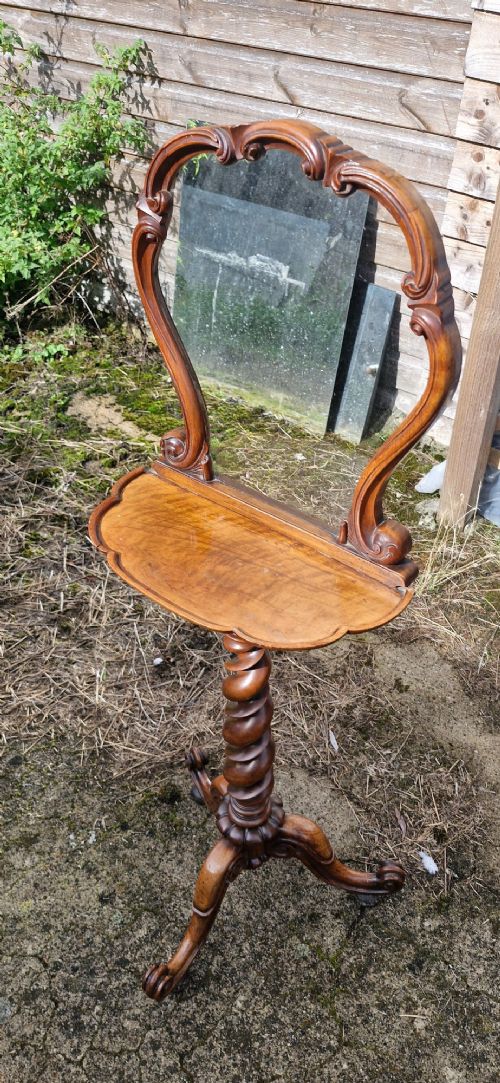
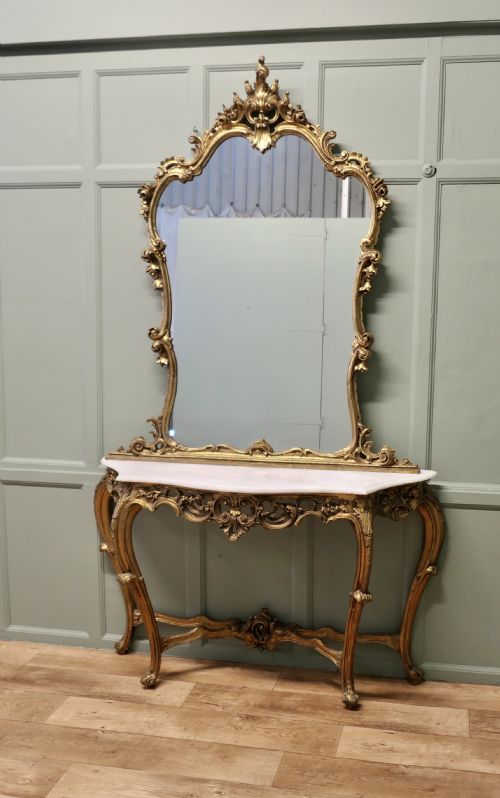
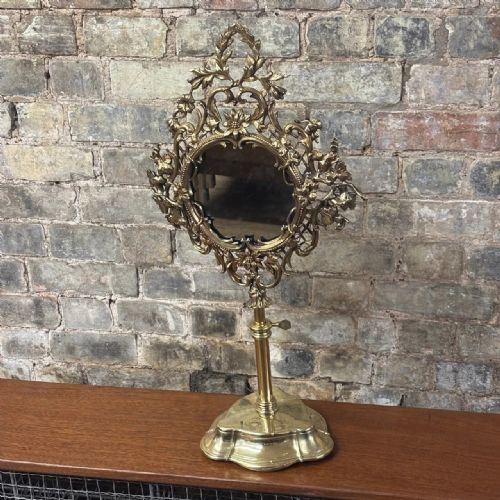
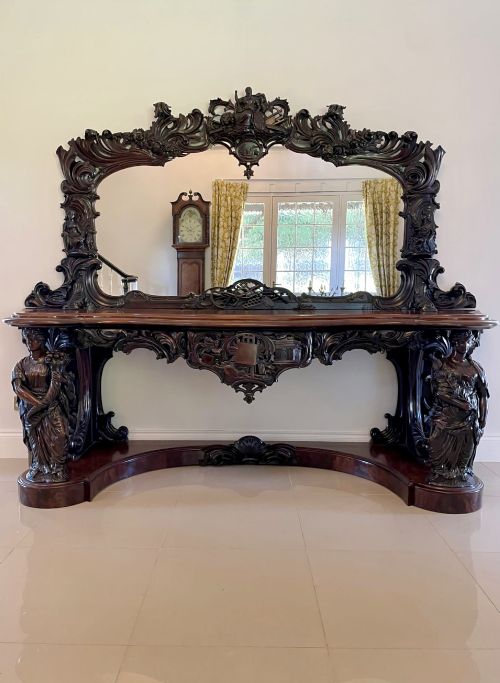


Rococo Revival Table Mirror
These rococo revival table mirror examples bring scrolling, fluid frames to dressing spaces, drawing the eye with their ornate, asymmetrical curves.
Rococo Revival Table Mirror
A rococo revival table mirror sits upon a dressing table, chest or console, designed to provide a movable glass for grooming and reflection. These pieces emerge chiefly from the nineteenth and early twentieth centuries, spanning Victorian, Edwardian and continental periods.
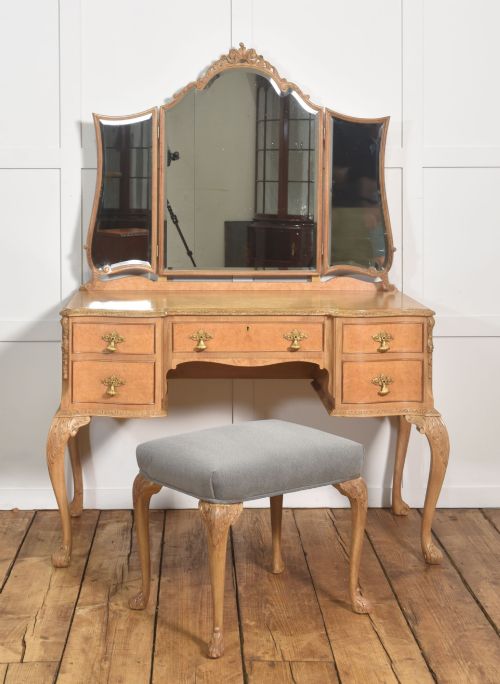
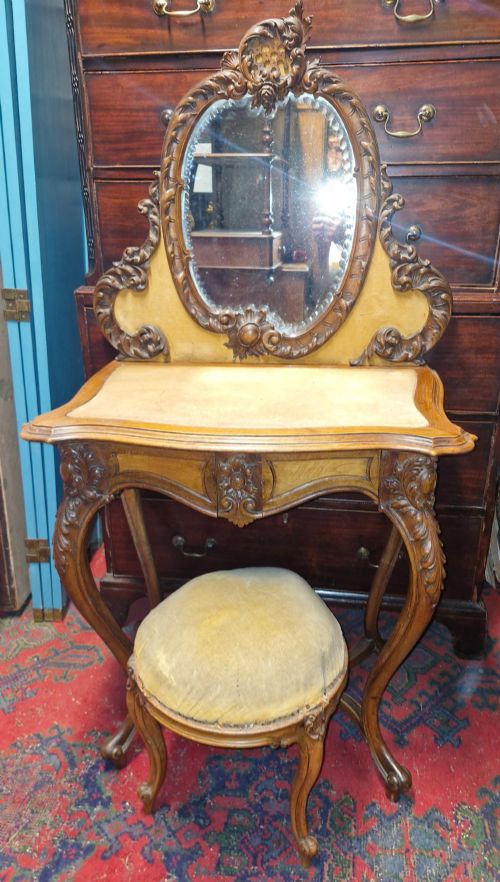
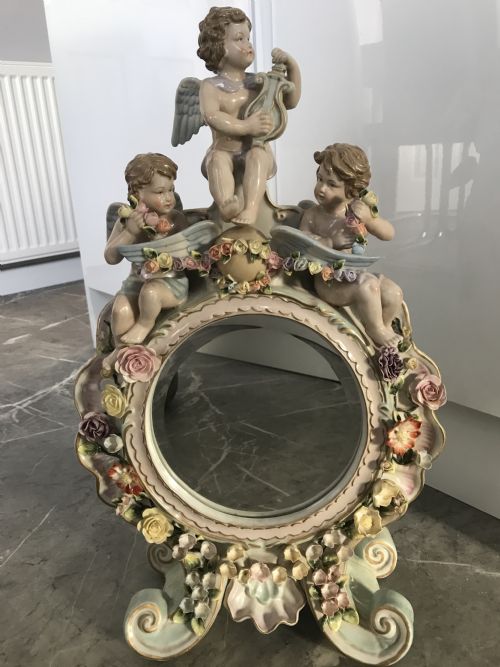
The versions most commonly met on this page range from solid brass frames and carved walnut stands to continental porcelain models adorned with flowers and cherubs. Makers channel earlier French taste through Louis XV revival lines, yielding vanity and dressing mirrors with distinctive easel backs or heavy wooden supports.
How They Were Made
Carved timber frames utilise walnut, mahogany and oak, often shaped with deep scrolls and asymmetric cartouches that define the revival style. Cabinetmakers shaped these woods to house tilting mirror plates suspended on pivot screws or swing brackets.
Metal and ceramic examples employ cast brass, ormolu, and moulded porcelain from continental factories like Dresden and Sitzendorf. Artisans added hand-painted floral details, silver deposit decoration, and applied gold leaf to enhance the ornate surface texture.
Rococo Revival Table Mirror Retail Price Guide 2026
Typical asking prices for rococo revival table mirror among the pieces listed under this phrase on Sellingantiques today, from the lower quarter to the upper quarter. They describe what is for sale here now, not the wider market.
Listings feature periods spanning from the nineteenth century through the 1930s, utilising walnut, mahogany, brass, and porcelain.
What Varies in Quality
The depth and crispness of the carving or casting distinguish finer pieces from simpler production, particularly where scrolls and floral motifs meet the edge of the glass. Superior metalwork shows clean chasing in brass and ormolu, while porcelain versions display finer hand-painting and intact, delicate three-dimensional flowers.
The weight of the materials and the stability of the support structure also separate tiers of quality, with substantial wooden frames and secure easel or pedestal backs holding their positions firmly. Original mirror glass with clear bevelling adds integrity to the piece compared to later replacements.
Jean Gille·Dresden Factory·Sitzendorf
The Rococo Revival Table Mirror Glossary
- Rococo Revival
- A nineteenth-century design movement inspired by the French Louis XV style, characterised by C-scrolls, shell motifs and asymmetry. It appears frequently in nineteenth-century furniture and mirror frames.
- Ormolu
- Gilded bronze or brass applied to decorative objects and furniture mounts. This technique gives metal fittings a rich gold appearance.
- Easel Back
- A hinged prop attached to the rear of a mirror or picture frame allowing it to stand upright on a horizontal surface. It provides support without needing wall fixings.
- Silver Deposit
- A chemical and electrical process used to bond pure silver designs onto a ceramic or glass surface. This technique creates metallic patterns against a coloured porcelain ground.
- Cartouche
- An ornamental tablet or frame resembling a scroll or rolled-up piece of parchment, often used to centre a design. It frequently anchors the top crest of a rococo mirror.
Rococo Revival Table Mirror: Frequently Asked Questions
How do I clean a porcelain frame?
Dust ceramic and porcelain elements gently with a soft, dry brush to protect delicate applied flowers and painted details from moisture damage.
Avoid chemical cleaning agents and harsh cloths that can strip away original gilding or vintage surface patination.
Are these mirrors heavy?
Solid wood, cast brass and ceramic models carry considerable weight and require a stable surface for safe placement.
Lighter wooden swing variants need balanced pivot screws to prevent the glass plate from slipping during use.
Can I adjust the angle?
Most table mirrors use side pivot screws or a hinged easel back to let you tilt the glass to your preferred viewing angle.
Take care not to over-tighten metal pivot nuts, as older threaded components can strip over time.
Where should I place it?
These pieces suit dressing tables, low chests of drawers, and console tables where they can sit securely at eye level.
Keep them away from direct, harsh sunlight to protect fabric components, painted porcelain, and wooden finishes from fading.