



Victorian Porcelain Mirror
A victorian porcelain mirror brings together gleaming ceramic frames and polished glass, offering a decorative surface that reflects period craftsmanship at its most ornate.
Victorian Porcelain Mirror
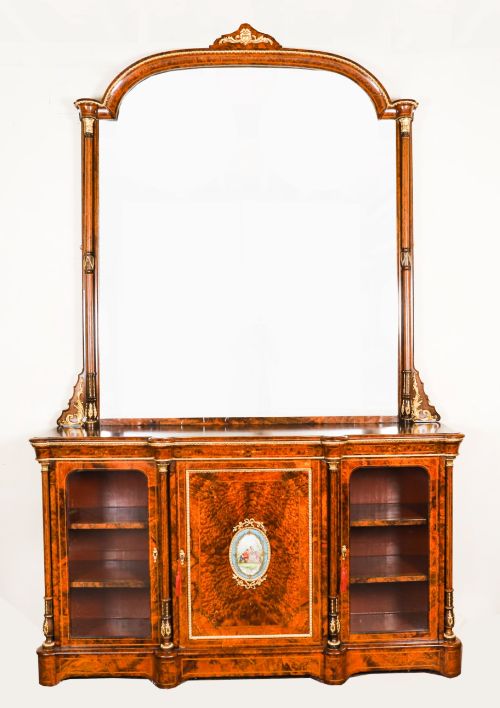
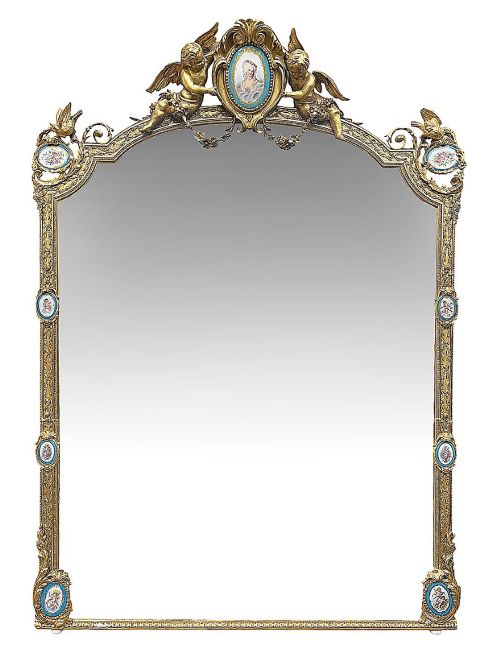
A victorian porcelain mirror combines glazed ceramic elements with glass panels, spanning styles from Rococo Revival to French Second Empire. These pieces function as dressing table mirrors, wall mirrors, and hand mirrors designed for domestic display.
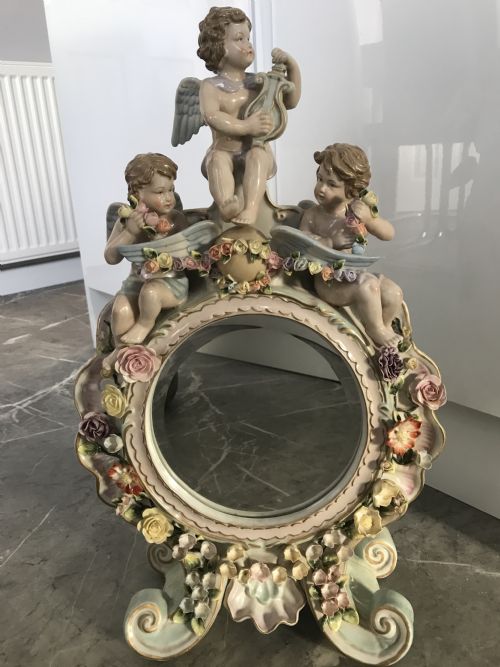
The selections encountered here range from continental factory pieces featuring cherubs and flowers to English overmantle mirrors set on porcelain feet. They appear alongside related furniture such as sideboards, credenzas, and dressing tables.
Origins stretch across the nineteenth century, including specific dates such as eighteen eighty and eighteen ninety, alongside broader Victorian periods. Continental workshops and English makers shape the selection available on this page.
How they were made
Makers shaped porcelain frames and applied enamel decoration, frequently incorporating hand-painted floral motifs and sculptural figures such as cherubs. Ormolu mounts and gold leaf add metallic highlights to the ceramic structures.
Support structures rely on ebonised wood and wood backing to hold the heavy ceramic and glass components securely. Mirror glass and silver deposit techniques provide the reflective surfaces set within these elaborate surrounds.
Victorian Porcelain Mirror Retail Price Guide 2026
Typical asking prices for victorian porcelain mirror among the pieces listed under this phrase on Sellingantiques today, from the lower quarter to the upper quarter. They describe what is for sale here now, not the wider market.
Perched cherubs peer out from dressing table mirrors, keeping a watchful eye on nineteenth-century powders and potions.
What varies in quality
The distinction between standard items and finer examples lies in the crispness of the porcelain modelling and the depth of the ormolu mounts. Finer works display careful hand-painting on the ceramic surface and substantial wood backing.
Signed factory pieces and sophisticated French Rococo Revival designs command greater attention than mass-produced continental items. The integration of porcelain feet and mounts demonstrates the maker's skill.
Jean Gille·Joseph Meissonnier·Sitzendorf Porcelain·Soane And Smith London
The Victorian Porcelain Mirror Glossary
- Ormolu
- Gilded bronze mounts applied to furniture and porcelain frames. This technique adds metallic lustre to the design.
- Ebonised wood
- Timber stained black to imitate ebony. It provides a dark contrast against porcelain and ormolu.
- Silver deposit
- A chemical process applying pure silver onto glass or porcelain surfaces. This creates intricate metallic patterns.
- Overmantle mirror
- A large glass panel designed to hang above a fireplace. Victorian examples frequently incorporate porcelain feet.
Victorian Porcelain Mirror: Frequently Asked Questions
How do I clean the porcelain frame?
Dust the ceramic surface gently with a soft dry brush to remove particles without disturbing the glaze. Avoid liquid cleaners that might seep into older wood backing or unglazed areas.
Take care around ormolu mounts and gold leaf details during maintenance. Gentle handling preserves the original finish.
Were these mirrors meant for the wall or tabletop?
Many Victorian examples function as dressing table mirrors, easel mirrors, or hand mirrors designed for boudoir use. Others serve as large overmantle pieces intended for permanent wall hanging.
Consider the weight and mounting hardware before placing heavier wall-hung pieces. Tabletop versions require stable surfaces to support their ceramic frames.
How do I spot a reproduction?
Examine the weight and quality of the porcelain, as older pieces display hand-finished details rather than uniform modern moulding. Look closely at the wood backing and mirror glass for signs of age.
Genuine nineteenth-century items exhibit wear consistent with domestic use over generations. Check mounting points and fixings to understand the piece's construction history.
What is silver deposit work?
Silver deposit is a technique where pure silver is bonded directly onto porcelain or glass surfaces. This creates raised metallic designs that contrast with the glazed background.
Victorian makers utilised this method on blue ground porcelain and dressing mirrors. The resulting decoration remains integrated with the ceramic body.