


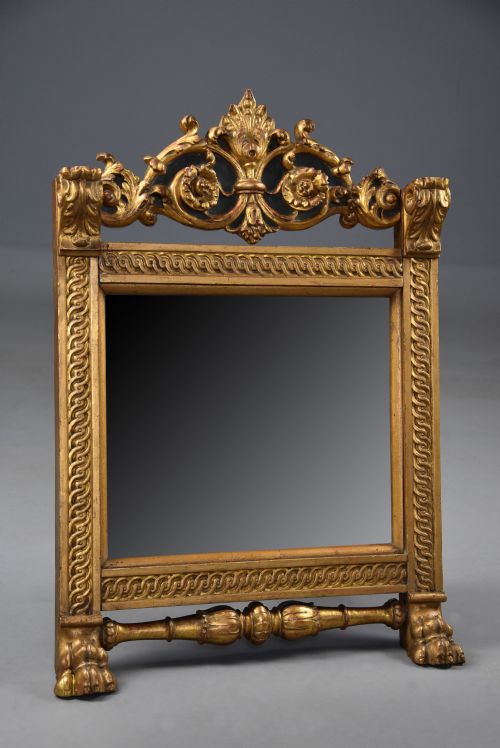

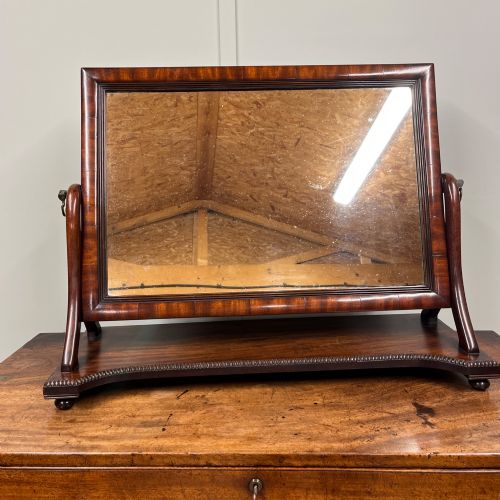
19th Century Tabletop Mirror
These 19th century tabletop mirror selections bring period character and functional design to a dressing table.
19th Century Tabletop Mirror
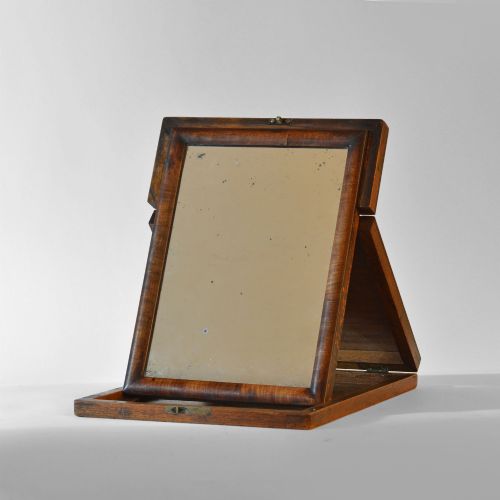
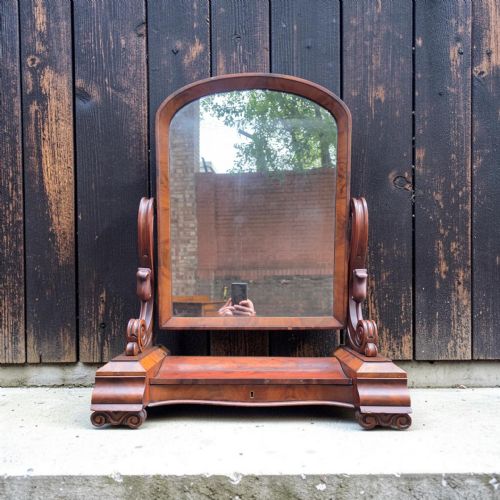
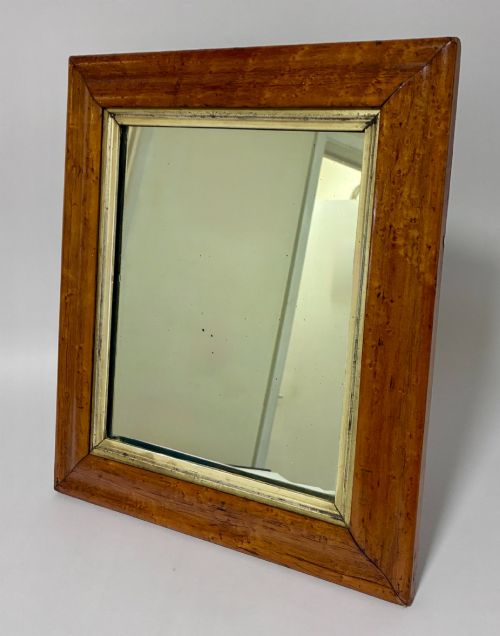
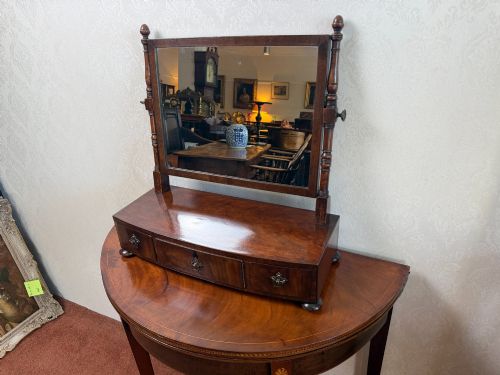
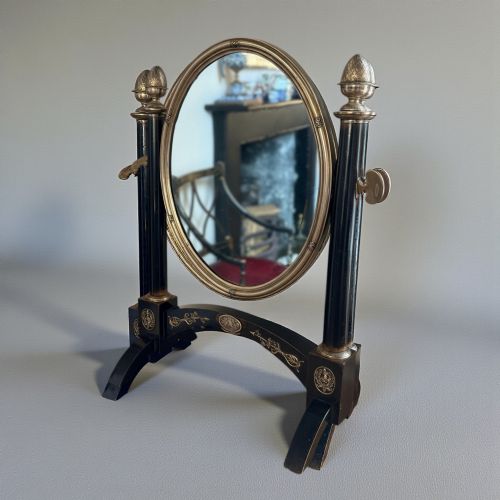
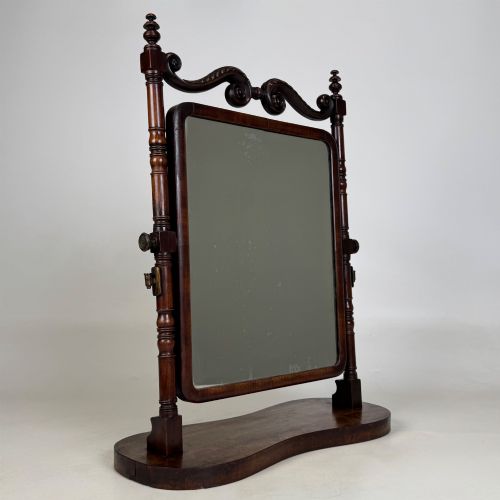
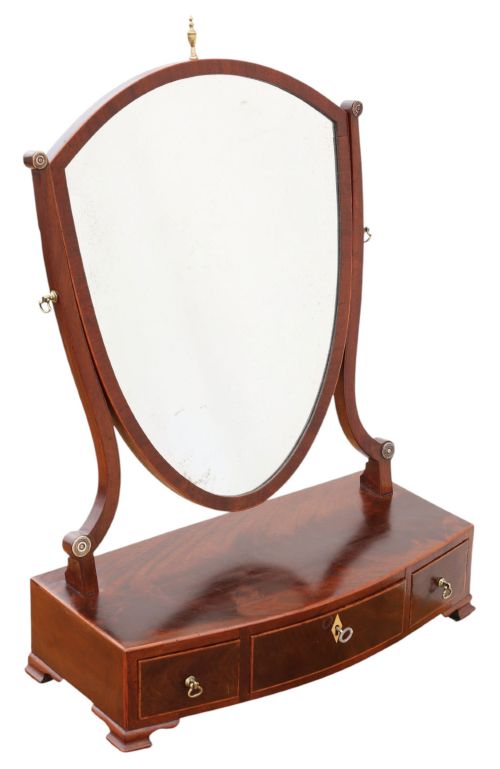
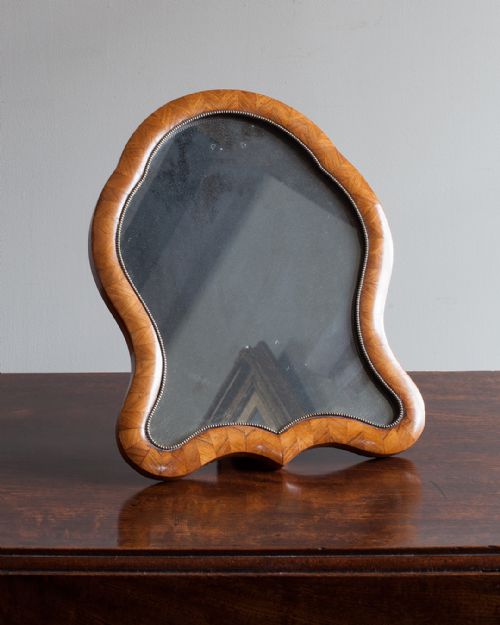
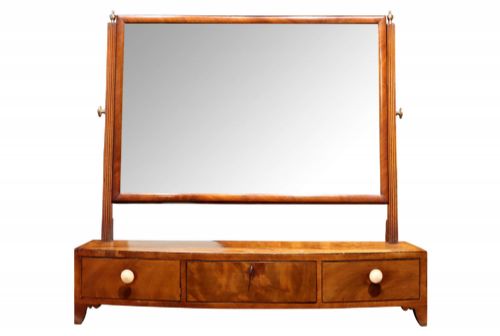
A 19th century tabletop mirror sits upon a chest, bureau, or dressing table, providing a reflective surface designed for personal grooming and dressing. These objects appear in various formats, from compact portable shaving pieces to large architectural swing frames set with drawers.
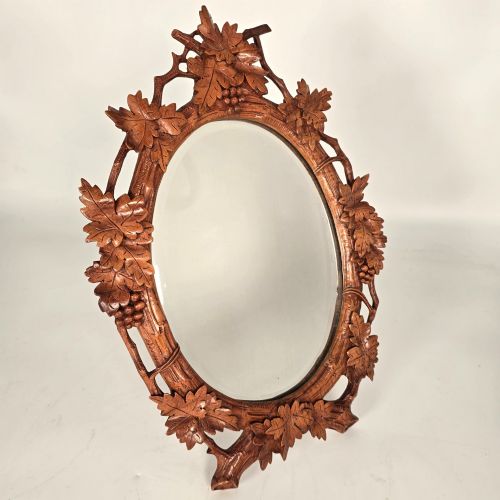
The versions most commonly met on this page include mahogany swing mirrors from the Georgian and Regency periods, alongside ornate late Victorian examples in brass, gilt bronze, and carved woods. Makers fashioned these pieces to stand independently on horizontal surfaces, often incorporating adjustable pivots and small compartments at the base.
Materials and construction
Cabinetmakers utilised dense timbers such as mahogany, walnut, rosewood, and kingwood for the frames and box bases, frequently employing figured veneers and marquetry inlay. Joinery methods included precise dovetailing for the small drawers housed within the table stands.
Metal elements required casting, chasing, and gilding, particularly in ormolu, brass, and champlevé enamel frames typical of French Empire and Revival pieces. Glass plates were silvered and fitted into pivoting wooden housings or secured by decorative metal easel backs.
19th Century Tabletop Mirror Retail Price Guide 2026
Typical asking prices for 19th century tabletop mirror among the pieces listed under this phrase on Sellingantiques today, from the lower quarter to the upper quarter. They describe what is for sale here now, not the wider market.
Listings feature woods including mahogany, walnut, rosewood, kingwood, lime wood, oak, and birch.
Distinctions in quality
Quality rests in the crispness of the carving, the selection of timber veneers, and the proportion of the frame to the base. Superior examples display finely figured mahogany or walnut grain, well-fitted drawer boxes with hand-cut dovetails, and substantial cast bronze or brass mounts.
Lesser pieces exhibit simpler pine carcases with thin mahogany veneers, plain turnings, and replacement mirror plates or fittings. The weight of the timber and the rigidity of the pivot mechanism indicate the standard of original workshop production.
Jean Gille
The 19th Century Tabletop Mirror Glossary
- Swing mirror
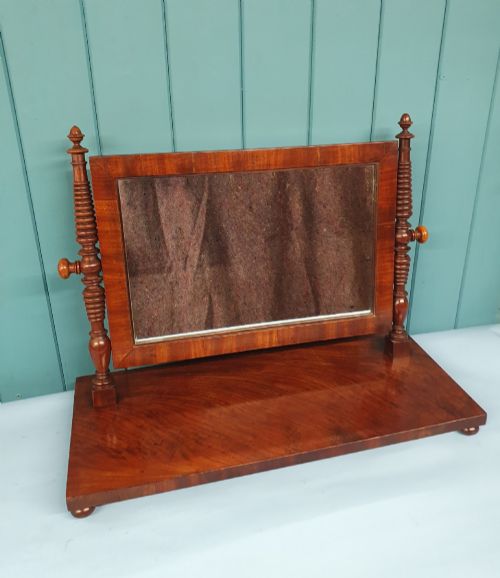
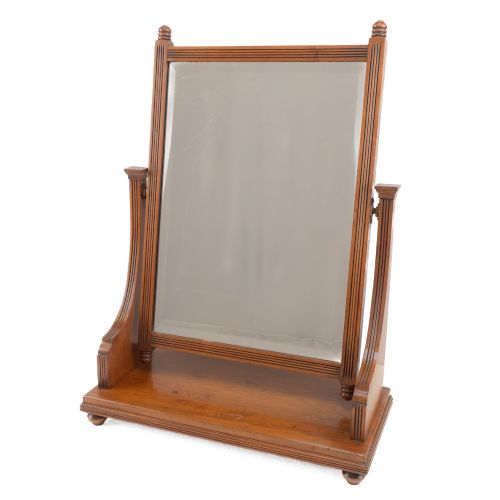
- A glass plate mounted on vertical pivots within a frame, allowing the user to tilt the angle of reflection. This form is often supported by upright arms attached to a box base.
- Toilet mirror
- A traditional term for a dressing table mirror designed for use during morning ablutions. These pieces frequently incorporate small drawers for storing trinkets or shaving gear.
- Ormolu
- Gilt bronze mounted on decorative objects and furniture, created by applying a mercury-gilding process to cast brass or bronze. It provides a bright golden finish on French Empire and revival pieces.
- Champlevé
- An enamelling technique where troughs are gouged into a metal surface and filled with vitreous enamel powder before firing. This technique appears on late 19th century decorative frames.
- Bureau fitment
- A small desk or writing compartment incorporated into the base of a mirror stand. It provides a folding surface and internal pigeonholes beneath the pivoting glass.
19th Century Tabletop Mirror: Frequently Asked Questions
How do I date a 19th century tabletop mirror?
Dating relies on timber selection, hardware, and stylistic indicators such as veneer thickness and drawer construction. Earlier Georgian and Regency examples favour solid mahogany with delicate boxwood stringing, while late Victorian pieces often show heavier revival carving or cast brass mounts.
Examining the backboards, screws, and mirror glass plates provides further clues. Original mercury silvering displays characteristic slight oxidation spots, whereas later replacements look uniform.
What is the difference between a dressing mirror and a toilet mirror?
In period terminology, both terms describe portable tabletop mirrors used for personal grooming. Toilet mirrors historically referred to smaller pieces associated with the toilet table.
Modern descriptions use dressing mirror, toilet mirror, and vanity mirror interchangeably for these pivoting tabletop objects. The actual form depends more on the presence of drawer bases than the specific title.
Where should I place a table mirror in a room?
These mirrors function best on flat surfaces at a comfortable height for seated use, such as a chest of drawers, sideboard, or dressing table. Positioning them opposite or adjacent to a window helps bounce natural light around the space.
Because the base is freestanding, ensure the surface is stable and deep enough to support the weight of the pivoting frame without risk of tipping.
How do I maintain the glass and wood on an antique mirror?
Dust the wooden frame regularly with a dry, soft cloth and avoid chemical polishes that can degrade old wax finishes. Keep the timber away from direct sunlight and radiators to prevent warping or veneer lifting.
Clean the mirror glass sparingly using a cloth slightly dampened with distilled water, ensuring moisture does not seep behind the bevelled edge where the silvering meets the backing.