


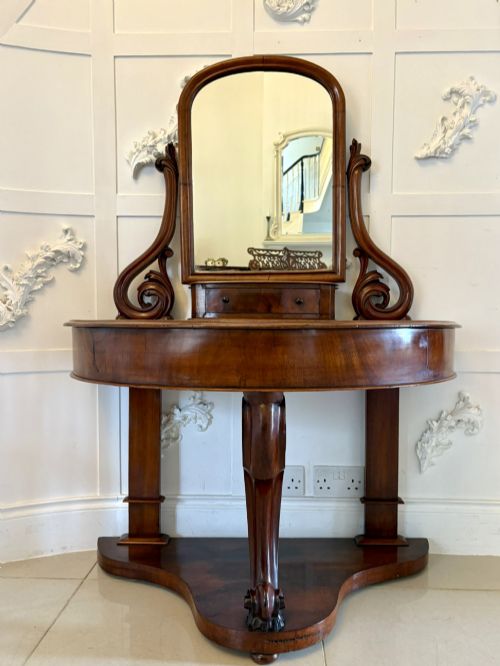


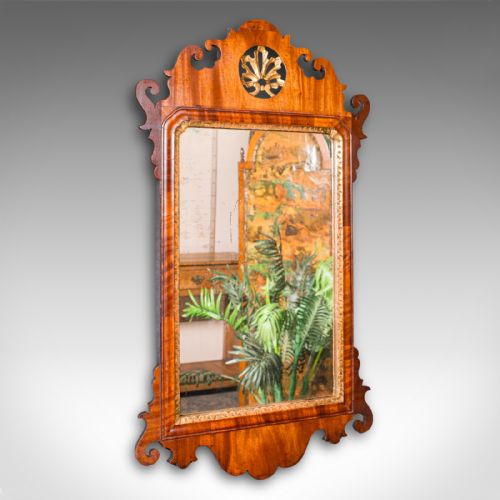


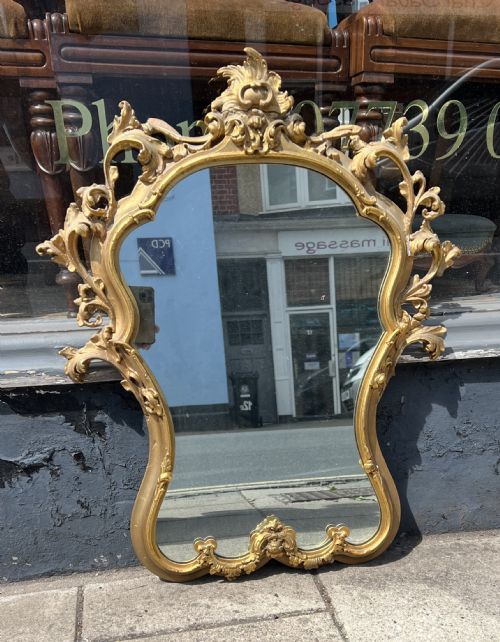

Carved Scroll Vanity Mirror
A carved scroll vanity mirror brings tactile timber warmth and fluid organic lines to a bedroom surface.
Carved Scroll Vanity Mirror
A carved scroll vanity mirror is a dressing glass designed for tabletop use or as a wall-hanging fixture, defined by sweeping wooden flourishes and architectural framing. These mirrors originate from periods spanning the Georgian era through to the early twentieth century, incorporating revival aesthetics that echo earlier craftsmanship.
The versions most commonly met on this page are fashioned from rich timbers like mahogany and walnut, alongside gilded or carved pine examples. They take the form of swing mirrors mounted on dressing tables or standalone tabletop pieces meant for the morning room or bedroom.
Makers drew upon diverse historical design vocabularies, producing pieces styled after Queen Anne, Chippendale, and Rococo traditions. Whether standing on four drawers or hanging independently, each item utilises shaped scrollwork to soften its profile.
How they were made
Cabinetmakers worked primarily in dense hardwoods such as mahogany and burr walnut, selecting boards with pronounced grain patterns to give depth to the frames. These timbers were shaped by hand, employing joinery techniques suited to supporting pivoting glass plates.
Surface ornamentation relied on meticulous hand carving, gesso preparation, and gilding to achieve the characteristic scroll motifs of the Rococo and Georgian revivals. Brass fittings were frequently integrated to secure the mirror plates and allow adjustable angles for the user.
Carved Scroll Vanity Mirror Retail Price Guide 2026
Typical asking prices for carved scroll vanity mirror among the pieces listed under this phrase on Sellingantiques today, from the lower quarter to the upper quarter. They describe what is for sale here now, not the wider market.
The listings span the Georgian era through to the 1930s, featuring walnut, mahogany, pine, and giltwood.
What varies in quality
The distinction between ordinary and exceptional examples lies in the crispness and depth of the carved scrollwork. Superior pieces display fluid, confident hand-chiseled details rather than mechanical uniformity.
Timber selection dictates the overall presence of the object, with figured burr walnut and rich aged mahogany marking out the more ambitious iterations. The integrity of the original mirror glass and the weight of the supporting brass hardware further separate standard production from finer workshop output.
The Carved Scroll Vanity Mirror Glossary
- Gesso
- A plaster-based material applied to wood surfaces as a smooth base for gilding or painting. It is traditionally built up in layers before being carved or moulded.
- Swing mirror
- A looking glass hung within a movable frame on pivots, allowing the user to tilt the angle. This form is central to dressing table accessories.
- Rococo revival
- A design movement drawing inspiration from the asymmetrical scrolls and shell motifs of the mid-eighteenth century. It experienced significant popularity during the nineteenth and early twentieth centuries.
- Burr walnut
- Timber taken from the warted growths on walnut trees, prized for its swirling, highly figured grain patterns. It adds distinct visual texture to cabinet fronts and mirror frames.
Carved Scroll Vanity Mirror: Frequently Asked Questions
Where were vanity mirrors placed?
These mirrors typically sat atop dressing tables in bedrooms or morning rooms where personal grooming took place. Their adjustable frames allowed users to direct light onto the face.
Some examples were designed specifically for reception halls or as wall-mounted fixtures to serve functional and decorative roles simultaneously.
How do I identify the period?
Dating relies on examining the timber species, joinery methods, and the style of the carved scrollwork. Earlier Georgian pieces often show simpler, robust proportions.
Revival pieces from the nineteenth and early twentieth centuries frequently combine historical motifs with machinery-assisted cuts or specific secondary woods.
Are these mirrors meant for walls?
While many examples function as tabletop dressing glasses with swing stands, several listings are dedicated wall mirrors. These hanging versions utilise identical carved scroll framing techniques.
Both types share the same decorative vocabulary, though wall variants lack the pivoting base structure.
What is gesso used for?
Gesso provides a smooth, receptive surface for applying gold leaf or paint to wooden mirror frames. It allows carvers to achieve sharp relief details.
Over time, this plaster mixture develops a fine network of age cracks that distinguishes older surfaces from modern reproductions.