


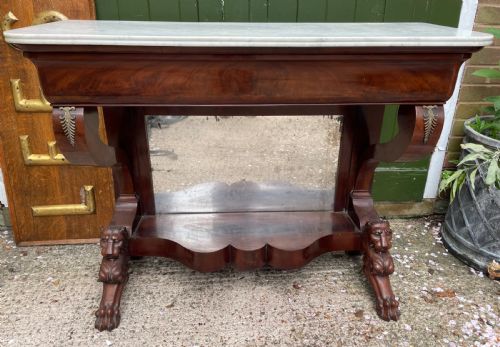


French Empire Table Mirror
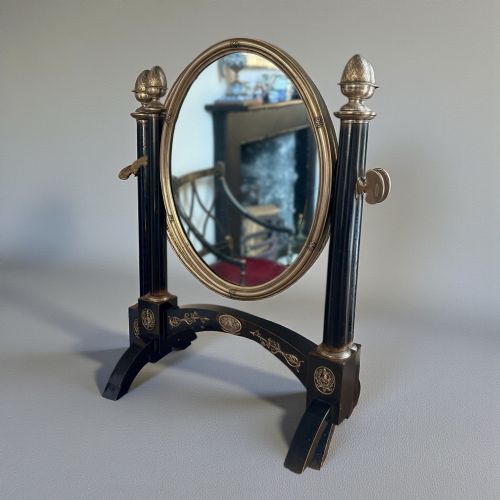
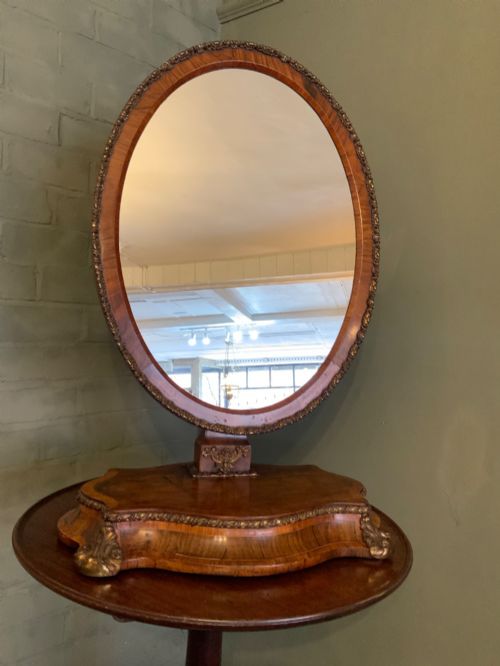
These french empire table mirror pieces bring classical dignity to a room, offering functional reflection framed in rich woods and cast metal.

French Empire Table Mirror
A french empire table mirror sits upon a surface, combining adjustable mirror glass with architectural mounts and classical proportions.
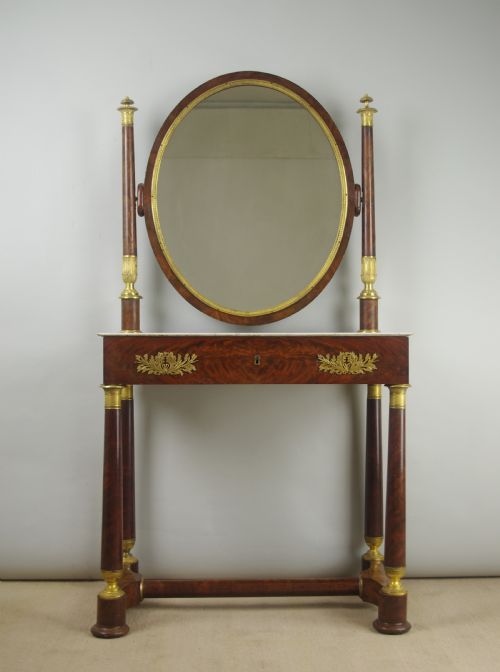
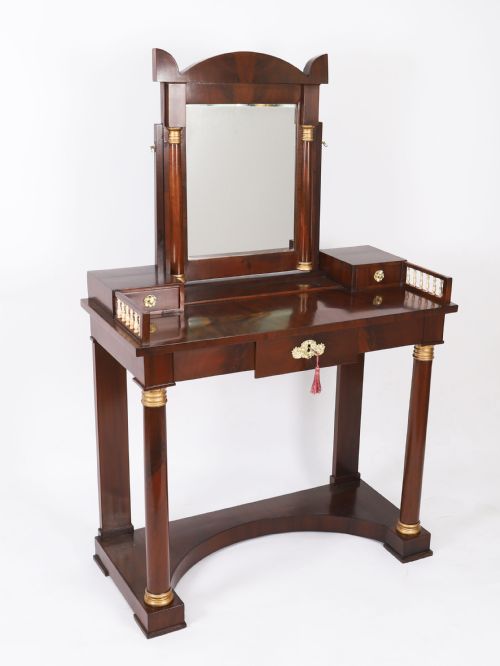
The selection extends from standalone pedestal mirrors to those integrated within dressing tables and console forms.
How they were made
Cabinetmakers utilised solid and veneered mahogany over robust carcases, frequently pairing the rich timber with marble tops.
Metalwork played a central role, with bronze, gilt metal, and ormolu cast into classical motifs to frame the glass and decorate the base.
The listings combine mahogany, marble, bronze, and ormolu across nineteenth-century and early twentieth-century periods.
What varies in quality
The crispness of the bronze and ormolu casting separates standard production from finer work, as does the depth of the mahogany grain.
Proportion and the integration of mirror glass within the overall architectural frame define the success of each piece.
The French Empire Table Mirror Glossary
- Ormolu
- Gilded bronze applied as decorative mounts. This technique creates sharp metallic highlights against dark wood.
- Console table
- A wall-mounted or freestanding table that often pairs with a mirror. These pieces frequently feature marble tops.
- Chiffonier
- A tall storage cabinet with drawers and shelves. Examples from this tradition utilise figured mahogany.
- Triptych
- A three-panel mirror arrangement with hinged sides. This allows the glass angles to be adjusted.
French Empire Table Mirror: Frequently Asked Questions
Where should I place a table mirror?
These mirrors sit comfortably upon chests of drawers, dressing tables, or console surfaces in reception rooms and bedrooms.
Their adjustable frames allow you to angle the glass for both practical use and to reflect light across the room.
How do I identify the Empire period?
Look for heavy mahogany construction, classical architectural symmetry, and cast bronze or ormolu mounts depicting classical motifs.
Nineteenth-century examples also appear in revival styles, reflecting the enduring popularity of these formal designs.
Are these mirrors adjustable?
Many examples feature pivoting frames supported by upright pillars or pedestals, allowing you to tilt the glass.
This functional mechanism remains a defining characteristic of period toilet and dressing table mirrors.
What materials are used?
Makers relied primarily on mahogany, bronze, ormolu, and glass, often incorporating marble for supporting console surfaces.
Brass and gilt metal also appear frequently in the decorative mounts and framing.