
Rococo Hall Table
These rococo hall table pieces bring elaborate French and Italian styling into an entranceway, prized for their ornate carving and shaped stone surfaces.
Rococo Hall Table
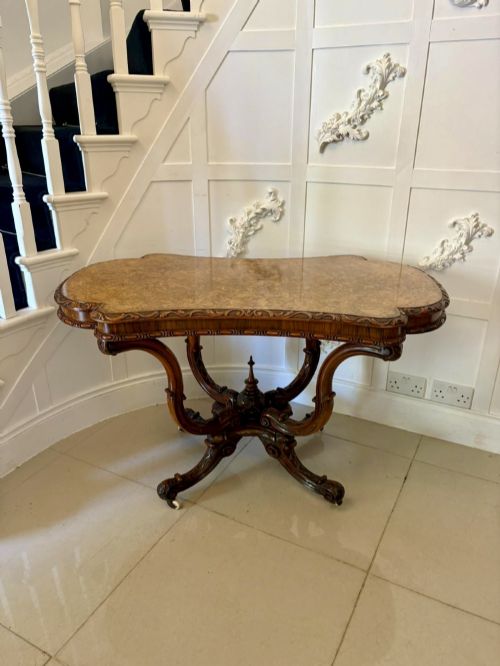
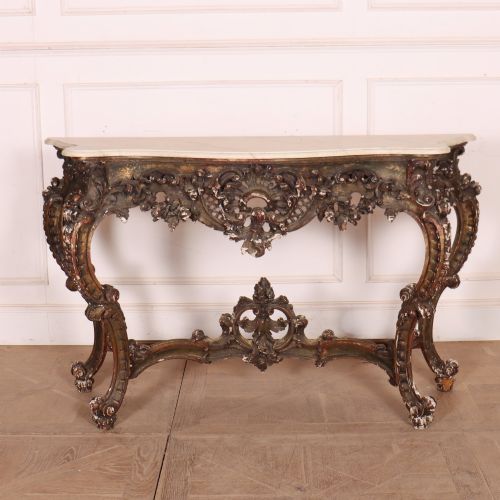
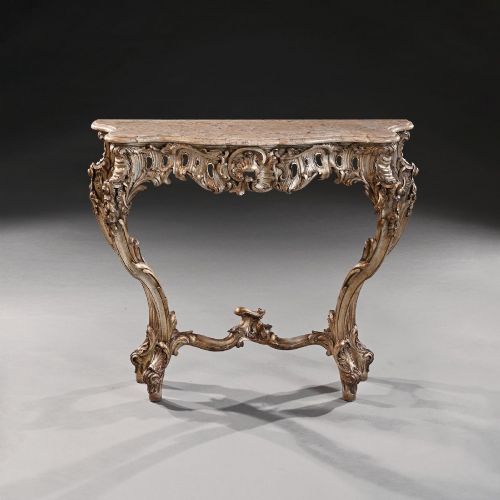
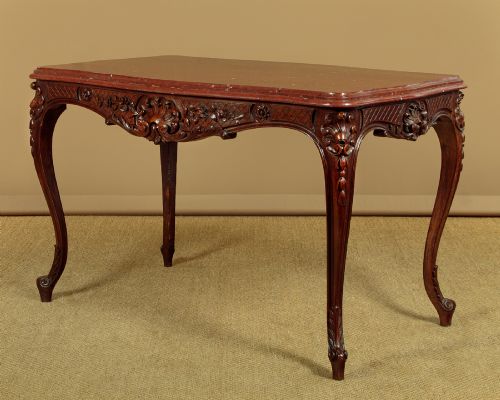
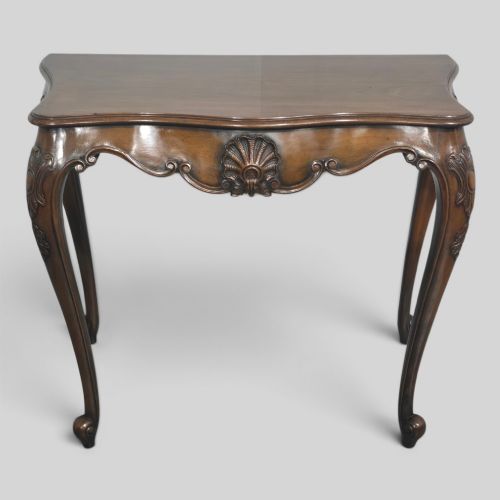
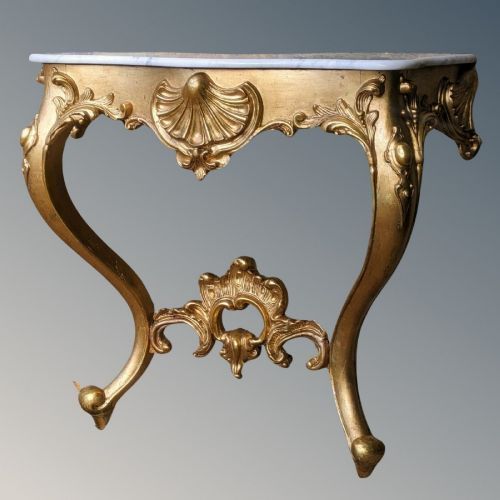
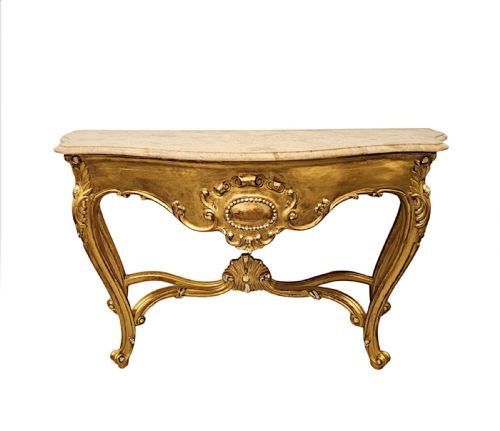
A rococo hall table serves as a decorative surface in an entranceway, drawing upon 18th century European design principles. The selection includes console tables, centre tables, and side tables designed with the curves and asymmetry characteristic of the style.
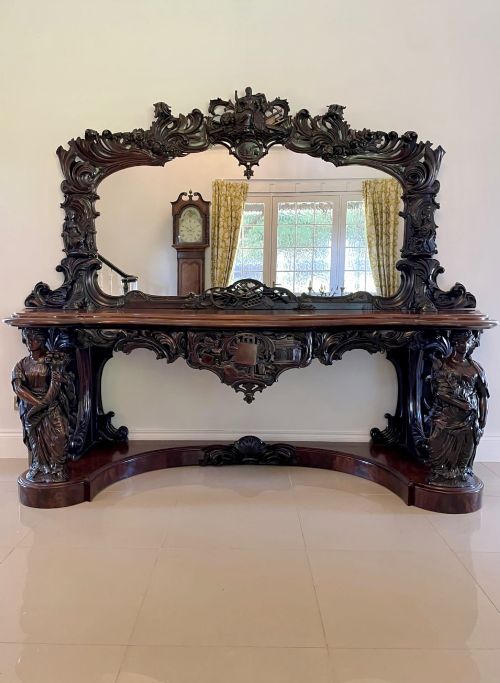
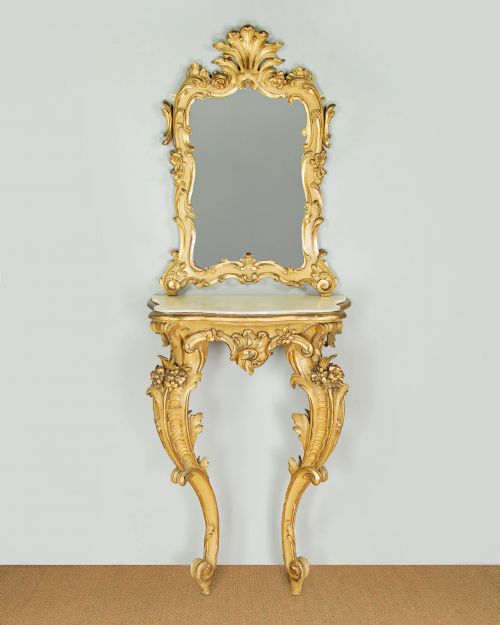
The pieces span various periods, ranging from the 18th century through the Victorian era and into the early 20th century. Italian and French origins predominate, often appearing as console tables paired with matching wall mirrors.
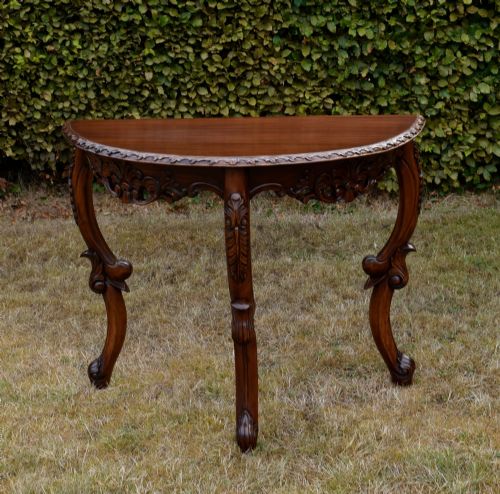
Makers and workshops across England and continental Europe produced these items using forms like the serpentine front, demi-lune shape, and freestanding centre tables.
How they were made
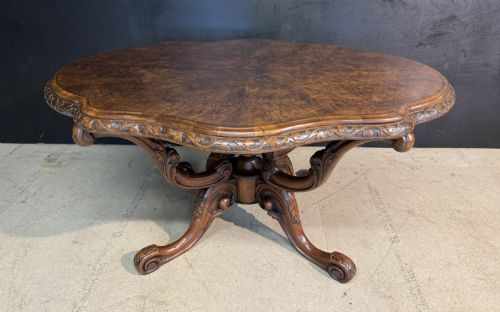
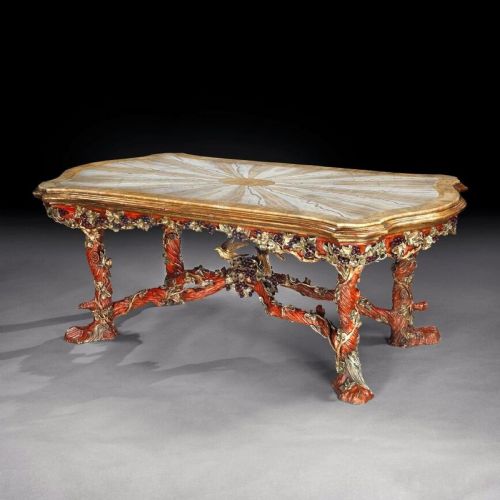
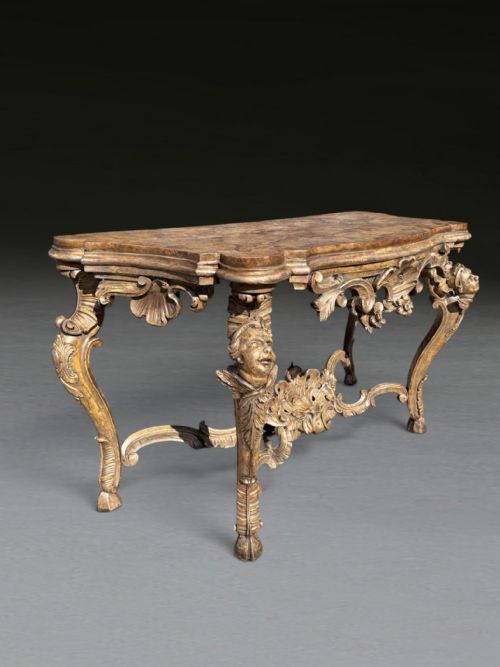
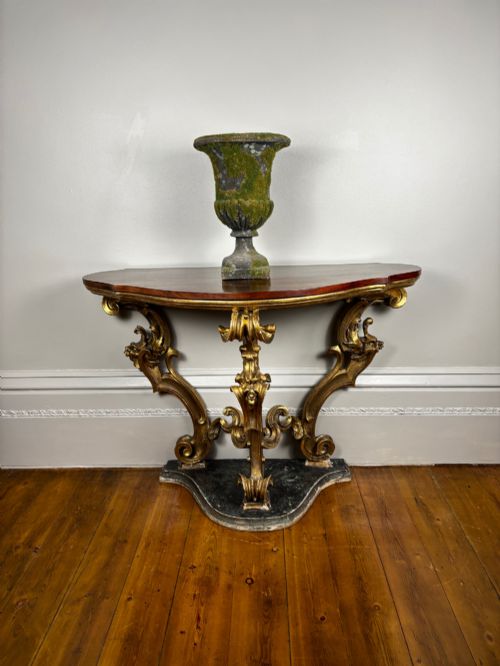
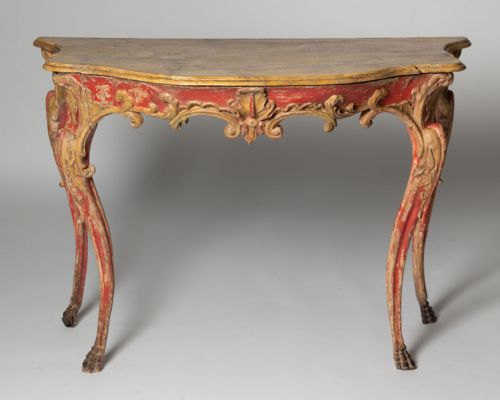
Makers utilised solid timbers such as walnut, mahogany, oak, and kingwood, frequently applying burr veneers for visual texture. Giltwood and gesso formed the basis for heavily gilded surfaces, sometimes finished with paint or silver gilding.
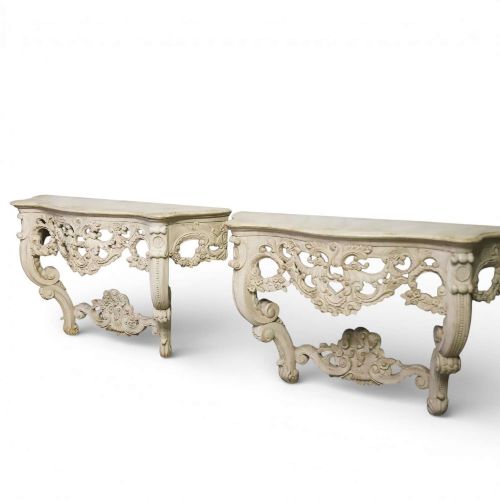
Carved wood frames supported heavy tops fashioned from marble, onyx, or rouge marble, shaped to follow the contours of the base. Surface ornamentation relied on hand-carved scrolling motifs, parcel gilding, and parquetry inlay.
Some tables wear their age with a shabby chic white finish, while others shine with centuries of untamed gold leaf.
What varies in quality
Quality rests in the depth and sharpness of the hand-carving across the wooden frames and the execution of the gilding. Superior examples display crisp detail in the asymmetrical scrolls and foliage without soft edges or heavy restoration.
The choice and thickness of the stone top also dictate the tier of the piece, with shaped marble or onyx slabs fitted precisely to the wooden base. Signed pieces or works originating from known London or continental firms command distinct recognition for their construction standards.
Maple and Co·Amleto Bertoni
The Rococo Hall Table Glossary
- Console table
- A table designed to stand against a wall, frequently secured to it with brackets due to having only front legs. These items often feature shaped marble tops and elaborate carving beneath the apron.
- Giltwood
- Timber that has been coated with a thin layer of gold leaf or gold paint over a prepared gesso ground. This treatment gives the carved wooden surface a brilliant metallic sheen.
- Serpentine front
- A furniture front curved in a concave-convex-concave shape, creating a gentle undulating line. This contour appears frequently on the leading edge of console and side tables.
- Demi-lune
- A half-moon shape used for table tops and the corresponding frames beneath them. These tables fit flush against a wall in narrow hallways.
- Parquetry
- Geometric patterns of wood veneer inlaid into a larger surface, such as a table top. This technique showcases contrasting timber grains and colours.
Rococo Hall Table: Frequently Asked Questions
Where does a rococo hall table fit best?
These tables sit flush against an entranceway or hallway wall, where their shaped tops and carved frames catch the eye immediately upon entry.
Because many are narrow console variants, they occupy minimal floor space while providing a surface for decorative objects or mirrors.
How do I identify a marble top console?
Marble top consoles feature heavy stone slabs, often in white, rouge, or onyx, cut to match the serpentine or curved wooden frames beneath.
The stone rests directly upon the gesso or carved wood apron, sometimes secured by the weight of the material alone.
What is the difference between a centre table and a console table?
A centre table stands independently with finished detail on all sides, designed to occupy the middle of a room rather than sit against a wall.
A console table is engineered specifically to stand flat against a vertical surface, often requiring wall attachment for complete stability.
How do I care for giltwood and carved wood?
Giltwood surfaces require gentle dusting with a soft, dry cloth to protect the delicate gold leaf layer from abrasion or moisture damage.
Avoiding direct sunlight and maintaining stable room humidity preserves both the timber frames and the applied finishes.