


Rococo Fireplace Andirons
Rococo fireplace andirons bring extravagant asymmetrical curves and warmth to a hearth, offering both function and sculptural presence.
Rococo Fireplace Andirons
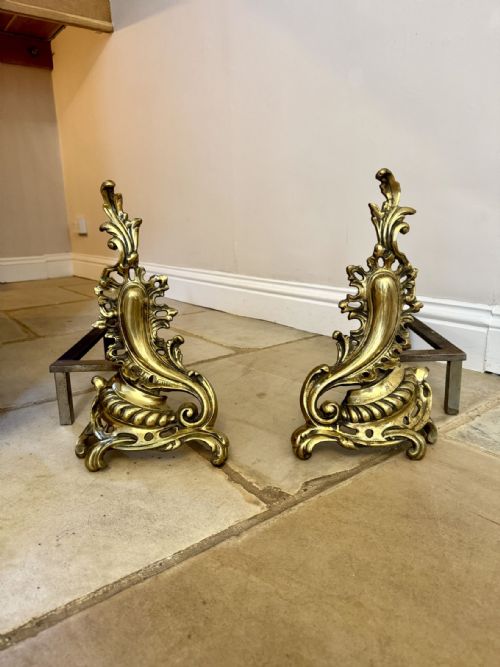
When buyers search for rococo fireplace andirons, they seek functional hearth supports that double as ornate decorative sculptures. The pieces gathered here predominantly reflect French design, spanning the eighteenth, nineteenth, and Georgian periods.
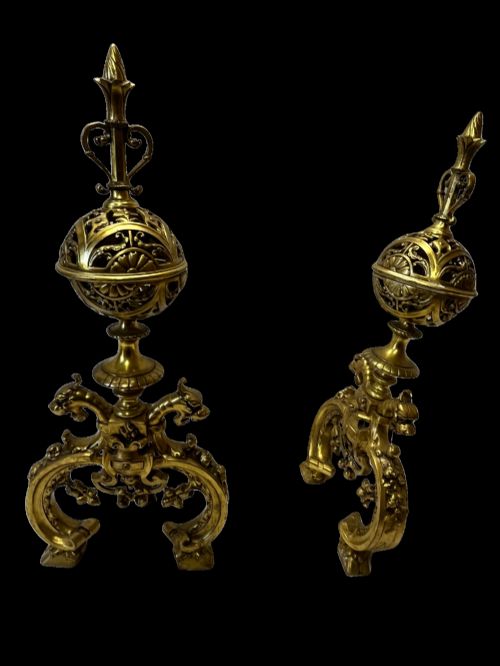
Most examples take the form of paired chenets or fire dogs designed to hold logs within an open fireplace. They display the characteristic scrolls, foliage, and figurative motifs associated with the style.
Originating largely from French workshops and revival movements, these objects serve as both practical supports and focal points for period interiors. The selection includes brass, bronze, and parcel-gilt iterations.
Materials and construction
Metalwork forms the core of these objects, utilising cast brass, wrought iron, and cast iron for structural stability and weight. Artisans shaped these robust metals to withstand intense hearth heat while supporting heavy logs.
Surface decoration frequently involves gilt bronze and ormolu, applying a fine gold layer over bronze or brass bases. This technique creates a rich contrast between polished metallic highlights and darker patinated recessed areas.
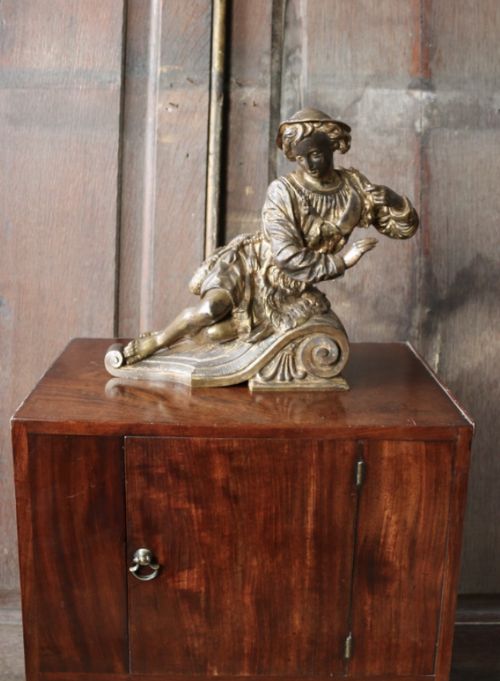
Many items incorporate sculptural statuettes, cherubs, or intricate foliate mounts joined securely to iron fire bars. The combination of casting, chasing, and gilding reflects advanced nineteenth-century and eighteenth-century metalworking skills.
Listings feature items from the eighteenth and nineteenth centuries, including Georgian pieces, constructed from bronze, brass, and iron.
Assessing craftsmanship
Quality reveals itself in the crispness of the chased detail and the depth of the casting. Superior examples exhibit sharply defined scrollwork and expressive figurative modeling rather than softened outlines.
The choice of materials and the execution of the mercury gilding or ormolu finish separate standard production from exceptional work. Deeper, more durable metallic finishes retain their lustre and tonal variation over centuries of use.
The Rococo Fireplace Andirons Glossary
- Chenet
- A French term for an andiron or fire dog used to support logs in a hearth. They often feature decorative frontispieces.
- Ormolu
- Finely ground high-carat gold mercury-gilded onto a bronze or brass object. This technique imparts a rich golden finish characteristic of luxury decorative metalwork.
- Fire dog
- A metal support placed in pairs inside a fireplace to hold burning wood logs above the hearth floor. They improve air circulation around the fire.
- Rococo
- An ornate artistic style originating in France characterised by asymmetry, scrollwork, and naturalistic motifs. It dominated mid-eighteenth-century design and experienced revivals later.
- Parcel gilt
- A decoration method where only specific portions of an object receive gold leaf or gilding. This highlights particular design elements against a contrasting metal base.
Rococo Fireplace Andirons: Frequently Asked Questions
How were andirons used in the past?
They functioned primarily to elevate firewood, allowing air to circulate underneath for a better burn. The decorative front pieces remained visible when the hearth was not in use.
Wealthy households commissioned elaborate gilt bronze versions to display status and complement interior reception rooms.
Can I use antique andirons in a working fireplace?
Most antique metal and irons are robust enough for occasional fires, provided they are cast from heavy iron or bronze. You should check the structural integrity of the log bars before lighting any fuel.
Many collectors prefer to use them for decorative display only to preserve delicate ormolu surfaces and historic gilding.
How do I distinguish eighteenth-century andirons from nineteenth-century revivals?
Eighteenth-century originals typically display hand-chased surface details and construction methods consistent with period metalworking practices. Nineteenth-century revival pieces often utilise heavier casting techniques and reflect broader historical stylistic revivals.
Examining the underside, screw types, and patination helps determine the exact period of manufacture.