


Gilt Bronze Fire Dogs
Gilt bronze fire dogs bring warmth and ornate French flair to a hearth, offering both hearth utility and decorative presence.
Gilt Bronze Fire Dogs
These gilt bronze fire dogs, also known as chenets or andirons, are functional and decorative hearth furnishings designed to support logs within a fireplace. Buyers searching this phrase will find matched pairs dating predominantly from the nineteenth century, reflecting various revivalist aesthetics.
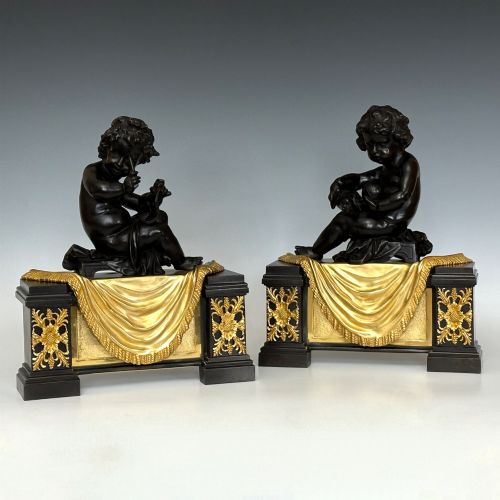
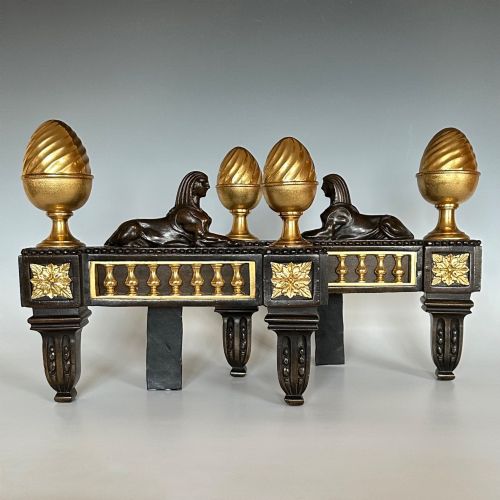
The pieces on this page heavily favour French designs, spanning Louis XIV, Louis XV, Rococo, Empire, and Regency styles. They frequently combine patinated dark bronze with bright gilt bronze or ormolu mounts, occasionally featuring cherubs or classical figural motifs.
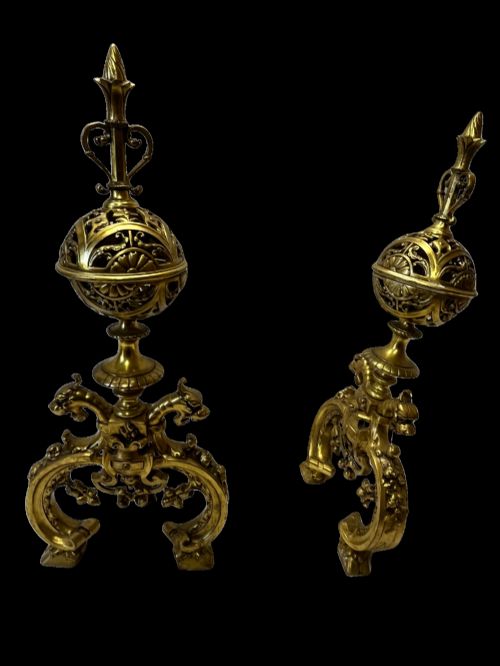
Most examples function as part of a wider fireplace arrangement, sometimes paired with fire guards, fenders, or grates. Forms range from simple cast brass and iron structures to elaborate sculptural works with adjustable widths for different hearth sizes.
Materials and manufacture
The construction relies on metal casting, combining robust structural metals like iron and plain bronze for the internal billet bars and feet. Over these frames, makers applied decorative cast brass, bronze, and iron.
Surface finish defines the appearance, using mercury gilding or modern electroplating known as ormolu to create the bright golden highlights. This is frequently contrasted against dark patinated bronze bodies to accentuate sculptural detail.
Listings feature pieces spanning the nineteenth century, incorporating materials such as ormolu, cast iron, and patinated bronze.
Judging quality
Quality rests in the crispness of the chasing and the depth of the casting in the bronze. Finer pairs exhibit sharply defined ornamentation, expressive figural work such as cherubs, and cleanly joined components rather than soft, blurred surface details.
The choice of materials also separates standard production from superior pieces, with heavy fire dogs combining patinated bronze and genuine ormolu mounts instead of uniform gilded brass. Heavier gauge metal and robust adjustable mechanisms indicate superior workshop output.
The Gilt Bronze Fire Dogs Glossary
- Chenet
- Alternative French term for fire dogs or andirons used to support logs in a hearth. They often display decorative front terminals.
- Ormolu
- Finely ground high-carat gold applied to a bronze base using a mercury amalgamation process or later electroplating. It provides the bright golden finish seen on many nineteenth-century pieces.
- Patinated bronze
- Bronze treated with chemicals or heat to produce a dark, stable surface finish. This technique creates visual contrast against bright gilt mounts.
- Billet bar
- The horizontal iron bar extending back from the decorative front of the fire dog to hold the firewood. It bears the direct heat of the hearth.
Gilt Bronze Fire Dogs: Frequently Asked Questions
What do fire dogs actually do?
Fire dogs support logs inside an open hearth to allow air to circulate underneath the wood for a better burn. They stand at the front of the fireplace, carrying the weight of the fuel on their horizontal iron bars.
Beyond their utility, the decorative front terminals project into the room to frame the hearth. They remain visible even when the fireplace is not in use.
Can these fit any fireplace?
Compatibility depends on the depth and width of your hearth, as well as whether the fire dogs feature adjustable components. Some nineteenth-century pairs include adjustable width frames to accommodate different fireplace openings.
Measuring your hearth space beforehand ensures the horizontal bars and front ornaments sit safely within the surround. Standard pairs require adequate clearance from the surrounding mantel and fire basket.
How are periods told apart?
Dating relies on stylistic clues and manufacturing techniques evident in the bronze work. Regency and Empire pieces often show classical restraint, while nineteenth-century Rococo revival examples display asymmetric scrollwork and abundant floral motifs.
Examining the underside and construction joints also helps reveal the age of the cast iron and brass components. Finer casting definitions typically align with specific revival periods during the eighteen-hundreds.