

Revolving Office Armchair
A revolving office armchair brings mechanical utility and handsome timber to a workspace, combining swivel action with sturdy domestic seating.
Revolving Office Armchair
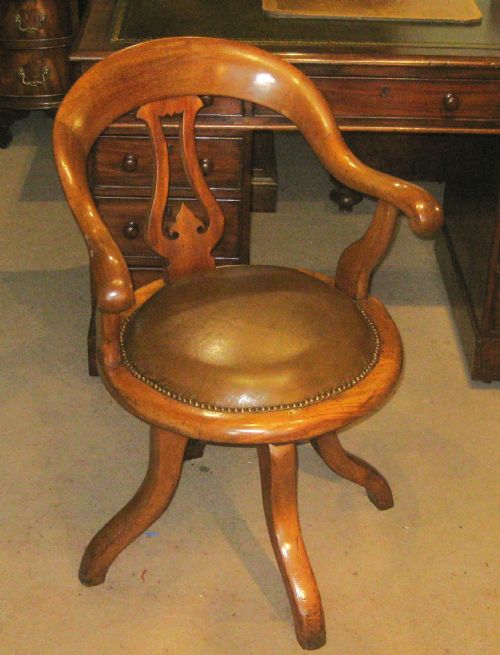
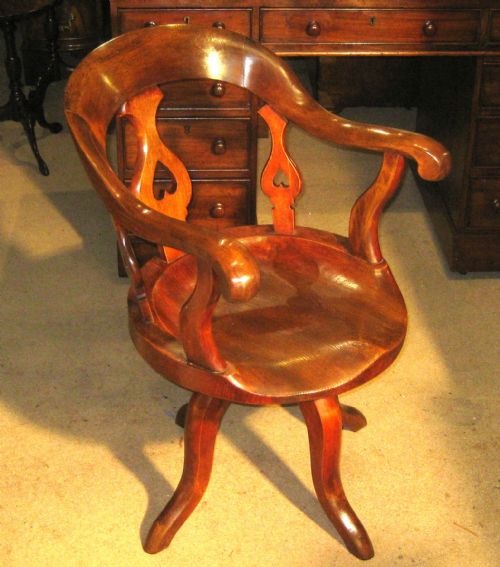
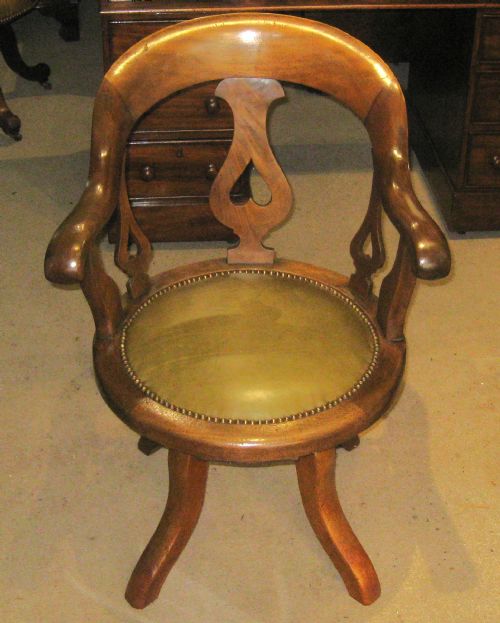
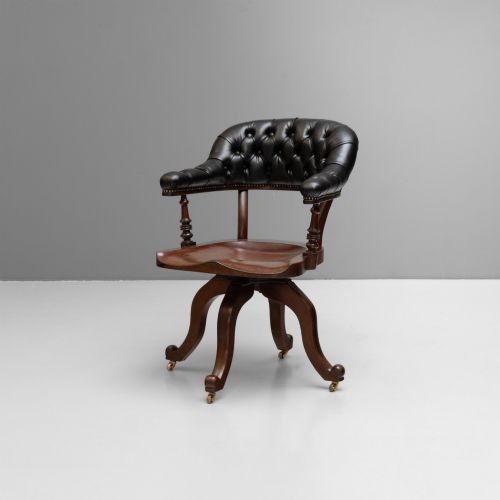
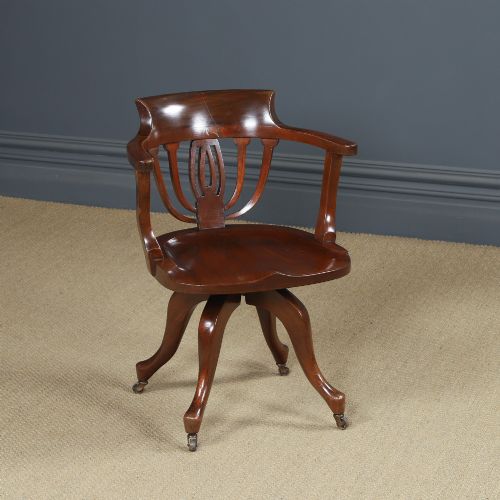
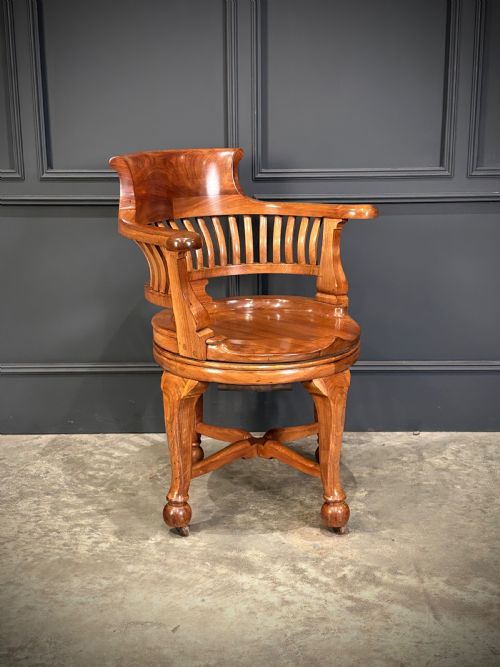
A revolving office armchair is designed for a desk or study, uniting a pivoting timber underframe with a supportive back and arms. These seating pieces span the Victorian and Edwardian eras, with many examples originating around the late nineteenth and early twentieth centuries.
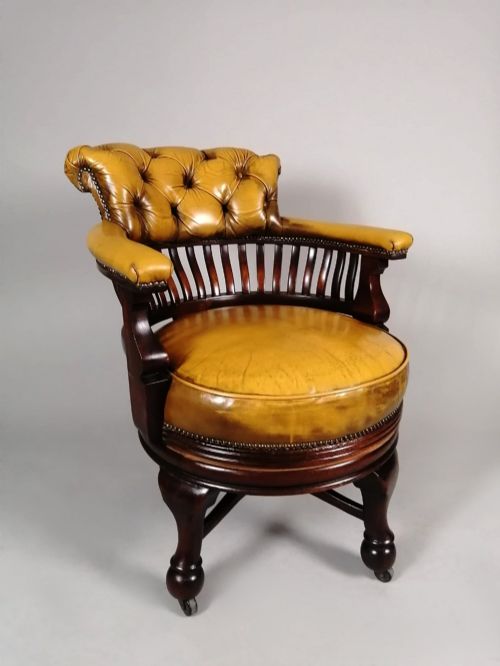
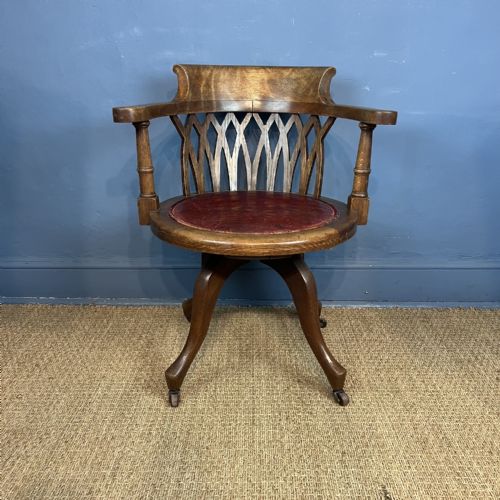
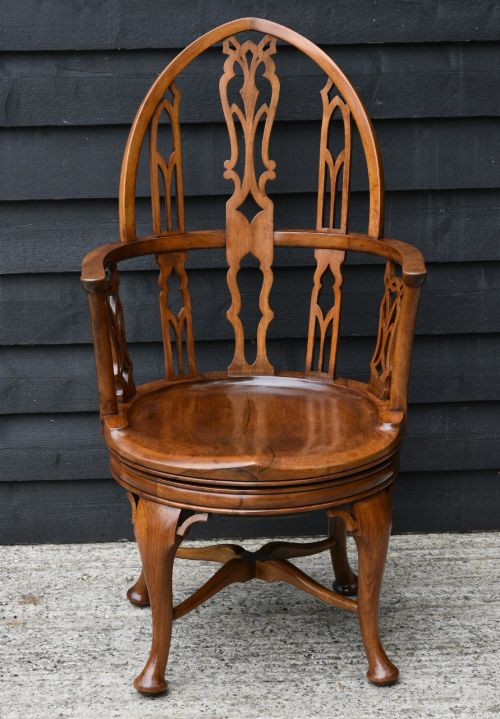
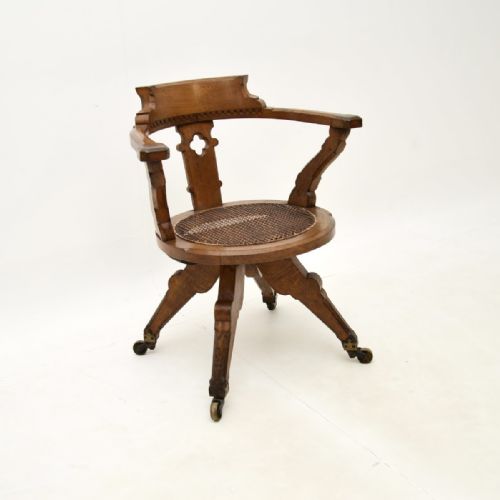
Mahogany and oak dominate the listings, frequently paired with buttoned leather inserts on the seats or backs. Versions range from straightforward utilitarian models to elaborate Gothic Revival and Arts and Crafts interpretations.
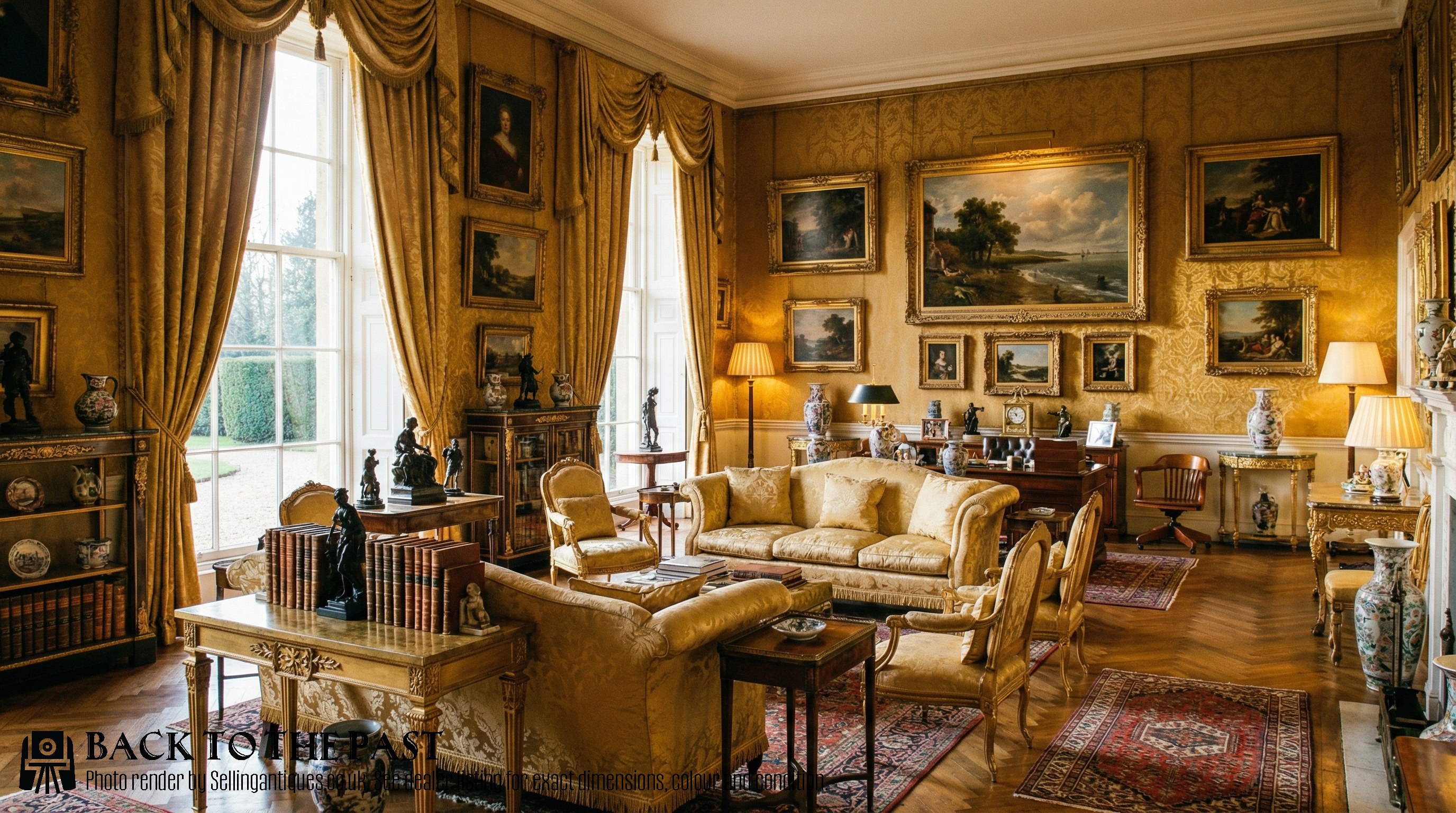
Materials and Mechanics
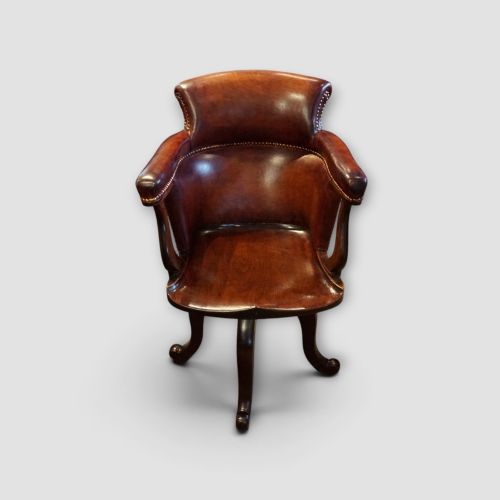
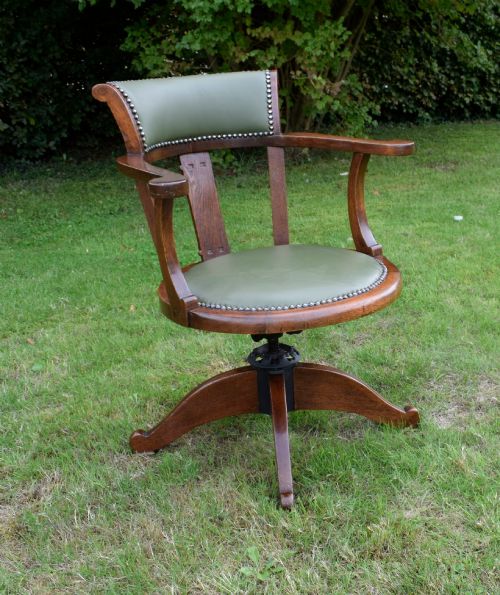
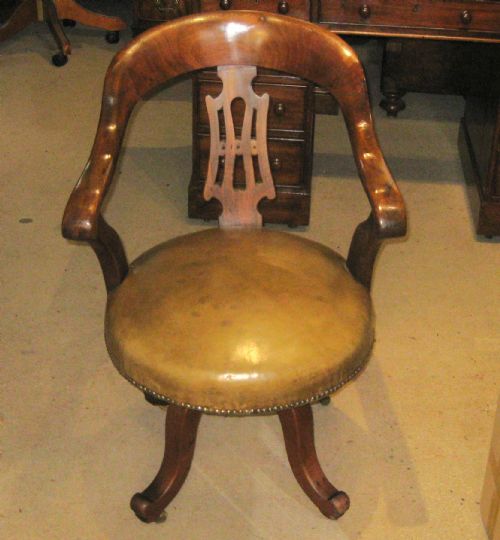
Cabinetmakers constructed the frames using solid timbers such as mahogany, oak, walnut and beech, often shaped into curved arms and supportive spindles. Leather upholstery, secured with brass studs, provided a durable working surface for the seat.
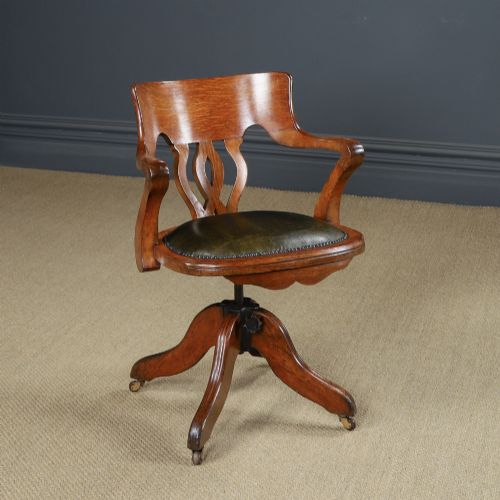
The swivel action relies on cast iron and brass spindle mechanisms concealed beneath the seat, allowing the occupant to turn and frequently adjust height or tilt.
Revolving Office Armchair Retail Price Guide 2026
Typical asking prices for revolving office armchair among the pieces listed under this phrase on Sellingantiques today, from the lower quarter to the upper quarter. They describe what is for sale here now, not the wider market.
Some resilient nineteenth-century specimens crossed oceans on passenger liners before settling permanently beside sturdy partner desks.
Assessing the Workmanship
Quality rests in the robustness of the revolving mechanism and the joinery of the wooden frame, where tight joints ensure stability during daily use. Finer examples display carefully selected timber grains, carved details and well-executed upholstery work.
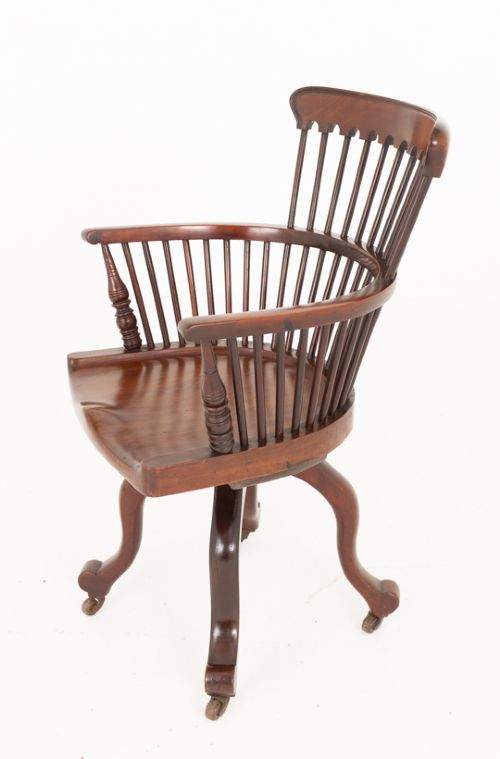
The proportion of the arms and the weight of the timber dictate the visual presence of the chair, separating utilitarian workshop seating from more refined library and executive pieces.
Kendrick & Jefferson·Shoolbred
The Revolving Office Armchair Glossary
- Swivel
- A mechanism allowing the upper portion of the chair to rotate fully on a central axis. This feature became standard in late nineteenth-century office furniture for administrative efficiency.
- Captain's chair
- A low-backed wooden armchair designed for ease of movement and comfort in a study or office. Many historical variants incorporate the pivoting base found on office models.
- Bergere
- An upholstered armchair with enclosed cane or wicker sides framing the seat. Edwardian makers occasionally applied this lighter aesthetic to office seating.
- Gothic Revival
- A nineteenth-century design style drawing on medieval architectural motifs such as pointed arches and heavy carved tracery. Chairs in this manner display darker woods and pronounced vertical lines.
- Sheriff's chair
- A robust swivel armchair with a wide wooden back rail, historically associated with American and British municipal offices.
Revolving Office Armchair: Frequently Asked Questions
What is a revolving office armchair?
A revolving office armchair is a traditional desk chair equipped with a central pivoting mechanism and armrests. It provides mobility and lumbar support for working at a partner desk or library table.
Most surviving examples date from the Victorian and Edwardian periods, constructed in solid hardwoods like mahogany and oak.
How do I date a swivel desk chair?
Dating relies on timber selection, hardware design, and stylistic markers such as Victorian turning or Edwardian Arts and Crafts simplicity. Earlier nineteenth-century examples often feature heavy mahogany frames and simpler iron mechanisms.
Later Edwardian models frequently incorporate oak, bentwood components, and more complex adjustable height or tilt screws beneath the seat.
Are these chairs comfortable for daily use?
Many historical desk chairs were built with ergonomic curved backs and padded leather seats designed for long hours of administrative work. Their solid construction makes them well-suited for modern study or office environments.
Height adjustment and swivel functions vary by model, so verifying the mechanical specifications helps ensure daily usability.
What woods were used for office armchairs?
Mahogany and oak are the primary timbers found across nineteenth and early twentieth-century office seating. Walnut, beech, and ash also appear frequently depending on the regional origin and stylistic period.
Darker finishes were popular in Victorian interiors, while lighter golden oak and mahogany became common during the Edwardian era.